PortoBallast Training Facility in Norway: Sea Clean's Plans
Updated
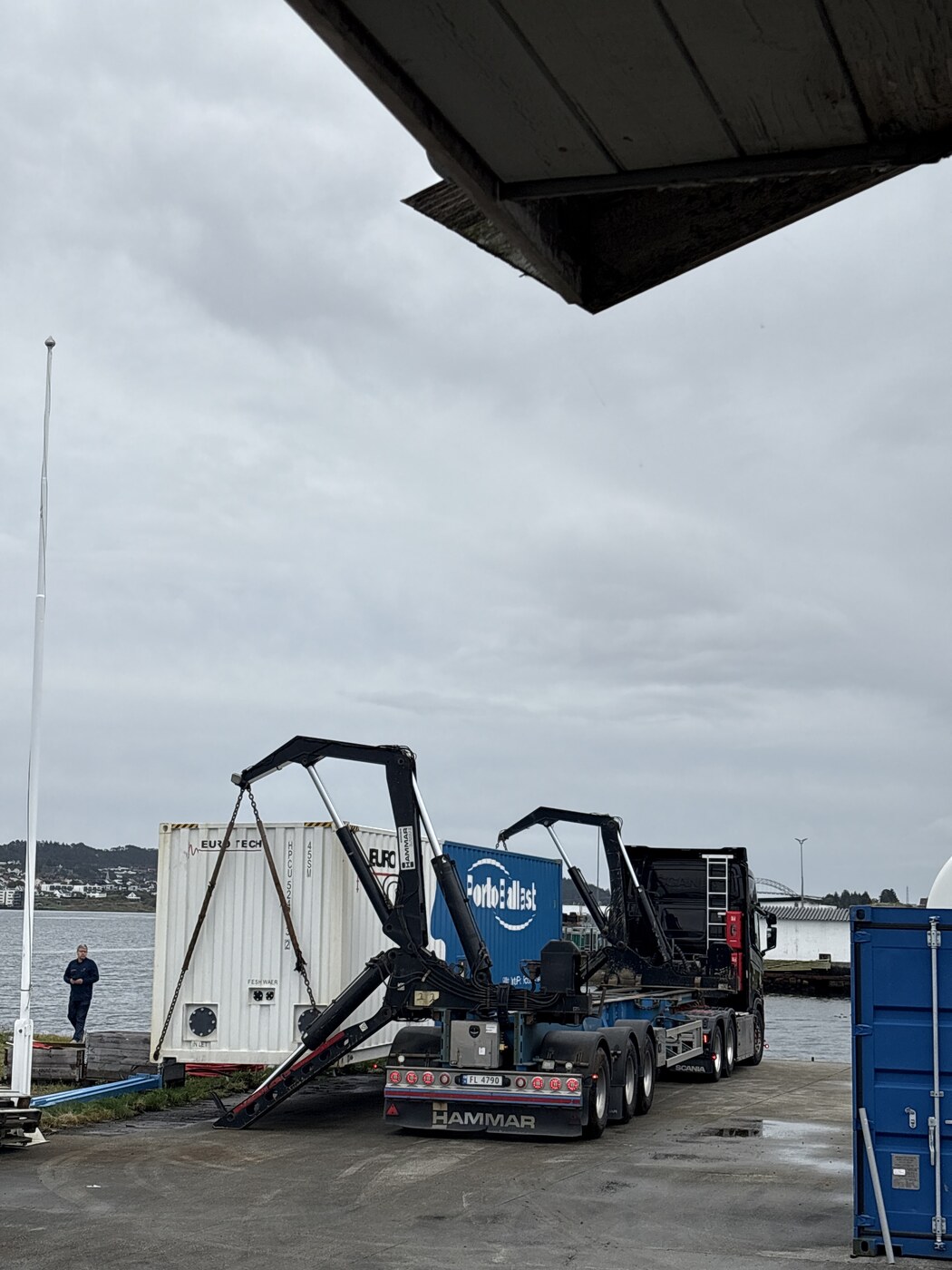
Sea Clean intends to use its first PortoBallast container, received on 7 October 2026, as a training facility. The planned value is practical familiarisation with mobile reception, treatment interfaces, filtration and UV, oxidant neutralisation and the evidence needed around a port operation. Training objectives can be discussed now, but course dates, demonstration readiness, access and any assessment arrangements must be confirmed. No accreditation or universally recognised qualification is claimed.
Sea Clean port-side treatment and PortoBallast hub
Key takeaways
- Sea Clean intends to use the received PortoBallast container as a training facility.
- Define learning objectives by role rather than promising a universal course.
- Dry familiarisation and live demonstrations have different readiness requirements.
- Treat UV, TRO, calibration and biological D-2 evidence as separate subjects.
- Rehearse vessel-to-shore communication, stop-work decisions and records.
- Dates, access, scope and any assessment must be confirmed by email.
Who could benefit from practical facility familiarisation?
Potential audiences include chief engineers, fleet technical staff, vessel superintendents, service technicians, port operators and procurement teams. They do not all need the same course. A chief engineer may need to understand vessel transfer and isolation, while a terminal operator needs site access, utilities, residue handling and stop-work coordination. A procurement team may need to distinguish rated equipment figures from the promised scope of an operated service.
Start by defining the participant roles and the decisions each person should be able to make afterwards. Training should not imply that a short visit qualifies someone to operate an unfamiliar BWMS without the manufacturer instructions, company authorisation or supervised practice required for their role. The planned facility creates a physical reference for explanation, not a substitute for a vessel's own approved documents and responsibilities.
What could a vessel-to-shore interface exercise cover?
A proposed familiarisation module can follow the water route from the vessel's ballast tanks to the agreed reception connection and onward to the treatment facility. Participants can examine how pressure, flow, hose compatibility, berth geometry and valve alignment affect the operation. Use the brochure's DN200 tie-in as reference information, then explain why nominal connection size alone does not establish a complete safe transfer assembly.
Exercises can distinguish paper planning, dry demonstrations and live water transfer. A dry exercise can rehearse who controls start-up, who confirms the outlet, how a stop signal travels between vessel and shore, and how the team records a pause. Any live demonstration needs its own readiness checks, supervision, risk assessment and permitted water route. Those conditions must be agreed before promising an operational training session.
Related guidance: PortoBallast Vessel-to-Shore Connection Checklist
How could filtration and UV be explained without overstating performance?
Euro Tech's brochure describes staged filtration and medium-pressure UV treatment, with a separate path for retained sludge and sediments. Training can make those relationships visible: solids capture, treatment of the moving water stream, monitoring, and the consequences of a blocked filter or an operating condition outside the accepted envelope. The goal is to explain the process sequence and the evidence an operator needs, not simply display a running pump.
A useful exercise compares a process reading with a conclusion about discharged-water quality. UV status, flow indication and a maintenance check each provide specific information, but they do not automatically establish biological D-2 performance for a particular discharge. Participants should learn which records support equipment readiness and which questions require sampling, laboratory analysis or authority review. That distinction is relevant both onboard and at a port reception facility.
What should TRO and neutralisation training distinguish?
A separate proposed module can cover water arriving from an electrolytic BWMS with excessive oxidants, the role of representative TRO measurement, the intended neutralisation method and the need to verify the treated water. The brochure describes sodium thiosulphate dosing and portable-meter checks, with control arrangements depending on configuration. Teach the actual supplied method rather than extrapolating a dosing-pump rating into an operator recipe.
It is especially important not to describe neutralisation as equivalent to complete ballast-water disinfection. Chemical dose, residual oxidant measurement, biological performance and discharge acceptance answer different questions. Training should also distinguish calibration from verification, appropriate reagent handling from guessed chemical mixing, and routine operation from a fault response. Where an installed sensor or control option is absent, the exercise must use the corresponding documented operating method.
Related guidance: PortoBallast TRO Neutralisation vs Full Ballast Treatment
How can contingency decisions and records be rehearsed?
A scenario can begin with a vessel reporting an onboard BWTS fault and an approaching cargo window. The participants identify affected ballast tanks, retain alarm and operating evidence, assess what information the port needs and compare technically feasible options. They should practise a decision process that does not treat a mobile container as automatic permission to discharge, nor a spare-parts repair as retrospective proof that earlier treatment succeeded.
A second exercise can prepare the handover record: responsible people, equipment identification, transfer timings, estimated or measured volumes with their basis, monitoring evidence, sampling identifiers, residue destination and authority correspondence. Entries should describe what actually happened, including interruptions and uncertainty. The facility's training purpose is to improve understanding and preparation; it does not make Sea Clean the flag Administration, class society, accredited laboratory or certifying body.
How should a training enquiry be submitted?
Email Sea Clean with the company, attendee roles and number, objectives, preferred dates, working language and whether the request concerns vessel operations, port reception, troubleshooting or procurement. If vessel-specific equipment is part of the scope, include the BWMS maker/model and the relevant procedures that can be shared. This gives Sea Clean enough context to consider a suitable familiarisation format without collecting submissions in a separate website form inbox.
Confirm availability, safe access, equipment readiness, demonstration limits, supervision and any commercial terms before travel is arranged. The first container's arrival does not establish that all training activities are ready on the delivery date. Do not infer course accreditation, a fixed syllabus, an examination, manufacturer certification or authority recognition from this planning article. Those would require their own explicit, documented arrangements.
Frequently asked questions
Can we request PortoBallast familiarisation in Norway?
Yes, you can email a training enquiry with attendee roles, objectives and preferred dates. Sea Clean intends to use the container for training, but the scope, readiness, dates, access and terms must be confirmed before arranging attendance.
Will the training award an accredited qualification?
No accreditation, manufacturer certification or authority-recognised qualification is claimed here. Practical familiarisation can support understanding, but any assessment or recognised credential would need its own documented scheme and explicit agreement.
Can crews practise an emergency BWTS scenario?
That can be proposed as a training objective. An exercise should cover information gathering, interfaces, authority communication, safe transfer planning and truthful records. It must not be represented as permission to carry out an actual contingency discharge.
Will the session include live ballast-water treatment?
That is not guaranteed by the arrival announcement. Live demonstrations require equipment and site readiness, competent supervision, a risk assessment and an agreed water route. Dry familiarisation or document-based exercises may be appropriate instead.
Sources
- Euro Tech — PortoBallast brochure, August 2026 edition — Pages 2–4: process, tie-ins, technical envelope and dosing system; manufacturer data subject to change, not Sea Clean's as-built acceptance record.
- Euro Tech Holdings — mobile hybrid launch, 9 June 2026 — Issuer's announcement: Nasdaq CLWT, containerised terminal/barge deployment and trailer transport.
- Euro Tech Holdings — Sea Clean partnership announcement, 17 June 2026 — Names Sea Clean and the planned Norwegian coastal facility. Its dispatch forecast is not the actual receipt date.
- IMO — Ballast Water Management — Convention, management plans, discharge standards and the distinction between equipment approval and operational requirements.
Related articles
- Sea Clean Receives First PortoBallast Container: 7 October 2026
- PortoBallast Vessel-to-Shore Connection Checklist
- PortoBallast for a BWTS Breakdown: Contingency Planning
- PortoBallast, IMO D-2 Testing and Port Acceptance
- What Is a Ballast Water Port Reception Facility?
- Port-Side Ballast Water Treatment for Vessels
Discuss PortoBallast directly by email
Training, rental/operated service and contingency enquiries are reviewed individually. Include objectives or the vessel, installed BWMS, port, dates, water volume and scope. Availability, readiness, suitability, permissions and quotation require confirmation. These links prepare email drafts; no website submission inbox is used.
Explore the PortoBallast series
- First container received: 7 October 2026
- What is PortoBallast, and who is Euro Tech?
- Specifications: flow, power and footprint
- Rental periods and service scope
- BWTS breakdown contingency planning
- Vessel-to-shore connection checklist
- IMO D-2, testing and port acceptance
- TRO neutralisation versus full treatment
- Filtration, UV and sludge management
- Deployment at ports and terminals
- Mobile treatment versus onboard BWMS