How PortoBallast Filtration, UV and Sludge Handling Work
Updated
Euro Tech's August 2026 brochure describes ballast-water reception, staged filtration and medium-pressure UV disinfection, with a separate sludge-treatment route for retained material. Its process diagram shows 8 mm and 40 µm filtration stages. Understanding the water and solids paths helps operators plan reception, monitor abnormal conditions and define residue responsibilities. The diagram is manufacturer reference information, not an as-built operating procedure for Sea Clean's received unit.
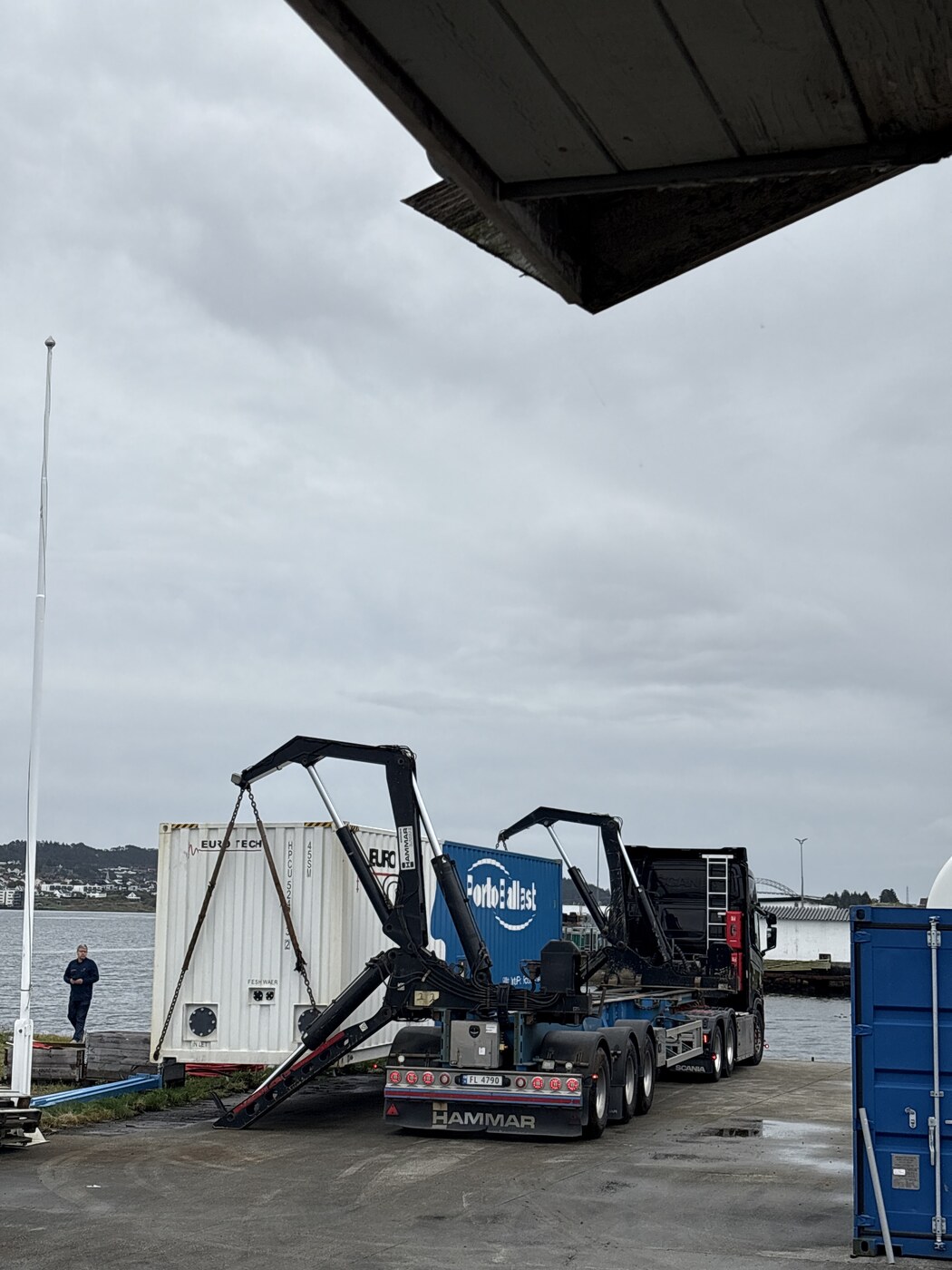
Sea Clean port-side treatment and PortoBallast hub
Key takeaways
- The brochure diagram shows staged 8 mm and 40 µm filtration followed by disinfection.
- Medium-pressure UV and filtration have different process roles.
- The published flow range does not justify operating outside the documented envelope.
- Captured sludge, separated liquids and returned water need defined handling routes.
- Clean, oil-free ballast water limits do not create universal wastewater acceptance.
- Process, residue and sampling records should follow the actual operation.
What sequence does the manufacturer publish?
The brochure's process diagram shows influent passing through a booster system, an 8 mm filtration stage, a 40 µm filtration stage and a disinfection unit before reaching the effluent route. The accompanying text identifies a high-efficiency medium-pressure UV reactor. This describes the intended process sequence; the actual supplied configuration, control logic, operating limits and alarm responses must be confirmed from the current unit documentation.
The route matters because each stage has a different role. Initial reception and pumping establish the transfer conditions, filtration retains selected material, and UV acts on the flowing water within its documented treatment envelope. A running pump or an open outlet does not prove that all process stages are functioning correctly. The operational record needs to show the relevant conditions and any interruption or abnormality, not merely that water passed through the container.
What does the filtration description establish?
The brochure describes removal of particles at or above the stated filtration scale and publishes organism-removal statements as part of its process description. Those statements are manufacturer claims, not test results for the ballast-water load in a future Sea Clean service. The useful procurement questions are the actual filter configuration, operating limits, condition, cleaning method and what happens to retained material during the accepted process.
Filtration can be affected by incoming solids and operating conditions. An operator needs the actual differential-pressure indications, alarm responses and cleaning instructions for the supplied system. This article does not invent setpoints or authorise bypassing a stage to maintain throughput. If a filtration problem changes the treatment path or water quality, the operation must follow the documented response and any conditions attached to the accepted scope.
How should UV treatment and flow be considered together?
The treatment-unit table gives a 50–300 m³/h range with adjustment of UV power. That wording links treatment operation to the documented process conditions rather than a fixed promise of maximum throughput. Water characteristics, the reactor and lamp condition, monitoring and control arrangements, and the accepted operating envelope all matter. Verify which parameters the actual unit measures and which conditions require a change or stop.
Do not borrow minimum UV-transmittance values, lamp counts or dose setpoints from another manufacturer's onboard system. The brochure reviewed here does not establish those project-specific details for the received unit. A process reading supports a defined operational question; biological performance and required acceptance evidence remain separate. The current operating instructions and configuration-specific evidence should control how the UV stage is used and documented.
Related guidance: PortoBallast, IMO D-2 Testing and Port Acceptance
Where do the captured solids and separated liquids go?
Euro Tech describes slurry and sediments retained by multiple-stage filtration moving to sludge treatment for further solid-liquid separation. The brochure says the separated liquid returns to a biological inactivation route, while the separated solid phase is temporarily stored or enters dewatering. Its diagram also shows collection, concentration, dewatering, liquid-return paths and sludge storage before outside disposal.
That description prevents a common planning error: treating filtration as if the captured material disappears. The project must identify the actual equipment used for the solids route, temporary capacity, monitoring, clean-down, transport and destination. Any liquid-return arrangement must follow the accepted process; it should not be mistaken for permission to discharge an unreviewed sidestream. The site team needs a complete mass-handling plan, not just an effluent pipe.
Which incoming streams are outside an automatic acceptance claim?
The brochure's influent table specifies clean ballast water, oil-free, with TSS at or below 500 mg/L and water temperature at or below 65°C. Disclose suspected oil, cargo residues, unusual chemistry or unidentified wastewater before agreeing reception. A broad launch statement about contamination challenges should not be read as a certified capability to treat every possible pollutant or an unlimited suspended-solids load.
The supplier and responsible authorities need enough information to establish whether the proposed stream is within the offered scope. Where information is missing, further investigation or testing may be needed. Do not substitute a visual impression of clear water for the required characterisation, nor assume that neutralisation will cure a contamination issue outside its method. Training can illustrate these decision boundaries without claiming a live treatment result.
Related guidance: PortoBallast Training Facility in Norway: Sea Clean's Plans
What records make the process traceable?
Link the vessel and tank identity, received volume and its measurement basis, transfer period, process configuration, relevant operating indications, interruptions, cleaning events and any samples to the same operation. Record the residue route and destination where applicable. A reviewer should be able to distinguish the main water stream from returned liquids, retained solids and any water held during an abnormal condition.
Maintenance and instrument evidence should be attached to the relevant equipment, while sampling reports should identify their purpose and relationship to the operation. Sea Clean's planned training facility can support understanding of these records, but it does not replace qualified testing or authority acceptance. For a practical enquiry, provide the water condition, intended volume and outlet, site information and the required reporting scope.
Frequently asked questions
Does PortoBallast use UV or electrolysis for its published main treatment route?
The August 2026 brochure describes staged filtration followed by a medium-pressure UV reactor. It separately describes oxidant neutralisation for suitable water from electrolytic onboard BWMS cases. Those functions should not be confused.
What filtration stages appear in the PortoBallast diagram?
The process diagram shows 8 mm and 40 µm filtration stages. Confirm the actual supplied equipment and current operating documentation before relying on the diagram as an as-built arrangement or an operating instruction.
Does filtering the water eliminate the need to handle sludge?
No. The brochure describes further separation, liquid-return routes, temporary solids storage and/or dewatering. The project needs an agreed residue-handling and disposal arrangement; retained material does not disappear.
Can the system take any heavily contaminated ballast stream?
That is not supported by the published envelope. The brochure specifies clean, oil-free ballast water and stated solids/temperature limits. Suspected contamination, unknown chemistry or other wastewater needs separate review before acceptance.
Sources
- Euro Tech — PortoBallast brochure, August 2026 edition — Pages 2–4: process, tie-ins, technical envelope and dosing system; manufacturer data subject to change, not Sea Clean's as-built acceptance record.
- Euro Tech Holdings — mobile hybrid launch, 9 June 2026 — Issuer's announcement: Nasdaq CLWT, containerised terminal/barge deployment and trailer transport.
- Euro Tech Holdings — Sea Clean partnership announcement, 17 June 2026 — Names Sea Clean and the planned Norwegian coastal facility. Its dispatch forecast is not the actual receipt date.
- IMO — Ballast Water Management — Convention, management plans, discharge standards and the distinction between equipment approval and operational requirements.
Related articles
- PortoBallast Specifications: Flow, Power and Footprint
- PortoBallast, IMO D-2 Testing and Port Acceptance
- PortoBallast TRO Neutralisation vs Full Ballast Treatment
- Deploying a Containerised BWTS at Ports and Terminals
- What Is a Ballast Water Port Reception Facility?
- Port-Side Ballast Water Treatment for Vessels
Discuss PortoBallast directly by email
Training, rental/operated service and contingency enquiries are reviewed individually. Include objectives or the vessel, installed BWMS, port, dates, water volume and scope. Availability, readiness, suitability, permissions and quotation require confirmation. These links prepare email drafts; no website submission inbox is used.
Explore the PortoBallast series
- First container received: 7 October 2026
- What is PortoBallast, and who is Euro Tech?
- Specifications: flow, power and footprint
- Sea Clean's planned training facility
- Rental periods and service scope
- BWTS breakdown contingency planning
- Vessel-to-shore connection checklist
- IMO D-2, testing and port acceptance
- TRO neutralisation versus full treatment
- Deployment at ports and terminals
- Mobile treatment versus onboard BWMS