Deploying a Containerised BWTS at Ports and Terminals
Updated
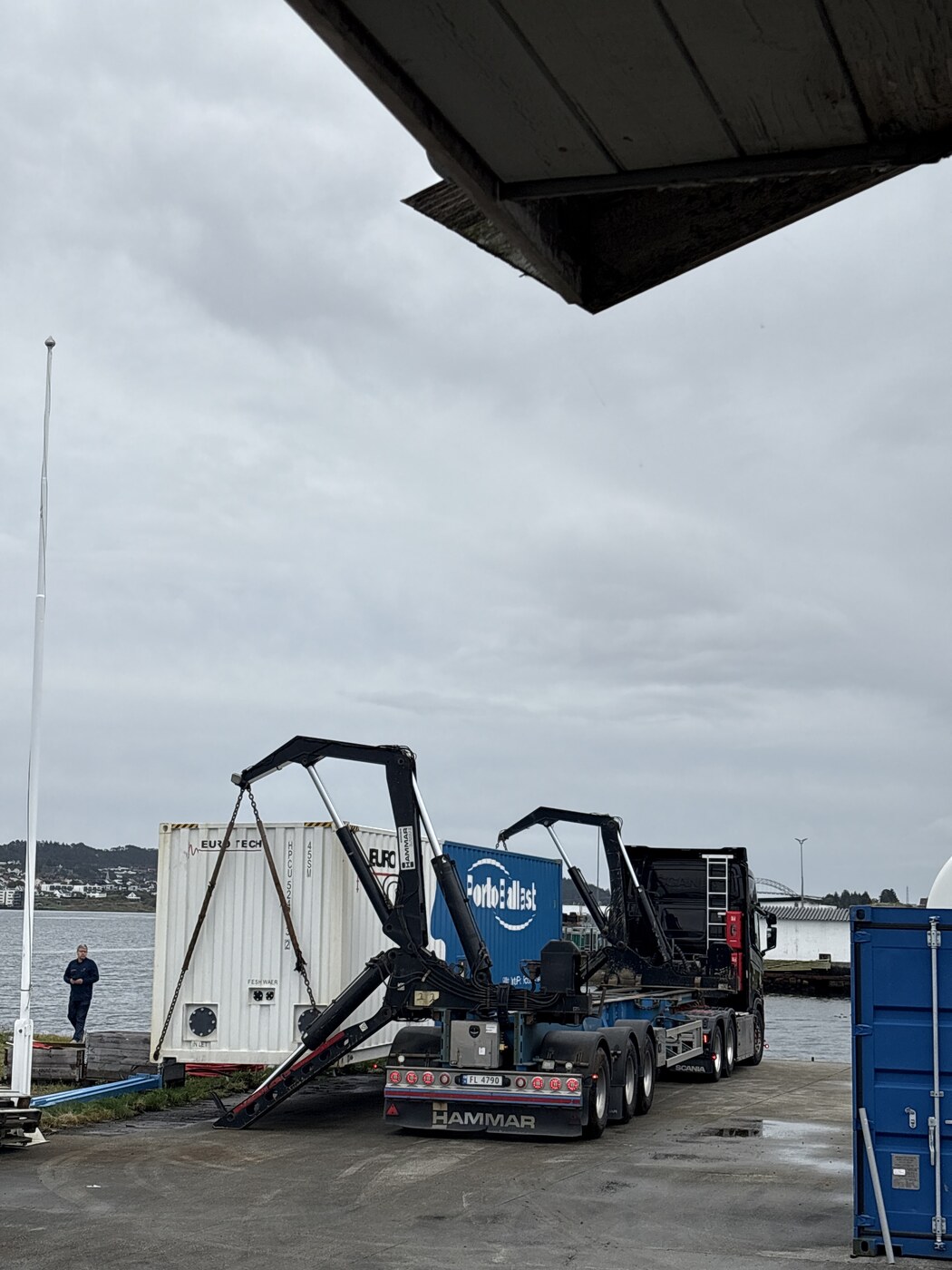
A containerised ballast-water facility can be transportable without being operationally simple. PortoBallast's manufacturer describes terminal and barge deployment with trailer transport; Sea Clean's arrival photo shows the first container being unloaded from a side-loader truck. A real deployment plan must cover the unit's actual weight and configuration, the receiving site, utilities, vessel connection, permissions, operators and waste routes. Mobility changes logistics, not the need for preparation.
Sea Clean port-side treatment and PortoBallast hub
Key takeaways
- A site-specific operating case should come before transport booking.
- Use the delivered unit's actual weight and handling documents.
- Plan clearance, access, utilities, interfaces and residue arrangements together.
- Barge deployment needs a separate platform and operational review.
- Mobile equipment does not carry universal discharge permission.
- Keep delivery, operational readiness, acceptance and final removal distinct.
Start with the operating case and receiving site
Identify why the facility is needed: planned vessel reception, a temporary service period, a response to an onboard failure or training. Define the water volume, expected operating window, incoming-water condition and intended outlet. Then identify the exact port, terminal, berth and proposed equipment position. A country name or a port map is not enough to assess access, utilities or a safe ship-to-shore route.
The site survey should establish who controls the land or deck, which local rules apply and whether other activities constrain the operation. Include vessel-agent and terminal contacts and any restrictions on chemicals, wastewater, temporary equipment or work near cargo handling. Sea Clean's Norwegian container receipt establishes a company milestone, not permanent presence or guaranteed service availability at every port mentioned in an enquiry.
How should transport and unloading be planned?
The August brochure lists a container-scale equipment room and 10,000/13,000 kg dry/operating weights. Transport and handling must use the delivered unit's actual weight, configuration and lifting/handling information. Review the route, vehicle access, unloading position, bearing conditions, overhead obstacles and safe exclusion area. The first-arrival photo demonstrates a side-loader operation at that delivery; it is not a lifting plan for another site.
Agree who books transport, provides the responsible handling contractor, checks site access and accepts the equipment at handover. A future move may need a different method depending on the quay, barge, vehicle approach and available equipment. No universal mobilisation duration or guaranteed transport slot is implied. The review should distinguish the physical delivery milestone from installation, inspection and readiness to operate.
Related guidance: Sea Clean Receives First PortoBallast Container: 7 October 2026
What clearance, access and utility arrangements are required?
A container body footprint does not include everything needed around it. Provide clear space for doors, operators, inspection, maintenance, hose bends, cable routing, drainage and emergency access. A separate dosing skid or residue arrangement can change the layout. Review the receiving surface and any relevant quay or deck load restrictions with the responsible parties rather than assuming a container-friendly space is suitable for the operating weight.
Establish electrical supply and protection, earthing, fresh water, drainage and the actual supplied air arrangement from the unit documentation. The brochure's 116 kW/400 V reference supply is an early site-screening fact, not an electrical design. Utilities need to be ready within the agreed scope before an operating window is promised. The same applies to communication, lighting, monitoring access and any required chemical storage or containment.
How does a barge deployment change the review?
Euro Tech describes barge deployment as one of the concept's options. A floating platform introduces its own structural, stability, mooring, access, utility and hose-movement questions. The water route, sampling access, operating conditions and safe response to interruption still need review. A brochure drawing of a barge does not demonstrate that an arbitrary available barge is suitable or approved for the offered equipment and operation.
Responsibilities must be clear across the vessel, barge operator, treatment operator, terminal and required authorities. Confirm the actual platform and its applicable documents rather than extending a shore-site arrangement to a floating deployment by assumption. This article does not claim Sea Clean owns a dedicated treatment barge or has a standing waterborne response fleet. Those would be separate operational and commercial facts requiring confirmation.
Which permissions and material routes must be settled?
Agree the reception and treatment purpose, accepted incoming-water envelope, final effluent destination and residue path with the relevant responsible parties. The launch announcement lists possible outputs such as nearshore discharge, onward treatment or reloading clean ballast to a vessel, but each location has its own acceptance and permission requirements. A mobile facility is not a permit that travels with the container and automatically applies everywhere.
Where treatment produces retained solids or separated liquids, identify temporary storage, transport and disposal responsibilities before operation. Define any sampling or reporting required for the outlet and the actual operation. Sea Clean is not an approving authority or accredited laboratory; appropriate parties and evidence need to be included in the scope. Do not let a transport deadline substitute for a missing environmental or operational decision.
Related guidance: PortoBallast, IMO D-2 Testing and Port Acceptance
How should readiness, operation and removal be handed over?
Receiving inspection should identify the equipment, configuration, condition and outstanding issues. The operational readiness check then covers utilities, interface assembly, control and communication arrangements, agreed procedures and the permitted route. Delivery, readiness and acceptance should be separate sign-offs or records as appropriate to the project; combining them into 'container arrived, service available' hides the checks that make the arrangement usable.
Plan the final handover too: isolation, draining, cleaning, residue destination, disconnection, site restoration and equipment collection. Retain the transfer and process records, sampling references and any restrictions or outstanding work. An email enquiry should provide the site, vessel, purpose, dates, water volume and available drawings so Sea Clean can assess an actual project instead of promising a generic nationwide deployment service.
Frequently asked questions
Can PortoBallast be moved by road?
Euro Tech's launch describes trailer-truck transport, and Sea Clean's supplied arrival photo shows unloading from a side-loader truck. A future move still needs the actual equipment, route, weight, access and handling plan to be assessed.
Does Sea Clean's arrival mean deployment is available at every Norwegian port?
No. The arrival is at Sea Clean, with intended training use. A separate deployment requires confirmation of equipment readiness, availability, transport, receiving-site suitability, vessel interfaces and the required operational scope.
Can the container be installed on any barge?
No automatic suitability is implied. The actual platform, loads, stability, mooring, utilities, access and applicable requirements need review. A manufacturer concept illustration is not acceptance of a specific barge arrangement.
Who handles sludge and other residues?
The responsible parties and permitted destination must be agreed in the project scope. A container delivery or rental agreement alone does not establish that the terminal, vessel or supplier has accepted every residue-handling obligation.
Sources
- Euro Tech — PortoBallast brochure, August 2026 edition — Pages 2–4: process, tie-ins, technical envelope and dosing system; manufacturer data subject to change, not Sea Clean's as-built acceptance record.
- Euro Tech Holdings — mobile hybrid launch, 9 June 2026 — Issuer's announcement: Nasdaq CLWT, containerised terminal/barge deployment and trailer transport.
- Euro Tech Holdings — Sea Clean partnership announcement, 17 June 2026 — Names Sea Clean and the planned Norwegian coastal facility. Its dispatch forecast is not the actual receipt date.
- IMO — Ballast Water Management — Convention, management plans, discharge standards and the distinction between equipment approval and operational requirements.
Related articles
- PortoBallast Vessel-to-Shore Connection Checklist
- PortoBallast Specifications: Flow, Power and Footprint
- Mobile Ballast-Water Treatment Rental in Norway: Scope First
- Sea Clean Receives First PortoBallast Container: 7 October 2026
- What Is a Ballast Water Port Reception Facility?
- Port-Side Ballast Water Treatment for Vessels
Discuss PortoBallast directly by email
Training, rental/operated service and contingency enquiries are reviewed individually. Include objectives or the vessel, installed BWMS, port, dates, water volume and scope. Availability, readiness, suitability, permissions and quotation require confirmation. These links prepare email drafts; no website submission inbox is used.
Explore the PortoBallast series
- First container received: 7 October 2026
- What is PortoBallast, and who is Euro Tech?
- Specifications: flow, power and footprint
- Sea Clean's planned training facility
- Rental periods and service scope
- BWTS breakdown contingency planning
- Vessel-to-shore connection checklist
- IMO D-2, testing and port acceptance
- TRO neutralisation versus full treatment
- Filtration, UV and sludge management
- Mobile treatment versus onboard BWMS