PortoBallast for a BWTS Breakdown: Contingency Planning
Updated
A mobile port reception and treatment facility can be considered in a BWTS contingency discussion, but it is not automatic permission to discharge after an onboard failure. The first task is to establish the vessel's condition, affected ballast, safety constraints and authority requirements. PortoBallast's published mobile concept offers a potential technical route where suitable; Sea Clean must confirm equipment readiness, availability, interfaces and scope for the actual port call.
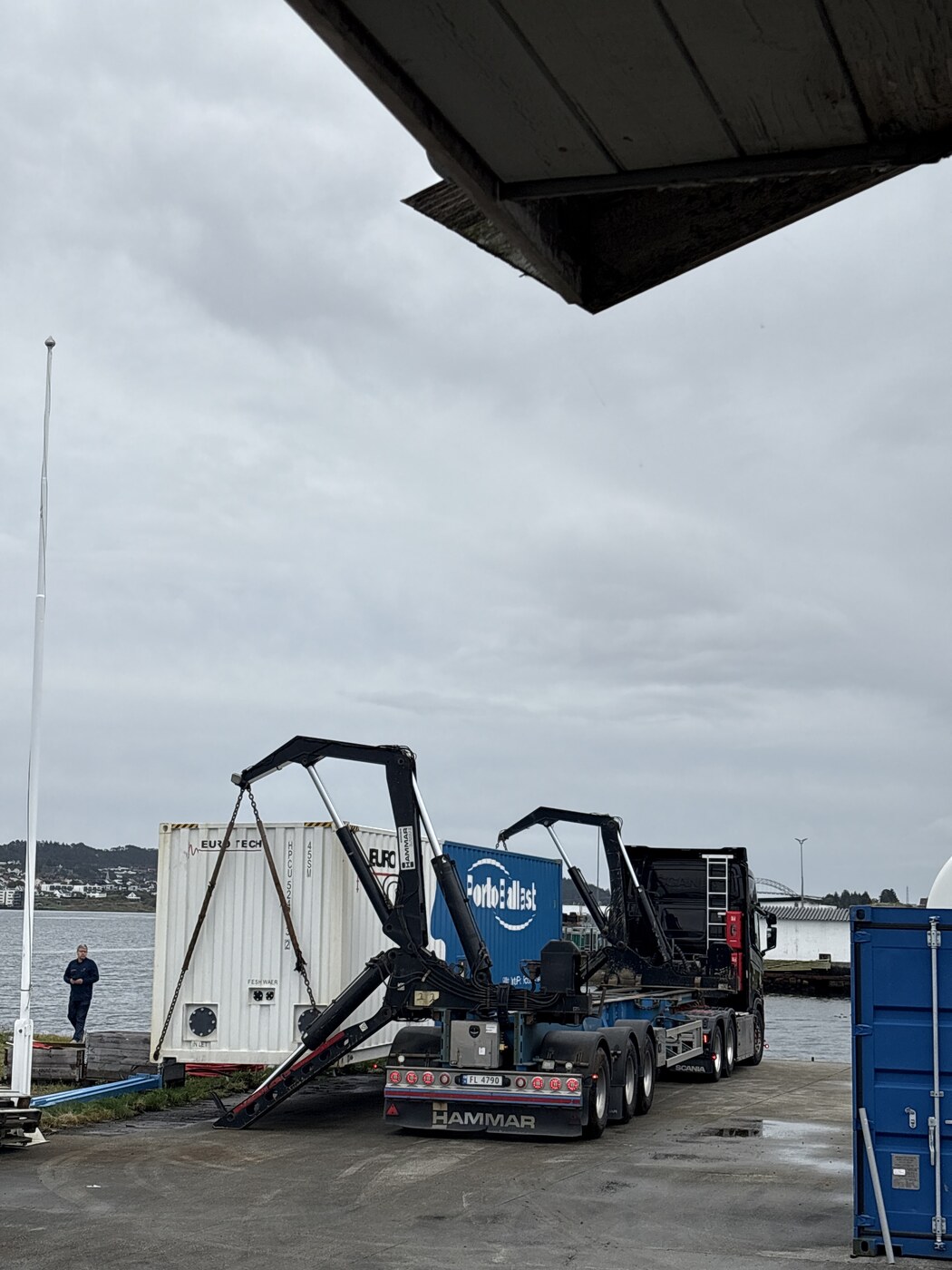
Sea Clean port-side treatment and PortoBallast hub
Key takeaways
- Preserve the failure evidence and identify affected ballast before choosing a route.
- A BWTS fault is not permission to discharge or to bypass treatment.
- Distinguish full treatment from a surplus-oxidant problem.
- Submit a vessel-specific proposal to the required authorities.
- Check utilities, transfer interfaces and actual mobilisation availability.
- Close the event with truthful operating, sampling, repair and acceptance records.
What information is needed immediately after the fault?
Record the installed BWMS maker/model, fault time, alarms, treatment stage affected, tank status and whether any water was already taken up, transferred or discharged during the incident. Preserve operating logs and relevant measurement records. Avoid repeatedly resetting alarms or rewriting a failure as a routine event: the uncertainty about treatment history is important information for both technical diagnosis and a possible reception arrangement.
The master and vessel company must consider stability, cargo constraints and the approved ballast-water management plan while establishing the next step. The treatment supplier does not take over the master's responsibility for vessel safety. Communicate the actual situation to the relevant port and other required parties rather than assuming that an alternative facility can be arranged privately without the operational case being reviewed.
When might mobile reception and treatment be relevant?
A port-side option may be relevant when a vessel cannot complete its intended ballast operation through the onboard system and a technically suitable reception route is available. Euro Tech's brochure describes service for vessels with or without onboard BWMS and a neutralisation role when an electrolytic system fails to control excessive oxidants. Those are manufacturer-described use cases, not a finding that any particular fault or ballast load is suitable.
Classify the problem before selecting a route. A failed UV stage, unreliable filtration, excessive TRO, a missing measurement channel and an unknown contamination event are not equivalent. Some cases may need repair and verification; others may require water reception or treatment subject to agreement. Biological uncertainty and a chemical-residual problem can coexist, so reducing TRO alone must not be assumed to resolve the entire incident.
Related guidance: PortoBallast TRO Neutralisation vs Full Ballast Treatment
How should a proposed contingency be presented to the port?
Prepare a concise description of the incident, affected volume and tanks, known water origin and treatment history, proposed facility and treatment function, transfer method, timing and intended outlet. Include the proposed monitoring, sampling and residue arrangements and the people controlling each stage. Explain what is known, what remains uncertain and what evidence can be supplied before and after the operation.
Ask the responsible authority what acceptance, reporting and evidence are required for this specific proposal. A manufacturer brochure, commercial quote or portable TRO result does not replace that decision. Keep written instructions and conditions attached to the operating plan, including any restriction on discharge, transfer rate, sampling or retention. If the proposed arrangement changes, the team must reconsider the scope rather than relying on approval for a different operation.
Which technical interfaces can prevent an urgent deployment?
The vessel needs a usable connection and controlled transfer route; the facility needs a safe site, appropriate utilities and an agreed outlet. Review hydraulic pressure, flow, hose size, length and route, vessel movement, electrical supply and access for unloading. PortoBallast's DN200 brochure tie-in and container-scale dimensions are early screening information, not proof that a berth's existing piping or an improvised adapter is compatible.
An urgent call can also encounter closed access windows, unavailable transport, unsuitable quay loading, missing electrical connection, conflicting cargo operations or an unconfirmed residue destination. These constraints should be disclosed early. Sea Clean's receipt of a container in Norway does not imply an instant European response network, a local office at the destination or a guaranteed mobilisation time. Availability and logistics must be reviewed honestly.
Related guidance: Deploying a Containerised BWTS at Ports and Terminals
What controls should be agreed before moving water?
Establish one coordinated start/stop process with named vessel and shore contacts, a checked valve line-up, an isolated incorrect-discharge path and an agreed response to communication loss. The responsible parties should understand how a pressure, process or water-quality abnormality changes the operation. Do not prescribe guessed alarm setpoints: use the actual equipment instructions, risk assessment and the conditions attached to the accepted contingency.
Clarify how untreated or uncertain water is contained during a stop, how any sampling hold is observed and how the team avoids confusing different tanks or operating periods. Monitoring and records should show the actual transfer sequence. A mobile facility is useful only when the whole interface is controlled; having treatment equipment physically present does not make an unsafe or undocumented transfer arrangement acceptable.
What evidence is needed to close the incident?
Keep the fault report, decisions, authority correspondence, transfer and treatment logs, sampling identifiers and reports, residue documents and the vessel's required operational entries linked to the same event. State whether volume was measured or estimated and record interruptions. Repair evidence for the onboard BWMS should describe the work and the return-to-service checks; it should not be used to rewrite the treatment history of water handled before the repair.
For a Sea Clean enquiry, provide the vessel/IMO number, maker/model, alarm evidence, port and berth, ETA, affected volume, water condition and your operational deadline. Sea Clean can review technical and coordination options, but it is not an approving authority or accredited laboratory. No emergency availability, successful treatment result or discharge acceptance is promised before the actual scope has been assessed and agreed.
Frequently asked questions
Can PortoBallast solve every onboard BWTS failure?
No. Suitability depends on the fault, water condition, required function, vessel interfaces, site readiness and authority acceptance. A mobile facility can be considered as one option, but neither the product description nor container arrival guarantees a solution.
Should we repair the BWMS or ask about port treatment?
That depends on the technical failure, water already affected, vessel safety and working window. Preserve the evidence and request a review. Repairing equipment and managing uncertain ballast water are related but separate scopes.
Is reducing TRO enough after a treatment failure?
Not necessarily. TRO neutralisation addresses excessive residual oxidants under an appropriate method; it does not automatically establish biological D-2 performance. The incident must be assessed for both chemical and biological concerns where relevant.
Does Sea Clean guarantee immediate emergency attendance?
No blanket response time is promised here. Equipment readiness, availability, transport, utilities, berth access and the required operating arrangement must be confirmed for the actual port call.
Sources
- Euro Tech — PortoBallast brochure, August 2026 edition — Pages 2–4: process, tie-ins, technical envelope and dosing system; manufacturer data subject to change, not Sea Clean's as-built acceptance record.
- Euro Tech Holdings — mobile hybrid launch, 9 June 2026 — Issuer's announcement: Nasdaq CLWT, containerised terminal/barge deployment and trailer transport.
- Euro Tech Holdings — Sea Clean partnership announcement, 17 June 2026 — Names Sea Clean and the planned Norwegian coastal facility. Its dispatch forecast is not the actual receipt date.
- IMO — Ballast Water Management — Convention, management plans, discharge standards and the distinction between equipment approval and operational requirements.
Related articles
- Mobile Ballast-Water Treatment Rental in Norway: Scope First
- PortoBallast, IMO D-2 Testing and Port Acceptance
- PortoBallast Vessel-to-Shore Connection Checklist
- PortoBallast TRO Neutralisation vs Full Ballast Treatment
- Euro Tech PortoBallast: Mobile BWTS and Nasdaq CLWT
- What Is a Ballast Water Port Reception Facility?
Discuss PortoBallast directly by email
Training, rental/operated service and contingency enquiries are reviewed individually. Include objectives or the vessel, installed BWMS, port, dates, water volume and scope. Availability, readiness, suitability, permissions and quotation require confirmation. These links prepare email drafts; no website submission inbox is used.
Explore the PortoBallast series
- First container received: 7 October 2026
- What is PortoBallast, and who is Euro Tech?
- Specifications: flow, power and footprint
- Sea Clean's planned training facility
- Rental periods and service scope
- Vessel-to-shore connection checklist
- IMO D-2, testing and port acceptance
- TRO neutralisation versus full treatment
- Filtration, UV and sludge management
- Deployment at ports and terminals
- Mobile treatment versus onboard BWMS