Routine Self-Monitoring of a Ballast Water Treatment System
Updated
Commissioning testing and port sampling are occasional events; the day-to-day evidence that a BWTS is working comes from routine self-monitoring by the crew. This article explains what to check between port calls, including treatment parameters, alarms and consumable levels, and how on-board indicative tests fit alongside accredited testing. It describes how Sea Clean AS supplies the TRO test kits, reagents and parts that make routine monitoring practical, while accredited laboratories and authorised parties remain responsible for certified analysis.
Key takeaways
- Self-monitoring is the day-to-day evidence a BWTS meets D-2 between occasional port samples and commissioning tests.
- Oxidising systems track TRO and neutralisation; UV systems track transmittance, lamp intensity and flow.
- A handheld TRO test kit independently verifies the system sensor and catches drift before it becomes a failure.
- On-board indicative tests give operational confidence but are not a certified D-2 compliance result.
- Alarm logs, manual test results and consumable records together show system health and support PSC encounters.
- Sea Clean supplies reagents, test kits and spares and provides engineer attendance when monitoring reveals a fault.
Why Self-Monitoring Matters Between Tests
Regulatory sampling and commissioning testing happen rarely compared with how often a vessel ballasts and deballasts. Between those events, the ship's own monitoring is the main evidence that the treatment system continues to meet the D-2 standard and that any drift or fault is caught early rather than at an inspection.
Self-monitoring also protects the crew during a port state control encounter. A consistent record of treatment parameters, alarms and consumable use shows that the system has been operated and maintained, which supports the vessel's position even before any sample is taken.
The aim is not to replace accredited analysis but to manage the system day to day. Routine checks catch sensor drift, consumable depletion and developing faults so they can be corrected before they become a compliance failure or a breakdown that strands the vessel.
Treatment Parameters to Check
For electrochlorination and other oxidising systems, total residual oxidant (TRO) is the central parameter. The crew confirms that the system generates adequate oxidant during treatment and that the residual is neutralised to within the permitted limit before discharge, comparing the system's own readings against an independent check where required.
For ultraviolet systems, the equivalent parameters are UV transmittance of the incoming water, lamp intensity and flow rate, since disinfection depends on delivering enough UV dose to the organisms. Low transmittance in turbid water or a fouled quartz sleeve reduces the delivered dose, and the system should flag this through its own monitoring.
Flow rate, pressure and filter differential pressure apply across system types because they affect both treatment performance and the load on the equipment. Recording these against each ballast operation builds a baseline that makes abnormal readings obvious.
Using On-Board Indicative Tests
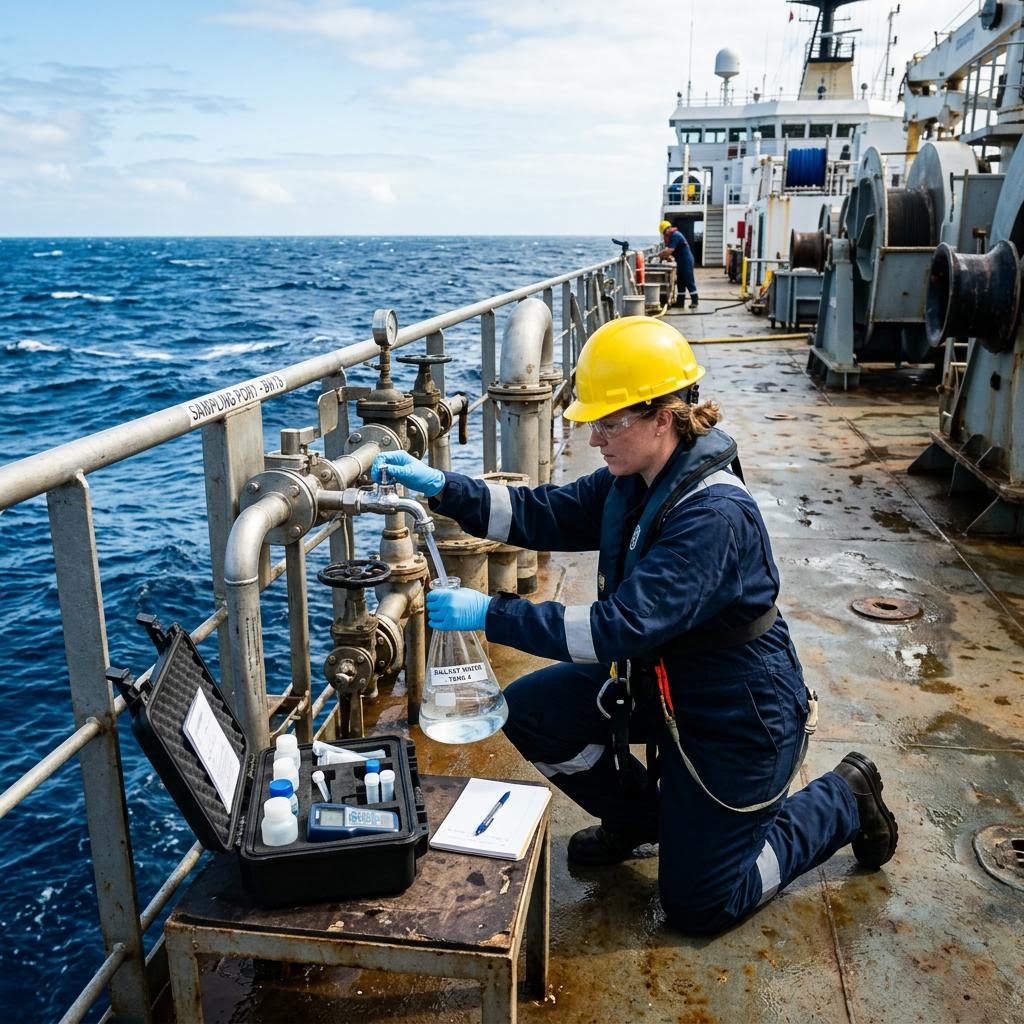
A handheld TRO test kit lets the crew verify oxidant and neutralisation independently of the system's built-in sensor, which is valuable because sensors drift and can fail. A periodic manual check against the kit confirms the analyser is reading correctly or shows that it needs calibration.
These on-board checks are indicative: they provide rapid screening and operational confidence, not a certified compliance result. They cannot by themselves prove the D-2 organism limits are met, but a clear oxidant or neutralisation problem found by the crew is a strong early warning that something is wrong.
Sea Clean supplies the TRO test kits and reagents, including sodium thiosulfate neutraliser, that make these checks routine, and advises on shelf life and storage so the crew is not relying on expired reagent. Where a result looks abnormal, it points to a check or service before the next regulated discharge.
Alarms, Logs and Consumables
A BWTS records alarms and operating data, and reviewing this log is part of self-monitoring. Recurring alarms, bypass events or treatment interruptions are signals that need investigation, and they are also exactly what a port state control officer may ask to see.
Consumable management is part of the routine: neutraliser stock, reagents for testing, UV lamps approaching end of life, and filter elements all have to be available before they are needed. Running out of neutraliser or reagent mid-voyage can force a non-compliant discharge or an out-of-service condition.
Keeping the alarm history, the manual test results and the consumable records together gives a coherent picture of the system's health. This documentation supports the ballast water record book entries and helps any attending engineer diagnose a problem quickly.
When Self-Monitoring Signals a Problem
Self-monitoring is only useful if abnormal readings trigger action. A TRO reading outside the expected band, a UV intensity alarm, rising filter differential or repeated treatment bypasses all indicate that the system needs attention before it is relied on for a compliant discharge.
Some issues are within the crew's scope, such as replacing a UV lamp, cleaning a sensor or restocking neutraliser. Others, like electrolyser cell fouling, sensor failure or control faults, usually need a service engineer and the correct spare parts to resolve.
Catching these early is the difference between a planned correction and an urgent breakdown at an inconvenient port. A clear self-monitoring record also lets a remote support contact or attending engineer understand the fault before arriving, which shortens the time to a fix.
How Sea Clean Supports Routine Monitoring
Sea Clean supplies the consumables that make self-monitoring sustainable: TRO test kits, sodium thiosulfate neutraliser and other ballast water reagents, plus genuine Headway OceanGuard parts and multi-brand spares such as UV lamps, quartz sleeves, sensors and filter elements. Keeping these aboard means a routine check rarely turns into a forced shutdown.
Where a self-monitoring result points to a fault, Sea Clean provides parts and engineer attendance to correct it, and supports commissioning or recommissioning testing in cooperation with accredited laboratories and authorised parties when a certified result is required. We do not certify analysis ourselves.
To set up a reliable supply of reagents and spares for routine monitoring, send the vessel name, IMO number, BWMS make and model and your usage rate to post@seaclean.no. Planning replenishment around the vessel's schedule avoids running short between port calls.
Frequently asked questions
How often should a crew check TRO with a manual kit?
Frequency depends on the system, the flag and company procedures, but a periodic manual check against the built-in sensor is good practice because sensors drift over time. A manual check is especially worthwhile before a discharge in a port where sampling is likely.
Can self-monitoring replace accredited ballast water analysis?
No. Self-monitoring and on-board indicative tests confirm the system is operating and catch problems early, but they do not produce a certified D-2 result. Detailed analysis to confirm organism limits is carried out by an accredited laboratory or an authorised party.
What consumables are needed for routine monitoring?
Typically TRO test kits and reagents, sodium thiosulfate neutraliser, and depending on the system, UV lamps, quartz sleeves, sensors and filter elements. Sea Clean supplies these and advises on shelf life so the crew is not relying on expired reagent or worn parts.
What should the crew do if a monitoring reading is abnormal?
Investigate before relying on the system for a regulated discharge. Some issues, such as a lamp change or restocking neutraliser, are within the crew's scope; others, like cell fouling or sensor failure, need a service engineer and the correct spare parts, which Sea Clean can arrange.
Sources
Related articles
- Total Residual Oxidant (TRO) Monitoring and Neutralisation
- Indicative vs Detailed Ballast Water Analysis
- BWTS TRO Sensor Calibration and Verification
- BWTS Annual Service and Planned Maintenance
- VGP Analytes and Monitoring Requirements for Ballast Water
- USCG Ballast Water Compliance for Ships Calling the United States