Indicative vs Detailed Ballast Water Analysis
Updated
Ballast water analysis is divided into indicative analysis, a rapid on-board screen, and detailed analysis, a definitive assessment by an accredited laboratory. This article explains the purpose, methods and limits of each, how Port State Control uses indicative results, and how Sea Clean AS supports both routes by coordinating sampling and supplying reagents while accredited laboratories perform the detailed analysis.
Key takeaways
- Indicative analysis is a rapid on-board screen; detailed analysis is a definitive accredited-laboratory assessment.
- Indicative methods include fluorometry, ATP and motility checks giving results in minutes.
- Detailed analysis quantifies viable organisms to the D-2 limits under ISO/IEC 17025 accreditation.
- PSC typically screens with indicative analysis and escalates to detailed analysis where doubt arises.
- Representative sampling underpins both, and poor sampling can distort either result.
- Sea Clean supplies indicative kits and reagents and coordinates detailed analysis with accredited labs.
Two Levels of Analysis
Ballast water analysis exists at two levels because the questions being asked differ. Indicative analysis answers, quickly and on board, whether a discharge is broadly likely to comply, while detailed analysis answers, definitively and in a laboratory, whether it actually meets the D-2 numeric limits.
The IMO guidance on ballast water sampling and analysis recognises this distinction, and Port State Control regimes use it in sequence: a rapid indicative screen first, escalating to detailed analysis where the screen or other evidence raises doubt. The two are complementary, not interchangeable.
Understanding which level applies in a given situation prevents both over-reliance on a quick screen and unnecessary delay waiting for a laboratory result. Crews and superintendents benefit from knowing what each can and cannot tell them.
What Indicative Analysis Does
Indicative analysis is a rapid, on-board or quayside method that gives an approximate indication of whether organism concentrations are within or outside the D-2 limits. It uses portable techniques, for example fluorometry, ATP measurement or motility-based viability checks, that produce a result in minutes rather than days.
Its strength is speed: an inspector or a crew running self-checks can get an immediate read on whether a discharge looks compliant. This makes it useful for screening, for self-monitoring between formal tests, and for deciding whether to escalate to detailed analysis.
Its limit is precision: indicative methods are screening tools and do not, on their own, definitively prove compliance or non-compliance to the legal numeric standard. A clear indicative pass gives confidence, while a fail or borderline result typically triggers detailed analysis rather than a final judgement.
What Detailed Analysis Does
Detailed analysis is the definitive assessment, performed by an accredited laboratory operating to ISO/IEC 17025, that quantifies viable organisms in the discharge against the D-2 size classes and indicator microbe limits. It uses microscopy, staining and viability techniques that distinguish living, reproductively capable organisms from dead material.
Because it is precise and traceable, detailed analysis is the basis for commissioning testing under MEPC.325(75), for resolving a disputed PSC result, and for any situation where a legally robust conclusion is needed. It takes longer and requires proper sample handling, transport and laboratory conditions.
The accredited laboratory, not the ship or the support provider, performs and certifies the analysis. This independence and accreditation are what give the detailed result its standing with flag, class and Port State Control.
How the Two Work Together
In practice, indicative and detailed analysis form a sequence. A vessel may run indicative self-checks routinely to confirm the system is performing, and a PSC inspector may run an indicative screen during a call; only if the screen indicates a problem, or other evidence raises concern, does the process escalate to detailed laboratory analysis.
This staged approach concentrates the slower, costlier detailed analysis where it is actually needed, while the rapid screen handles routine confirmation. It also means a clear indicative pass can keep a call moving without waiting on a laboratory.
For operators, the lesson is to use indicative analysis proactively, so problems are found and fixed before an inspection, and to understand that a poor indicative result is a prompt to act rather than a final verdict.
Sampling Underpins Both
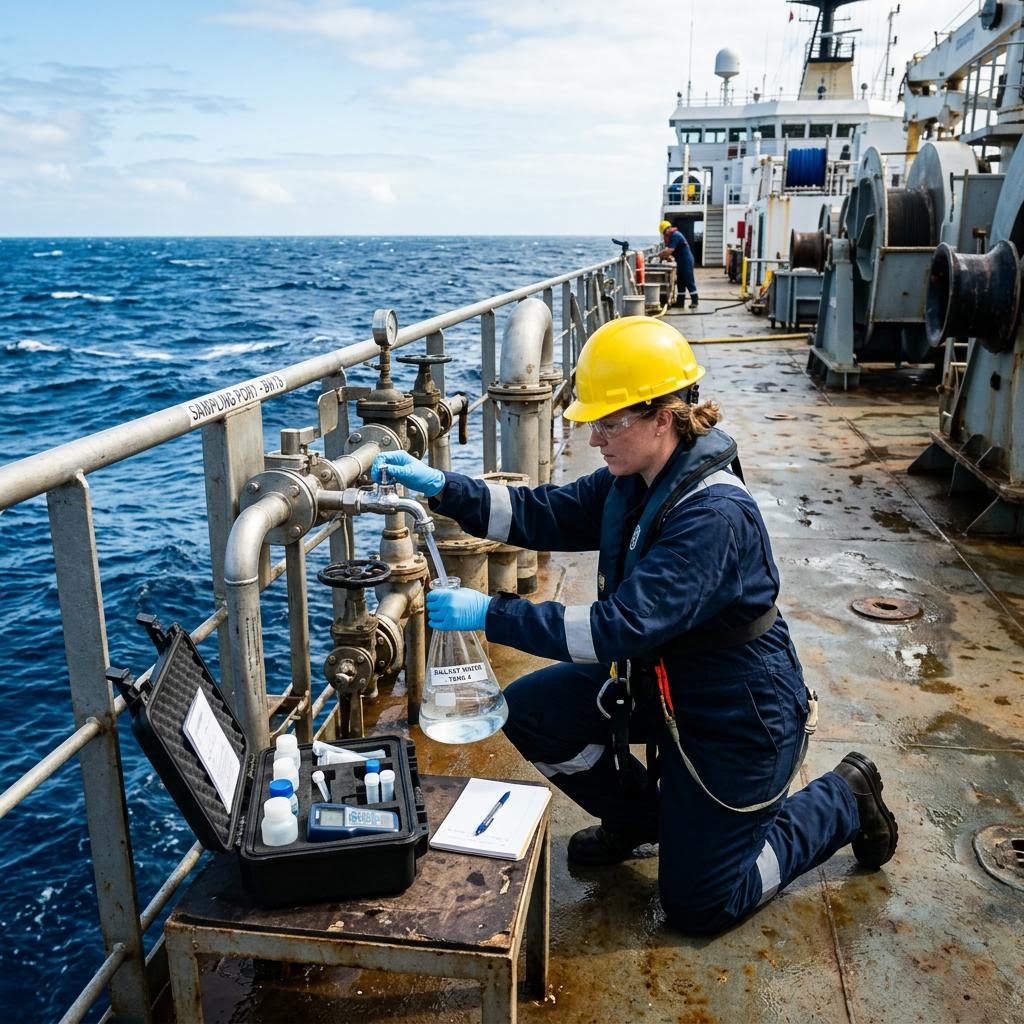
Neither analysis is meaningful without a representative sample. The sample must be drawn from a point that reflects the treated discharge, using a method and equipment that do not damage organisms or bias the result, ideally from a dedicated sampling facility.
Poor sampling can make a compliant discharge look non-compliant or mask a real problem, so the sampling method matters as much as the analytical method. This is true for indicative checks and even more so for detailed analysis, where samples must also survive handling and transport to the laboratory.
Sea Clean supports representative sampling, supplies the reagents and test kits for indicative checks, and coordinates the logistics so detailed samples reach the accredited laboratory in good condition. We are not an accredited testing laboratory; the detailed analysis is performed by the accredited laboratory.
Choosing the Right Route
For routine self-monitoring and quick confidence, indicative analysis is the appropriate tool. For commissioning a new system, resolving a dispute, or any situation needing a legally robust conclusion, detailed analysis by an accredited laboratory is required.
Operators should plan for both: keep reagents and indicative test kits aboard for screening, and know how to arrange detailed analysis with accredited parties when it is needed. Treating the quick screen as a substitute for the definitive test, or vice versa, leads to either false confidence or unnecessary delay.
Sea Clean can supply indicative test kits and reagents and coordinate detailed sampling with accredited laboratories and authorised parties. Send the vessel name, IMO number and requirement to post@seaclean.no to discuss the right route for a given call.
Frequently asked questions
Can an indicative result prove compliance on its own?
No. Indicative analysis is a screening tool that indicates whether a discharge is broadly likely to comply. Definitive proof against the D-2 numeric limits requires detailed analysis by an accredited laboratory.
When is detailed analysis required?
Detailed analysis is used for commissioning testing under MEPC.325(75), for resolving a disputed PSC result, and wherever a legally robust conclusion is needed. It is performed and certified by an accredited laboratory.
How does Port State Control use indicative analysis?
Inspectors may run a rapid indicative screen during a call. A clear pass can keep the call moving, while a fail or borderline result, or other evidence, typically triggers escalation to detailed laboratory analysis rather than a final judgement.
What does Sea Clean provide for these analyses?
Sea Clean supplies indicative test kits and reagents, supports representative sampling, and coordinates the logistics for detailed samples to reach an accredited laboratory. We are not an accredited testing laboratory and do not perform the detailed analysis.
Sources
Related articles
- Indicative Analysis Methods for Ballast Water
- Detailed Ballast Water Analysis in an Accredited Laboratory
- Ballast Water Commissioning Testing: What Happens On Board
- Ballast Water and Port State Control Inspections
- USCG Ballast Water Compliance for Ships Calling the United States
- The US EPA VGP and VIDA Framework for Ballast Water