Total Residual Oxidant (TRO) Monitoring and Neutralisation
Updated
Total residual oxidant, or TRO, is the parameter that controls oxidising ballast water treatment systems and proves the discharge has been neutralised. This article explains what TRO is, how it is generated and measured, why neutralisation with sodium thiosulfate matters, and the discharge limits involved. It describes the role of TRO sensors and handheld test kits and how Sea Clean AS supplies reagents, kits and parts, while accredited parties remain responsible for certified compliance analysis.
Key takeaways
- TRO measures the oxidising chemicals in water and is the control parameter for electrochlorination and chemical-dosing BWTS.
- Oxidant is generated to disinfect, then neutralised before discharge because chlorine residuals harm marine life.
- Sodium thiosulfate is the common neutraliser; the discharge-side analyser confirms TRO is below the permitted limit.
- Handheld TRO kits give a rapid indicative check but do not measure organism viability for a full D-2 result.
- TRO analysers drift and foul, so calibration against a manual kit and reagent management keep readings reliable.
- Sea Clean supplies neutraliser, kits, analyser reagents and parts, and coordinates detailed analysis with accredited parties.
What TRO Is and Why It Is Used
Total residual oxidant is a measure of the oxidising chemicals present in water after a treatment process that uses chlorine or other oxidants. In electrochlorination and chemical-injection ballast water treatment systems, oxidant is generated to kill organisms, and TRO is the practical way to confirm that enough oxidant is present to disinfect and, later, that it has been removed before discharge.
TRO is convenient because it can be measured quickly and continuously, unlike organism counts which require laboratory work. It serves as a surrogate: an adequate, controlled oxidant level during treatment supports disinfection, and a low residual at discharge shows the water will not harm the receiving environment.
Because TRO is central to how oxidising systems are controlled and verified, it appears in both the system's own automatic control and in the independent checks that crews and attending parties carry out. Understanding it is essential for anyone operating or servicing an electrochlorination BWTS.
How Oxidant Is Generated and Measured
In an electrochlorination system, seawater is passed through an electrolyser cell where an electric current produces sodium hypochlorite and related oxidants directly from the chloride in the water. The dose is controlled so the treated water carries enough oxidant to disinfect during the holding or treatment period without generating excessive residual.
TRO is measured by an in-line analyser, commonly using a colourimetric reaction with a reagent such as DPD that produces a colour proportional to oxidant concentration, or an equivalent electrochemical method. The analyser feeds the control system so dosing and neutralisation are adjusted automatically as water quality and salinity vary.
Salinity and temperature affect oxidant generation, so low-salinity or cold water can reduce the system's ability to produce oxidant. The monitoring system flags when generation is inadequate, which is one reason TRO trends are worth watching during self-monitoring rather than assuming constant performance.
Neutralisation Before Discharge
Disinfecting water with oxidant is only acceptable if the oxidant is removed before the water is discharged, because chlorine residuals are themselves harmful to marine life. Neutralisation reduces the TRO to a low limit, typically expressed as a maximum allowable discharge concentration set during the system's type approval.
Sodium thiosulfate is the reagent most commonly used to neutralise residual oxidant. It is dosed into the discharge so the TRO falls below the permitted limit, and the system verifies the result with its discharge-side analyser before water goes overboard.
Running out of neutraliser, or dosing it incorrectly, means the vessel either discharges above the residual limit or cannot discharge at all. Maintaining neutraliser stock and confirming the discharge-side TRO reading are therefore core parts of compliant operation, and a manual kit check guards against a faulty discharge sensor.
TRO Limits and Indicative Testing
The maximum allowable discharge concentration of TRO is established for each type-approved system and reflected in its operating limits; the crew operates to that figure rather than choosing their own. For port sampling, oxidant residual is one of the parameters an indicative test can check rapidly on board because it changes quickly after collection.
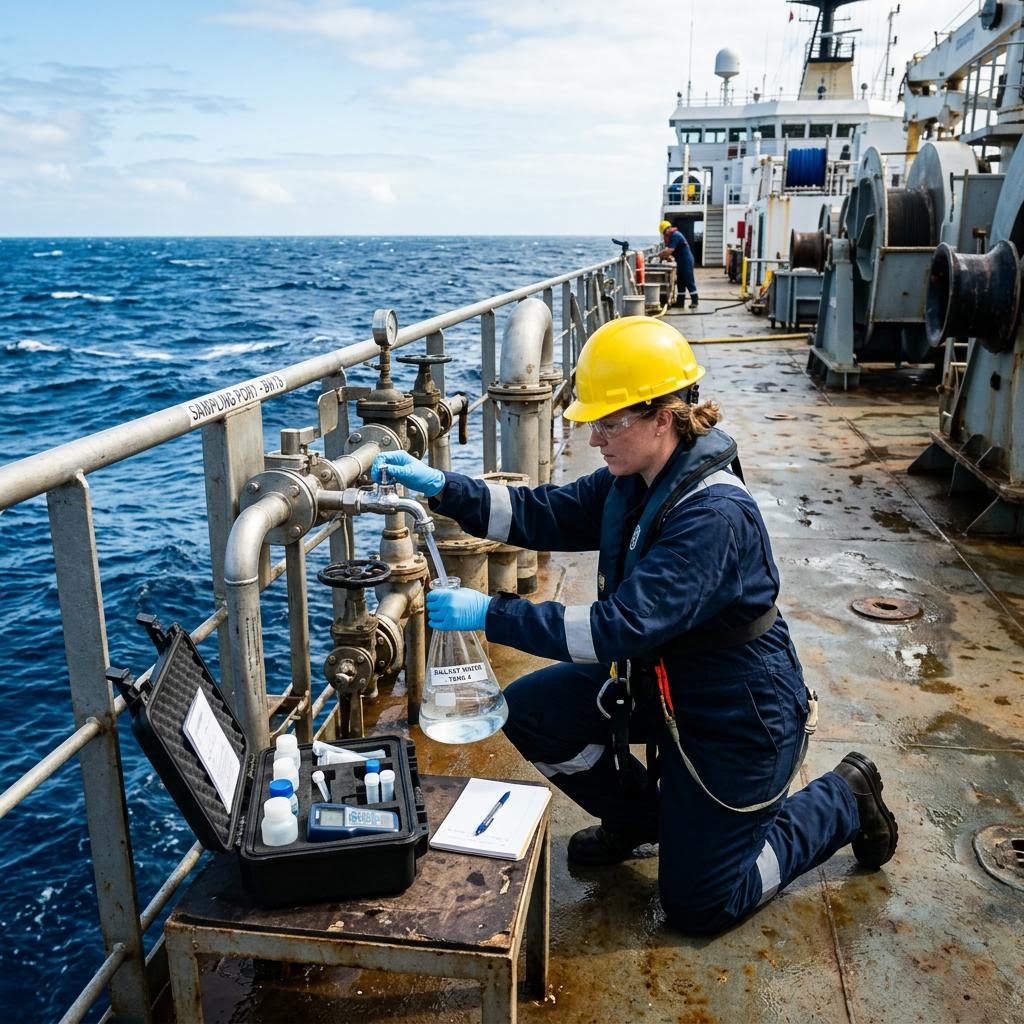
Indicative TRO testing with a handheld kit gives a fast yes-or-no on whether the discharge has been neutralised, which is useful for both self-monitoring and supporting a port state control encounter. It does not, however, measure organism viability, so it is not a complete D-2 compliance result on its own.
Where a detailed compliance assessment is needed, organism analysis is carried out by an accredited laboratory. Sea Clean supplies the TRO kits and reagents used for indicative checks and coordinates with accredited laboratories and authorised parties for detailed analysis; Sea Clean does not certify the analytical result itself.
Sensor Calibration and Common Faults
TRO analysers drift and foul over time, so calibration and verification keep them trustworthy. A manual TRO measurement compared against the in-line analyser shows whether the sensor is reading correctly; a persistent discrepancy means the analyser needs calibration or servicing.
Common faults include reagent depletion in colourimetric analysers, blocked sample lines, fouled optics or electrodes, and degraded reagent that gives false readings. Because the analyser controls dosing and neutralisation, an unreliable sensor can cause either under-treatment or excess residual at discharge.
Sea Clean supplies analyser reagents, spare sensors and parts, and provides engineer attendance for calibration and fault rectification on Headway OceanGuard systems and, on an independent basis, other oxidising BWMS. Keeping calibration current avoids both compliance failures and unnecessary chemical use.
How Sea Clean Supports TRO Monitoring
Sea Clean supplies sodium thiosulfate neutraliser, TRO test kits and analyser reagents, plus genuine Headway parts and multi-brand spares including TRO sensors, dosing components and electrolyser parts. Reliable reagent supply is the foundation of both neutralisation and accurate monitoring.
We advise on shelf life and storage so reagents perform as expected, and we plan replenishment around the vessel's schedule so neutraliser and test reagent do not run short between port calls. For faults, we provide parts and engineer attendance to restore correct TRO control.
For commissioning or recommissioning testing where TRO and organism analysis are required, Sea Clean coordinates sampling support and attendance in cooperation with accredited laboratories and authorised parties. To arrange supply or support, send the vessel name, IMO number, BWMS model and requirement to post@seaclean.no.
Frequently asked questions
What does TRO stand for and why does it matter?
TRO stands for total residual oxidant, a measure of the oxidising chemicals in water after treatment. It matters because it confirms enough oxidant is present to disinfect during treatment and that the residual has been neutralised below the permitted limit before discharge.
Why is sodium thiosulfate used in ballast water systems?
Sodium thiosulfate neutralises residual oxidant so the discharged water does not carry harmful chlorine residuals. It is dosed into the discharge until the TRO falls below the maximum allowable concentration set during the system's type approval, which is then verified by the discharge-side analyser.
Can a TRO test prove D-2 compliance on its own?
No. A TRO test confirms oxidant generation and neutralisation but does not measure organism viability. A full D-2 assessment requires organism analysis carried out by an accredited laboratory; the TRO check is an important but partial indicator.
How is a TRO sensor kept accurate?
By regular calibration and by comparing the in-line analyser against a manual TRO kit measurement. A persistent discrepancy means the sensor needs calibration or service. Reagent depletion, fouled optics or electrodes and degraded reagent are common causes of inaccurate readings.
Sources
Related articles
- Routine Self-Monitoring of a Ballast Water Treatment System
- BWTS TRO Sensor Calibration and Verification
- Indicative vs Detailed Ballast Water Analysis
- Sunrui BalClor BWTS Service and Support
- VGP Analytes and Monitoring Requirements for Ballast Water
- USCG Ballast Water Compliance for Ships Calling the United States