Indicative Analysis Methods for Ballast Water
Updated
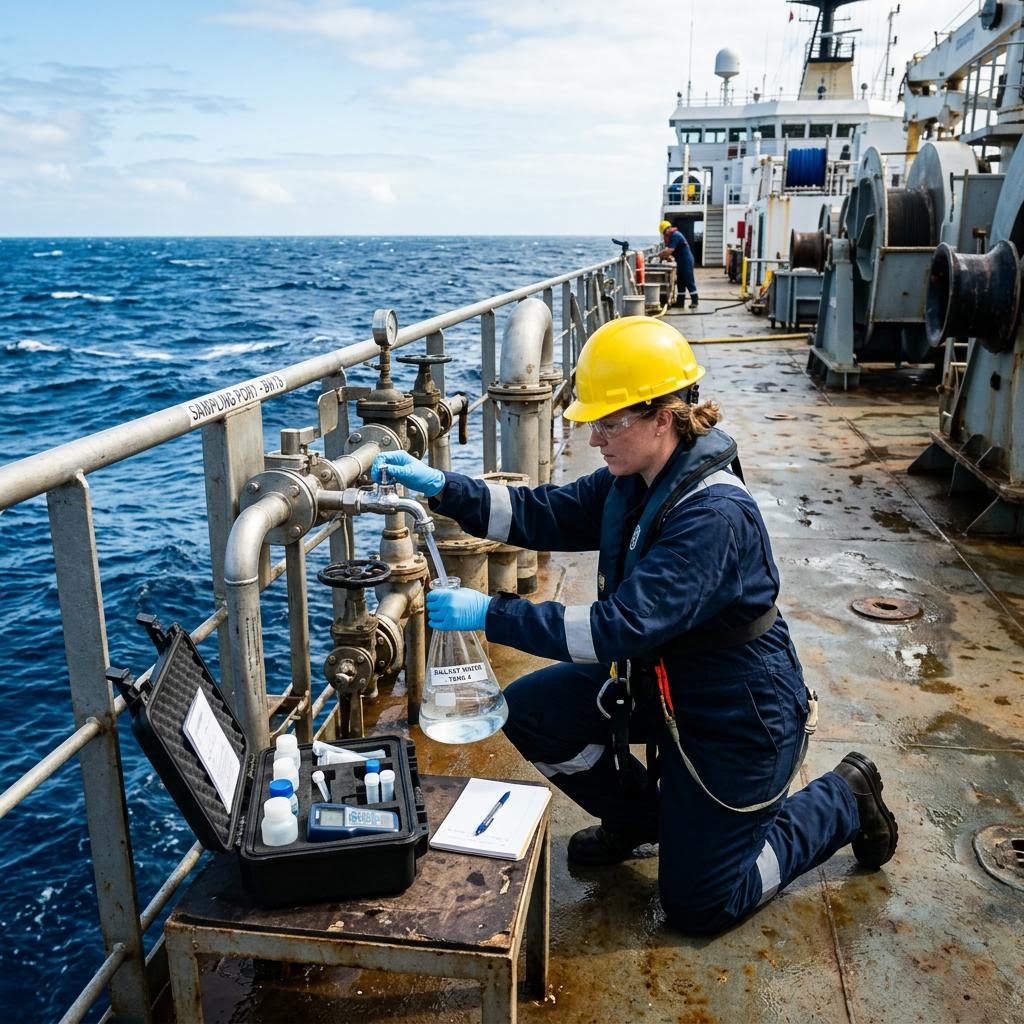
Indicative analysis methods give a rapid on-board indication of whether a ballast water discharge is broadly likely to meet the D-2 standard, using techniques such as fluorometry, ATP measurement and motility-based viability checks. This article explains how the main methods work, what each measures, their strengths and limits, and how Sea Clean AS supplies reagents and supports on-board screening while detailed analysis stays with accredited laboratories.
Key takeaways
- Indicative methods give rapid on-board screening but do not certify compliance to the D-2 standard.
- Fluorometry estimates viable photosynthetic organisms via chlorophyll or stain fluorescence.
- ATP and enzyme methods indicate total living biomass or metabolic activity within minutes.
- Motility and vital-stain methods target organism viability directly, including the larger size class.
- TRO testing confirms oxidant dosing and neutralisation for oxidant-based treatment systems.
- Sea Clean supplies reagents and kits and supports screening while detailed analysis stays with accredited labs.
The Role of Indicative Methods
Indicative analysis methods are screening tools designed to give a fast, approximate answer to whether a discharge is broadly within or outside the D-2 limits. They trade the precision of laboratory analysis for speed and portability, producing a result in minutes on board or at the quay.
These methods support three uses: routine self-monitoring by the crew, rapid screening by Port State Control inspectors, and a first check before deciding whether to escalate to detailed analysis. None of them, on its own, definitively proves compliance to the legal numeric standard.
Because they are screening tools, indicative methods are most usefully treated as early-warning instruments. A clear pass gives confidence the system is working; a fail or borderline result is a prompt to investigate or to arrange detailed analysis.
Fluorometry
Fluorometry measures the natural fluorescence of chlorophyll and related pigments in photosynthetic organisms, or the fluorescence of stains applied to indicate viability. Because living phytoplankton fluoresce when excited by specific light wavelengths, a fluorometer can estimate the concentration of viable photosynthetic organisms in a sample.
Portable fluorometers are widely used for rapid ballast water screening because they are quick, require little sample preparation, and give a numeric read that can be compared against a threshold. Some instruments use variable fluorescence techniques to distinguish active, viable cells from dead material.
The limit is that fluorometry primarily addresses photosynthetic organisms and is an indicative estimate, not a direct count of all viable organisms across the D-2 size classes. It is a strong screening signal but does not replace microscopy-based detailed analysis.
ATP and Enzyme-Based Methods
Adenosine triphosphate (ATP) is present in all living cells, so measuring ATP gives an indication of total living biomass in a sample. ATP-based test kits use a luminescent reaction that produces light in proportion to the ATP present, read by a portable luminometer within minutes.
Enzyme-activity methods work on a similar principle, detecting metabolic activity as a proxy for viability. Both approaches give a rapid, broad indication of whether living organisms are present at concentrations that suggest a problem, across a wider range of organism types than fluorometry alone.
Their limit is that they measure aggregate biomass or activity rather than counting organisms in the specific D-2 size classes. A high reading flags a likely problem and a low reading gives confidence, but the definitive size-classified count comes from detailed analysis.
Motility and Stain-Based Viability
Motility-based methods observe whether organisms are moving, using portable microscopy or imaging, since movement is a direct sign of viability for many zooplankton-sized organisms in the larger D-2 class. Stain-based methods apply vital stains that change colour or fluorescence depending on whether a cell is alive.
These approaches target organism viability directly, which is the property the D-2 standard cares about, and can give a useful read on the larger size class that fluorometry does not address well. They require some skill and clean technique to perform reliably on board.
As with the other indicative methods, the result is a screen rather than a certified count. Borderline or failing reads should be confirmed by detailed analysis at an accredited laboratory before drawing firm conclusions.
TRO and Operating Checks
For oxidant-based treatment systems, measuring total residual oxidant (TRO) is an essential operating check that complements organism-focused indicative methods. TRO confirms that oxidant was dosed and, critically, that it has been neutralised to a safe level before discharge, which is both an environmental and a treatment-performance indicator.
TRO test kits using colorimetric reagents give a rapid read of oxidant concentration, and are used routinely during operation and before discharge. While TRO does not directly count organisms, an out-of-range TRO points to a dosing or neutralisation problem that would affect treatment.
Sea Clean supplies TRO test kits and sodium thiosulfate neutraliser, alongside the reagents for indicative organism checks. Keeping these in date and using them routinely turns indicative analysis into a working self-monitoring routine.
Using Indicative Methods Well
The value of indicative methods comes from using them routinely and correctly: run screens during normal operation, record the results alongside the treatment system logs, and treat a poor read as a prompt to investigate before an inspection finds the problem. Consistent self-monitoring builds an operating record that supports the vessel.
Crews should be trained in the chosen method, keep reagents in date, and understand that a screen is not a certified result. When a definitive answer is needed, detailed analysis by an accredited laboratory is the route.
Sea Clean supplies the reagents and test kits for indicative screening and supports the sampling that underpins them. Send the vessel name, IMO number and requirement to post@seaclean.no for reagent supply or to coordinate detailed analysis with accredited parties.
Frequently asked questions
What does fluorometry actually measure in ballast water?
Fluorometry measures the fluorescence of chlorophyll or applied stains to estimate the concentration of viable photosynthetic organisms. It is rapid and useful for screening but primarily addresses photosynthetic organisms rather than all D-2 size classes.
Why is TRO testing part of indicative monitoring?
For oxidant-based systems, TRO testing confirms oxidant was dosed and then neutralised to a safe level before discharge. An out-of-range TRO points to a dosing or neutralisation problem affecting both the environment and treatment performance.
Can indicative methods replace laboratory analysis?
No. Indicative methods are screening tools. A definitive, size-classified count of viable organisms to the D-2 standard requires detailed analysis at an accredited laboratory. Borderline or failing screens should be confirmed by detailed analysis.
What does Sea Clean supply for indicative testing?
Sea Clean supplies TRO test kits, sodium thiosulfate neutraliser and reagents for indicative organism checks, and supports the sampling that underpins them. We are not an accredited testing laboratory and do not perform detailed analysis.
Sources
Related articles
- Indicative vs Detailed Ballast Water Analysis
- Fluorometry for Rapid Ballast Water Screening
- Total Residual Oxidant (TRO) Monitoring and Neutralisation
- Routine Self-Monitoring of a Ballast Water Treatment System
- Measuring Organism Viability in Ballast Water
- USCG Ballast Water Compliance for Ships Calling the United States