Detailed Ballast Water Analysis in an Accredited Laboratory
Updated
Detailed ballast water analysis is the definitive assessment of a discharge against the D-2 standard, performed by an accredited laboratory operating to ISO/IEC 17025 using microscopy and viability techniques. This article explains how detailed analysis works, why sample handling is critical, where it fits in commissioning and dispute resolution, and how Sea Clean AS coordinates and supports the process without itself performing the analysis.
Key takeaways
- Detailed analysis is the definitive D-2 assessment, performed by an ISO/IEC 17025 accredited laboratory.
- D-2 sets per-class limits for ≥50 µm and 10 to <50 µm organisms plus microbial indicators.
- Analysis counts viable organisms, distinguishing living from dead material, not mere presence.
- Sample handling, temperature and time-to-analysis can decide the result before it reaches the bench.
- Detailed analysis underpins commissioning testing and the resolution of disputed PSC results.
- Sea Clean coordinates and supports the process but does not itself perform or certify the analysis.
What Detailed Analysis Is For
Detailed analysis is the definitive, legally robust assessment of whether a ballast water discharge meets the D-2 numeric limits. Where indicative analysis screens quickly and approximately, detailed analysis quantifies viable organisms precisely and traceably, which is why it underpins commissioning testing and the resolution of disputed results.
It is performed by an accredited laboratory operating to the ISO/IEC 17025 standard for testing laboratories, which establishes the competence, traceability and quality control behind the result. This accreditation is what gives the detailed analysis its standing with flag administrations, class and Port State Control.
Because detailed analysis is slower and more demanding than a quick screen, it is used where a definitive conclusion is genuinely needed rather than for routine confirmation. Commissioning a new system under MEPC.325(75) is the most common trigger.
The D-2 Size Classes and Indicators
The D-2 standard sets numeric limits across two organism size classes and several microbial indicators. The larger class covers organisms greater than or equal to 50 micrometres in minimum dimension, the smaller class covers organisms from 10 to less than 50 micrometres, and there are separate limits on indicator microbes such as toxicogenic Vibrio cholerae, Escherichia coli and intestinal enterococci.
Detailed analysis assesses each of these against the limits, counting viable organisms in the size classes and culturing or testing for the microbial indicators. The result is a per-class verdict, not a single number, so a discharge must satisfy every limit to pass.
Crucially, viability is what is counted: the analysis distinguishes living organisms capable of reproduction from dead or non-viable material, because the D-2 standard is about preventing the transfer of living organisms, not all particles.
Laboratory Methods
For the larger size class, laboratories typically concentrate the sample and use microscopy with movement observation or vital staining to count viable organisms. For the 10 to less than 50 micrometre class, methods include microscopy with fluorescent vital stains and techniques that distinguish living from dead cells, sometimes supported by variable fluorescence.
Microbial indicators are assessed by culture-based or equivalent methods to determine concentrations against the limits. Each method follows defined protocols with quality control, calibration and traceability, which is part of what the ISO/IEC 17025 accreditation governs.
The combination of methods produces a documented, defensible result for each D-2 parameter. The laboratory, not the ship or any support provider, performs and certifies this analysis.
Why Sample Handling Decides the Result
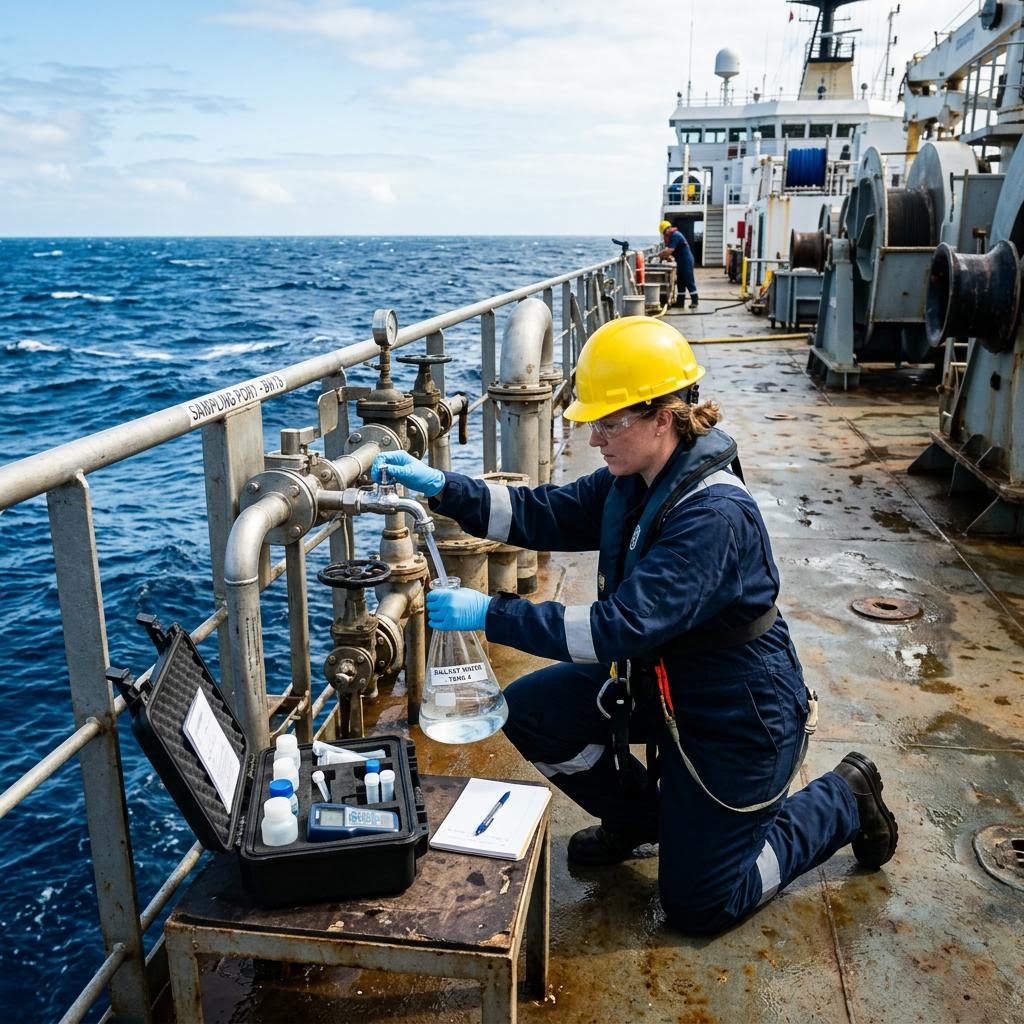
A detailed analysis is only as good as the sample it receives. The sample must be representative of the treated discharge, drawn from an appropriate point using equipment that does not damage organisms, and then handled, stored and transported under conditions that keep organisms in the state they were in at discharge.
Temperature control, time-to-analysis, protection from light, and avoidance of mechanical stress all affect organism viability between sampling and the laboratory bench. A sample that is mishandled can make a compliant discharge appear non-compliant, or vice versa, regardless of how good the laboratory is.
This is why coordination between the sampling, the logistics and the laboratory matters as much as the analysis itself. Getting a representative sample to the accredited laboratory in good condition is a logistics task that has to be planned.
Where It Fits in Compliance
Detailed analysis is the basis for commissioning testing under MEPC.325(75), where it confirms a newly installed system meets D-2 in service. It is also the route to resolving a disputed Port State Control result, since a definitive accredited-laboratory analysis carries the weight to confirm or overturn an indicative screen.
For routine operation, vessels rely on indicative self-monitoring rather than detailed analysis, reserving the laboratory route for commissioning, disputes and specific verification needs. Understanding this keeps the slower, costlier detailed analysis focused where it adds value.
A passing detailed result becomes part of the vessel's compliance file, supporting the ballast water certificate and demonstrating to authorities that the system performs to standard.
How Sea Clean Supports the Process
Sea Clean coordinates and supports detailed analysis in cooperation with accredited laboratories and authorised parties. We help arrange the attendance, support representative sampling, supply in-date reagents and sampling consumables, and coordinate the logistics so the sample reaches the laboratory in good condition.
We are not an accredited testing laboratory and do not perform or certify detailed analysis; that is the role of the accredited laboratory operating to ISO/IEC 17025. Our contribution is the practical coordination and on-board support that makes the test happen reliably.
For commissioning, dispute resolution or verification, send the vessel name, IMO number, system details and intended timing to post@seaclean.no. Early coordination with the accredited parties is the main factor in a clean, conclusive result.
Frequently asked questions
What makes detailed analysis definitive?
It is performed by an accredited laboratory operating to ISO/IEC 17025, which governs competence, traceability and quality control. It quantifies viable organisms across the D-2 size classes and microbial indicators, producing a documented, defensible result.
Why does sample handling matter so much?
A detailed result is only as good as the sample. Representative sampling and controlled temperature, time and handling keep organisms in the state they were at discharge. Mishandling can make a compliant discharge appear non-compliant or vice versa.
When is detailed analysis used instead of a quick screen?
Detailed analysis is used for commissioning testing under MEPC.325(75), for resolving a disputed PSC result, and for specific verification needs. Routine confirmation relies on indicative self-monitoring rather than the laboratory route.
Does Sea Clean run the laboratory analysis itself?
No. Sea Clean is not an accredited testing laboratory. We coordinate and support sampling, supply reagents and consumables, and handle logistics so samples reach the accredited laboratory, which performs and certifies the analysis.
Sources
Related articles
- Indicative vs Detailed Ballast Water Analysis
- Accredited Laboratories and Authorised Parties in Ballast Water Testing
- Ballast Water Commissioning Testing: What Happens On Board
- Measuring Organism Viability in Ballast Water
- Indicative Analysis Methods for Ballast Water
- USCG Ballast Water Compliance for Ships Calling the United States