Ballast Water and Port State Control Inspections
Updated
Port state control (PSC) is where a vessel's ballast water compliance is tested in practice, through document checks, equipment inspection and, increasingly, sampling. This article explains the stages of a ballast water PSC inspection, from documents to indicative and detailed sampling, and what can trigger an escalation or detention. It describes how Sea Clean AS helps vessels prepare and respond, supplying reagents, parts and engineer attendance, with accredited parties responsible for any certified analysis.
Key takeaways
- Ballast water is now a standard PSC item, starting with documents and escalating to inspection and sampling if needed.
- The initial check covers the IBWM Certificate, management plan, type approval and the ballast water record book.
- Inconsistent records, expired certificates and unexplained bypasses are common triggers for deeper inspection.
- Indicative sampling screens rapidly; detailed sampling sends a sample to an accredited laboratory for certified counts.
- Confirmed non-compliance can lead to detention until the system is repaired, re-verified and accepted.
- Sea Clean supplies reagents, parts and engineer attendance to prepare for PSC and rectify findings.
How Ballast Water Fits Into PSC
Port state control is the inspection of foreign ships in national ports to verify they meet international requirements, carried out by officers acting under regional PSC agreements and national law. Since the BWM Convention entered into force, ballast water management has become a standard item in these inspections alongside safety and pollution-prevention checks.
A ballast water PSC inspection typically begins with documents and an initial check of the management system, and only escalates to sampling if the officer has grounds for concern or under a targeted campaign. Understanding this progression helps a crew present the right evidence at each stage.
The consequences range from a recorded deficiency with a deadline to rectify, through to detention if the officer judges the vessel unfit to proceed. Ballast water deficiencies are increasingly common findings, which makes preparation worthwhile.
The Initial Document Check
The first stage is documentary. The officer checks the International Ballast Water Management Certificate, the approved Ballast Water Management Plan, the type-approval documentation for the fitted BWMS, and the Ballast Water Record Book entries against the vessel's recent ballast operations.
Inconsistencies are a common trigger for deeper inspection: record book entries that do not match the voyage, missing entries, an expired certificate, or a management plan that does not reflect the equipment actually fitted. A tidy, accurate and internally consistent set of documents reduces the likelihood of escalation.
The officer also looks for evidence that the crew understands and operates the system, including records of commissioning testing where applicable and routine self-monitoring. Documents that show a system in regular, monitored use are more convincing than a certificate alone.
Inspecting the System and Crew Familiarity
If the documents prompt further checking, the officer may inspect the BWMS itself and question the crew on its operation. This can include confirming the system is installed and functional, reviewing alarm and operating logs, and checking that the crew can describe how they treat, monitor and discharge ballast water.
Bypass arrangements draw particular attention. The officer wants to see that any bypass is properly controlled and recorded, and that the system is not being routinely bypassed in a way that defeats the purpose of treatment. Repeated unexplained bypasses or treatment interruptions in the logs are a warning sign.
Crew familiarity matters because a working system operated by a crew who cannot explain it raises doubt. Clear procedures, accessible records and a crew confident in the system's operation all support the vessel's position during this stage.
Indicative and Detailed Sampling at PSC
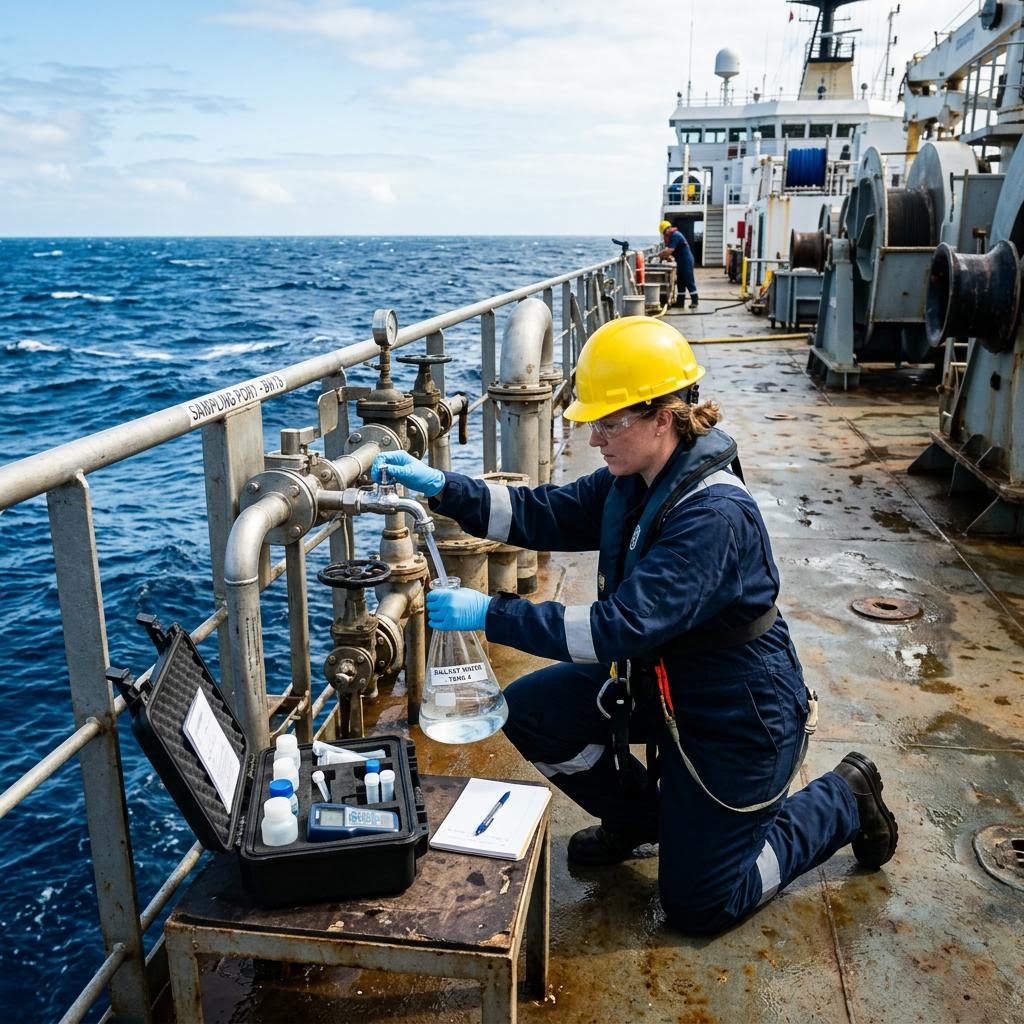
Where concern persists, or under a concentrated inspection campaign, the officer may take or arrange a sample. Indicative sampling gives a rapid on-board screen, often of oxidant residual or living-organism indicators, to decide whether the discharge is broadly compliant or clearly not.
An indicative result suggesting non-compliance can lead to detailed sampling, where a sample is sent to an accredited laboratory for the certified organism counts the D-2 standard requires. The detailed result is the authoritative measure and carries more weight than the indicative screen.
It is important to understand that PSC sampling is performed under the authority of the port state, using accredited laboratories or authorised parties for detailed analysis. Sea Clean is not the testing authority; it supports the vessel by ensuring the system, reagents and documentation are in order so a sample is more likely to pass.
Deficiencies, Detention and Rectification
The outcome of a ballast water PSC inspection depends on what is found. Minor documentary issues may be recorded as deficiencies with a deadline for correction, while a confirmed failure to treat ballast water or a non-compliant discharge can lead to detention until the problem is rectified.
Where the system is faulty, rectification usually means repair, parts replacement and re-verification before the vessel is released, sometimes combined with contingency measures agreed with the port state for the immediate situation. The cost of a detention, in time and reputation, far exceeds the cost of keeping the system maintained.
Sea Clean supports rectification by supplying the parts and engineer attendance needed to restore the system, and by coordinating any re-testing with accredited laboratories or authorised parties. Acting quickly and presenting clear evidence of repair helps shorten a detention.
How Sea Clean Helps With PSC Readiness
Preparation is the strongest defence against a ballast water PSC finding. Sea Clean supplies TRO test kits and reagents so the crew can verify the discharge before arrival, neutraliser to keep the system compliant, and genuine Headway and multi-brand spares to keep equipment functional.
Where a vessel faces an inspection or a deficiency, we provide engineer attendance to diagnose and repair faults and coordinate any certified re-testing with accredited laboratories and authorised parties. For Norway and North Sea ports a technician can typically attend quickly; for other regions, mobilisation is arranged as flights, visas and port access allow.
To prepare for PSC or respond to a finding, send the vessel name, IMO number, port, BWMS type and the nature of the issue to post@seaclean.no. Early engagement gives the greatest chance of avoiding or shortening a detention.
Frequently asked questions
What does port state control check first for ballast water?
The initial check is documentary: the International Ballast Water Management Certificate, the approved management plan, the BWMS type approval and the ballast water record book entries against recent operations. Inconsistencies here are a common trigger for deeper inspection or sampling.
Will PSC always take a ballast water sample?
Not always. Sampling tends to follow when documents or equipment raise concern, or under a targeted inspection campaign. Indicative sampling gives a rapid screen, and a result suggesting non-compliance can lead to detailed sampling analysed by an accredited laboratory.
Can a ballast water issue cause a detention?
Yes. A confirmed failure to treat ballast water or a non-compliant discharge can lead to detention until the problem is rectified and re-verified. Minor documentary issues are more often recorded as deficiencies with a deadline to correct.
How does Sea Clean help with a PSC detention?
Sea Clean supplies the parts and engineer attendance needed to repair the system and coordinates any certified re-testing with accredited laboratories or authorised parties. Sea Clean is not the testing authority but helps restore the system and present clear evidence of repair to shorten a detention.
Sources
Related articles
- Ballast Water Record Book: Entries, Format and PSC Expectations
- Ballast Water Contingency Measures and Non-Compliance
- Rectifying a BWTS-Related PSC Detention
- Ballast Water Commissioning Testing: What Happens On Board
- USCG Ballast Water Compliance for Ships Calling the United States
- The US EPA VGP and VIDA Framework for Ballast Water