The US EPA VGP and VIDA Framework for Ballast Water
Updated
Ballast water discharged in US waters is regulated not only by the US Coast Guard but also under US Environmental Protection Agency permitting, which is moving from the Vessel General Permit toward the Vessel Incidental Discharge Act framework. This article explains how the VGP treats ballast water, what VIDA changes, the monitoring and recordkeeping duties, and how Sea Clean supports sampling and reagent supply alongside accredited laboratories.
Key takeaways
- US ballast water discharge is regulated by the EPA under the Clean Water Act in addition to USCG equipment and management rules.
- The Vessel General Permit set numeric organism limits, residual monitoring and recordkeeping for ballast water discharge.
- VIDA restructures the system so the EPA sets standards and the USCG writes and enforces the implementing regulations.
- VGP conditions continue to apply until the VIDA implementing regulations are fully in force.
- Compliance depends on demonstrating both the biological standard and any chemical residual limit through monitoring and sampling.
- Sea Clean supplies reagents and supports sampling but is not an accredited laboratory; accredited parties certify detailed analysis.
Why the EPA Regulates Ballast Water Too
In the United States, ballast water discharge is treated as a pollutant discharge under the Clean Water Act, which brings it within the US Environmental Protection Agency's permitting authority. This is why a vessel can face two overlapping federal regimes at once: the US Coast Guard's equipment and management rules, and the EPA's discharge permitting. Both apply within US waters out to the relevant limit.
Historically the EPA covered ballast water through the Vessel General Permit, a national permit for discharges incidental to the normal operation of commercial vessels. The VGP set effluent limits, monitoring obligations and recordkeeping for a long list of discharge types, ballast water among them. Compliance was a condition of lawfully operating in US waters, separate from anything the Coast Guard required.
The framework is now transitioning under the Vessel Incidental Discharge Act, which is intended to replace the permit-based approach with uniform national standards and a clearer division of roles between the EPA and the Coast Guard. During the transition the existing VGP conditions continue to apply until the new standards and implementing regulations take full effect.
How the VGP Treats Ballast Water
Under the Vessel General Permit, ballast water discharge is subject to a numeric effluent limit aligned with the IMO D-2 and USCG living-organism standard, plus management practices covering uptake, exchange where relevant, and treatment system operation. The permit also addresses biocide residuals for systems that use active substances, recognising that treated water must be safe to discharge as well as biologically compliant.
The VGP requires functional monitoring of the treatment system and, for systems using chemicals, monitoring of residual levels such as total residual oxidant before discharge. This is where onboard TRO measurement and neutralisation become a permit issue and not just a process control matter. Crews must be able to show that discharged water met both the organism standard and any residual limit.
Recordkeeping under the VGP covers system operation, monitoring results, maintenance and any corrective action, retained on board and available to inspectors. The records have to be consistent with the vessel's other ballast documentation. Sea Clean supplies the TRO test kits and sodium thiosulfate neutraliser used in this residual monitoring, helping crews keep electrochlorination and similar systems within permit limits.
What VIDA Changes
The Vessel Incidental Discharge Act restructures the system so that the EPA sets national discharge standards of performance and the US Coast Guard develops and enforces the corresponding implementing regulations. The aim is a single, nationally uniform set of requirements that reduces the patchwork of overlapping permit conditions and state variations that grew up under the VGP era.
For ballast water the substantive standard is expected to remain closely aligned with the existing living-organism limits, so the practical target for treatment performance does not change dramatically. What changes is the legal vehicle, the enforcement structure and the way monitoring and reporting obligations are framed. Operators should track the rollout because effective dates and detailed requirements are set in the implementing regulations.
Until the VIDA implementing regulations are fully in force, the Vessel General Permit conditions continue to govern, so vessels must keep meeting VGP monitoring and recordkeeping duties. Sea Clean keeps operators informed of where they sit in the transition and ensures sampling and reagent support matches the requirements actually in effect for a given call.
Monitoring, Residuals and Sampling
EPA-style compliance leans on the ability to demonstrate that discharged ballast met both the biological standard and any chemical residual limit. For treatment systems that generate oxidants, this means measuring total residual oxidant and, where needed, dosing neutraliser so the discharge is within limits. Accurate, in-date reagents and a working sensor are essential for these checks to mean anything.
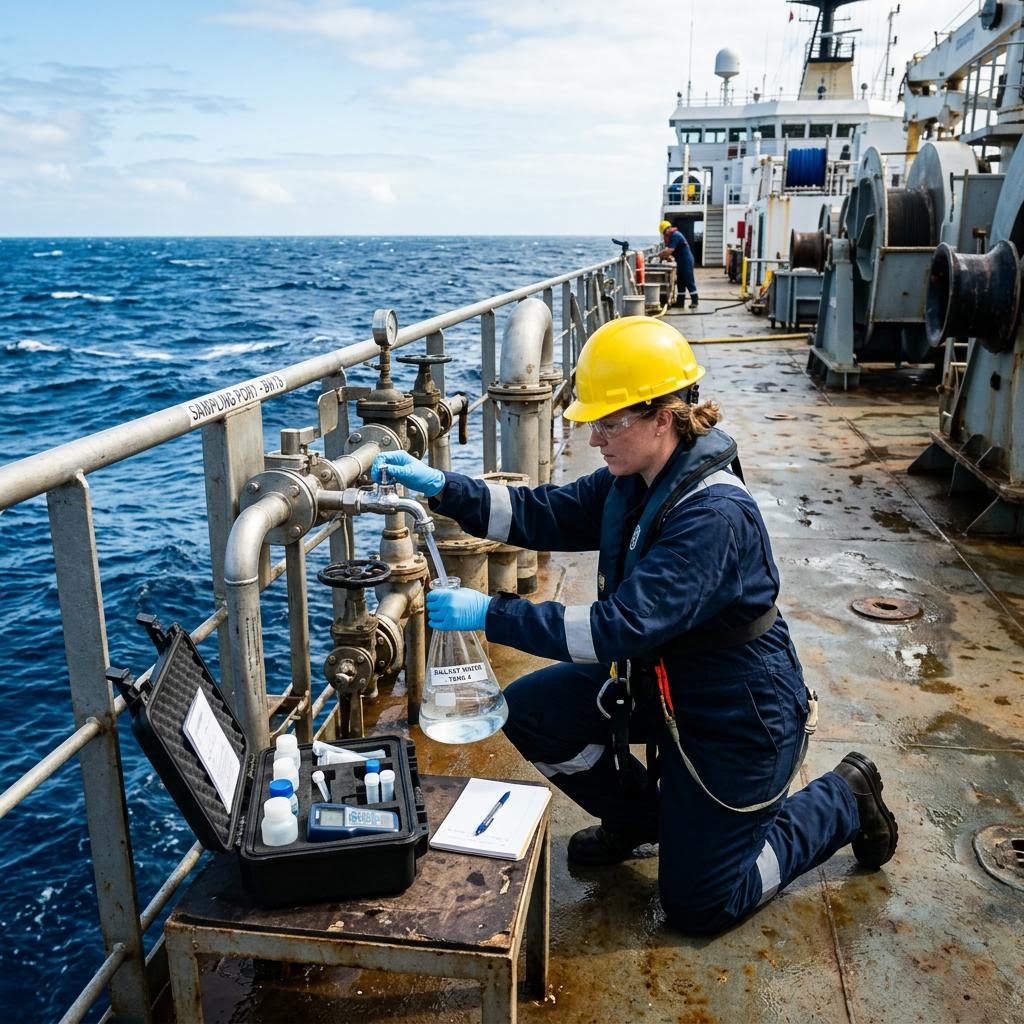
Biological performance is assessed through sampling, where indicative analysis gives a rapid screening indication on board and detailed analysis in an accredited laboratory provides defensible organism counts. The EPA framework, like the Coast Guard regime, distinguishes between rapid screening and laboratory-grade analysis, and inspectors may use either depending on the situation.
Sea Clean supports representative sampling and supplies the consumables and reagents, while the accredited laboratory or authorised party performs and certifies any detailed analysis. We are not an accredited testing laboratory and do not issue accredited results; our role is to make the onboard sampling and residual monitoring reliable enough that the certified analysis goes smoothly.
Recordkeeping and Inspection Readiness
A vessel trading to the US needs its ballast records, treatment system monitoring data, residual measurements and any corrective-action notes organised and consistent with the Coast Guard documentation. Inspectors from either agency, or under a state's delegated authority, may ask to see this material. Disorganised or contradictory records are a frequent trigger for deeper scrutiny.
Because the EPA and Coast Guard requirements overlap, it is efficient to keep a single coherent ballast water file that satisfies both. The file should reflect the actual installed system, the real sampling points and the procedures the crew follows. A plan or log that describes equipment the vessel does not have undermines the whole record.
Sea Clean helps operators align TRO testing and sampling documentation with the vessel's existing plan and records so the package is internally consistent before a US call. Owners can reach us at post@seaclean.no with the vessel particulars and intended ports to begin coordination ahead of arrival.
How Sea Clean Supports Compliance
Sea Clean is a Norwegian maritime company based in Haugesund and Karmsund with a Rotterdam presence, supplying BWTS spare parts, ballast water reagents and ship chandler stores and providing service and engineer attendance. For EPA-regulated trades our contribution is equipping and preparing the vessel, not certifying its discharges. The certified analysis stays with the accredited laboratory or authorised party.
We supply TRO test kits and sodium thiosulfate neutraliser for residual monitoring, support representative sampling, and coordinate with accredited laboratories where detailed analysis is needed. We also keep operators current on where the VGP to VIDA transition stands so their preparation matches the rules in force.
Engaging early gives time to restock reagents, verify the treatment system is operating within limits and assemble a consistent record set. Contact post@seaclean.no with the vessel name, IMO number and US itinerary to start that process before the ship enters US waters.
Frequently asked questions
How is the EPA's role different from the Coast Guard's?
The EPA regulates ballast water as a discharge under the Clean Water Act, historically through the Vessel General Permit, while the Coast Guard regulates the treatment equipment and ballast management. Under VIDA the EPA sets national discharge standards and the Coast Guard writes and enforces the implementing regulations.
Has VIDA replaced the Vessel General Permit yet?
Not fully. VIDA establishes the framework, but the existing VGP conditions continue to apply until the implementing regulations take full effect. Operators should follow the rollout because effective dates and detailed requirements are set in those regulations.
Why does TRO monitoring matter under the EPA framework?
Treatment systems that generate oxidants must discharge water within both the organism standard and a chemical residual limit. Measuring total residual oxidant and dosing neutraliser where needed demonstrates the discharge is compliant, which is why accurate reagents and a working sensor are essential.
Can Sea Clean issue an EPA-compliant ballast water test result?
No. Sea Clean is not an accredited testing laboratory. We supply reagents and support representative sampling, while accredited laboratories or authorised parties perform and certify any detailed analysis that carries regulatory weight under the EPA framework.
Sources
Related articles
- USCG Ballast Water Compliance for Ships Calling the United States
- California Ballast Water and Biofouling Rules
- Total Residual Oxidant (TRO) Monitoring and Neutralisation
- Indicative vs Detailed Ballast Water Analysis
- EPA VGP and VIDA Ballast Water Rules Explained
- VIDA vs VGP: Key Differences Vessel Operators Must Know