Recommissioning a BWTS After Lay-Up
Updated
A treatment system that has sat idle through a lay-up rarely returns to service without attention. This article covers what degrades during lay-up, the inspection and renewal a recommissioning needs, the function and compliance checks before trading resumes, and how Sea Clean AS supports reactivation with parts, reagents and engineer attendance.
Key takeaways
- During lay-up reagents and electrolytes expire, seals dry, cells scale and UV lamps age even when unlit.
- Recommissioning is an inspection and renewal exercise, not just a power-up.
- Sensors usually need calibration or verification and consumable renewal before a valid function test.
- Electrochlorination cells and UV lamps must be checked and serviced because output cannot be assumed after storage.
- Sea Clean supplies in-date reagents, sensors, lamps and parts, genuine for Headway and sourced independently for other makers.
- Whether a fresh commissioning test is required depends on flag and class; Sea Clean coordinates it with accredited parties.
What Happens to a BWTS in Lay-Up
During a lay-up the treatment system is usually drained or left static, and components that depend on regular operation begin to degrade. Reagents and sensor electrolytes have shelf lives and expire; seals and gaskets dry out or set; electrochlorination cells can scale or passivate; and UV lamps lose output with age even when not lit. The longer and less controlled the lay-up, the more attention recommissioning needs.
Electrical and control equipment can suffer from condensation and corrosion in an unheated space, and stagnant water left in pipework or the treatment unit can foul or corrode internal surfaces. A system shut down properly with a documented lay-up plan recovers far more easily than one simply switched off and forgotten.
Recommissioning is therefore an inspection and renewal exercise, not just a power-up. Assuming the system will work because it worked before lay-up is the common mistake that leads to a failed function test or, worse, a finding at the first port after return to service.
Inspection on Reactivation
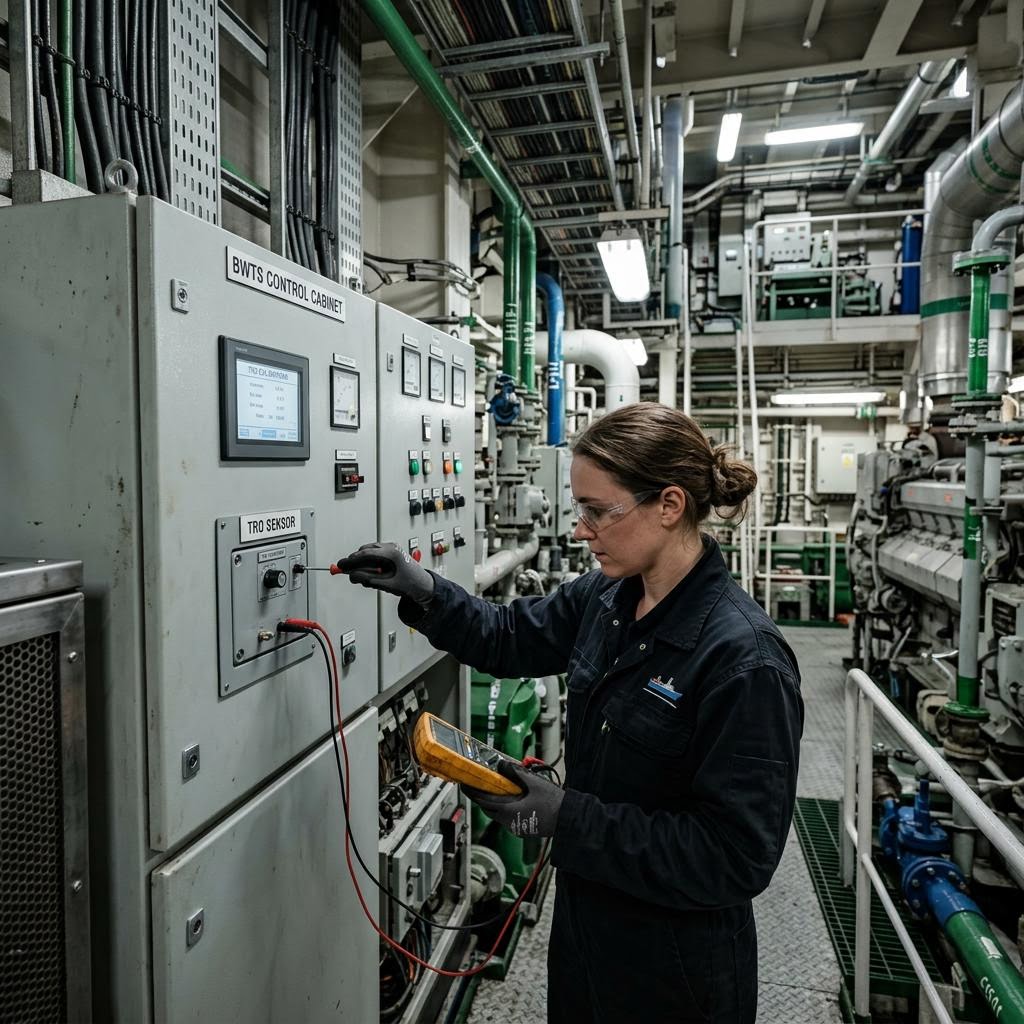
Recommissioning starts with a visual and functional inspection of the whole system: the filter and its backflush mechanism, the treatment unit, sensors, control cabinets, valves and pipework. Signs of corrosion, scaling, dried seals, water ingress in cabinets and pest or salt damage are noted, and any drained sections are checked before water is reintroduced.
Electrical insulation and earthing should be verified before energising control and power equipment, particularly after a long lay-up in a damp space. Sensors are checked for physical condition and electrolyte state, and consumables are inspected for expiry. This inspection defines the parts and reagents the recommissioning will need.
An accurate inspection prevents both wasted effort and missed faults. It lets the right components be ordered before the function test, so the recommissioning is a single coordinated event rather than a series of false starts as faults appear one by one.
Sensor, Cell and Lamp Attention
TRO and UV intensity sensors usually need calibration or verification after lay-up, and TRO sensor electrolytes and reagents often need renewal if they have expired. A sensor reading incorrectly will either mask a real problem or trip false alarms, so getting the measurement chain right is central to a valid recommissioning.
Electrochlorination cells should be inspected for scaling and passivation and cleaned or serviced as needed before output is verified; a cell that cannot make its rated oxidant will fail to meet the treatment standard. UV systems need lamp and quartz sleeve condition checked, with lamps replaced if they are near end of life, because output cannot be assumed after storage.
Sea Clean supplies the sensors, sensor consumables, cell-cleaning support, UV lamps and quartz sleeves needed, with genuine parts for Headway OceanGuard as the authorized Headway agent and sourced parts for Techcross, Erma First, Sunrui and other makers on an independent basis.
Reagent and Consumable Renewal
Reagents and consumables are among the first things to expire in lay-up. TRO test kit reagents, sensor electrolytes and sodium thiosulfate neutraliser all have shelf lives, and using expired stock produces unreliable readings and weak neutralisation. Filter elements and seals exposed during lay-up may also need renewal.
Sea Clean supplies in-date TRO test kits, sodium thiosulfate neutraliser and other consumables, labelled for the receiving vessel with attention to shelf life so the recommissioned system starts with reliable stock. Renewing consumables as part of recommissioning, rather than discovering them expired at the first ballast operation, keeps the return to service clean.
Establishing a fresh spares and reagent holding at recommissioning also resets the planned maintenance position, so the system enters trading with a known baseline rather than an unknown inheritance from before the lay-up.
Function Test and Compliance Check
Once inspected and renewed, the system is function-tested: the filter and backflush, the treatment unit, the sensors, the alarms and the full ballast and de-ballast sequence are run and verified. The aim is to confirm the system operates as intended and that the measurement chain reports correctly before the vessel relies on it in service.
Whether a fresh commissioning test under MEPC.325(75) is required depends on the flag, class and the circumstances of the lay-up; where it is, representative discharge sampling and accredited analysis apply. Sea Clean is not an accredited testing laboratory and does not hold testing accreditation; it coordinates and supports such testing with accredited laboratories and authorised parties, who certify the analysis.
A documented recommissioning, with the function-test results and any sampling, gives the operator evidence that the system is fit for service and supports the vessel at its first ports after return to trading.
Planning Recommissioning With Sea Clean
Recommissioning is most efficient when planned against the lay-up records: knowing how long the system was idle, how it was shut down and what its condition was lets the likely parts and reagents be staged before attendance. The vessel particulars, system make and model and the planned reactivation date allow Sea Clean to prepare the visit.
For Norwegian and North Sea locations an engineer can usually attend within 0-24 hours when scheduling allows; for vessels reactivating further afield, attendance is arranged as flights, visas and access permit, with parts and reagents routed by courier or freight and a local agent coordinating access.
Contact post@seaclean.no with the system make, the lay-up history and the planned return-to-service date to begin recommissioning support, combining inspection, parts, reagents and a function test in one coordinated attendance.
Frequently asked questions
Why can't a BWTS just be switched back on after lay-up?
Idle systems degrade: reagents and sensor electrolytes expire, seals dry out and set, electrochlorination cells scale or passivate, and UV lamps lose output. Control equipment can suffer condensation and corrosion. Recommissioning is an inspection and renewal exercise to confirm the system actually works before the vessel relies on it.
What consumables usually need renewal at recommissioning?
TRO test kit reagents, sensor electrolytes and sodium thiosulfate neutraliser commonly expire during lay-up, and filter elements and seals may need renewal. Sea Clean supplies in-date stock labelled for the vessel so the recommissioned system starts with reliable consumables rather than expired ones.
Is a new commissioning test needed after lay-up?
It depends on the flag, class and the circumstances of the lay-up. Where a fresh commissioning test under MEPC.325(75) is required, representative discharge sampling and accredited analysis apply. Sea Clean coordinates and supports such testing with accredited laboratories and authorised parties, who certify the analysis; it does not itself hold testing accreditation.
How quickly can Sea Clean support a recommissioning?
For Norwegian and North Sea locations an engineer can usually attend within 0-24 hours when scheduling allows. For vessels reactivating further afield, attendance is arranged as flights, visas and port access permit, with parts and reagents routed by courier or freight and local agent coordination.