BWTS Electrolyser and Electrochlorination Cell Cleaning
Updated
Electrochlorination ballast water systems generate disinfectant by electrolysing seawater in a cell, and that cell scales and degrades over time. Keeping it clean maintains chlorine output and compliant treatment. This article explains why cells foul, how cleaning is done safely around hydrogen, and how Sea Clean verifies output afterwards.
Key takeaways
- The electrolyser cell generates the disinfectant measured as TRO, so its condition governs treatment.
- Scaling from calcium and magnesium insulates electrodes and reduces output; wear eventually needs cell replacement.
- Cleaning uses a controlled acid wash to the maker's method, followed by thorough rinsing before return to service.
- Electrolysis produces flammable hydrogen, so gas handling and ventilation must be respected during all cell work.
- Output is verified against expected TRO after cleaning, with the analyser calibrated and neutralisation confirmed.
- Headway cell work uses authorized agency; other electrochlorination makes are served as independent service.
How the Electrolyser Cell Works
In an electrochlorination BWTS, seawater is passed through an electrolyser cell where an electric current splits chloride in the water to generate hypochlorite, the active disinfectant measured as total residual oxidant. The cell's electrodes and the current driving them determine how much disinfectant is produced for a given flow and salinity.
Because the process relies on the cell's surfaces and the water's conductivity, anything that coats the electrodes or changes the water chemistry affects output. Low salinity or low temperature reduces generation as a process limit, which must be distinguished from a fouled or worn cell that needs cleaning or replacement.
Understanding this is the basis of cell maintenance: the goal is to keep the cell generating its designed output so the system reaches the TRO needed to treat the ballast and then neutralise it before discharge.
Why Cells Scale and Lose Output
Over time the electrolysis process deposits scale, chiefly calcium and magnesium compounds, on the cell electrodes. This scaling insulates the surfaces and reduces the current's effectiveness, so chlorine generation falls and the system struggles to reach its target TRO. A gradual decline in output at the same flow and salinity is the classic sign of a scaling cell.
Electrodes also wear over the cell's service life, with the active coating depleting until the cell can no longer generate adequately even when clean. Cleaning restores a scaled cell; a worn-out cell needs replacement, and telling the two apart is part of the engineer's assessment.
Sediment, marine growth or contamination from poor-quality ballast water can add to the problem. Recognising whether the cause is reversible scaling or end-of-life wear decides whether cleaning or a new cell is the right action.
The Cleaning Process
Cell cleaning typically uses a controlled acid wash to dissolve the calcium and magnesium scale from the electrodes, following the maker's procedure for the specific cell. Some systems include an automatic or in-place acid cleaning function, while others require the cell to be isolated and cleaned manually by an engineer. The correct acid, concentration and contact time matter, as too aggressive a clean can damage the electrode coating.
Before cleaning, the cell is isolated and drained under the vessel's permit-to-work system, and the cleaning solution is handled with the appropriate protective equipment. After the acid wash the cell is thoroughly rinsed so no cleaning chemical remains before the system is returned to service.
Where in-place cleaning no longer restores output, the cell is opened for inspection or replaced. Sea Clean carries out the cleaning to the maker's method and judges whether output is genuinely restored or the cell has reached the end of its life.
Safety Around Hydrogen and Acid
Electrolysis of seawater produces hydrogen as a by-product, which is flammable and must be safely vented and diluted. Any work on the cell and its associated gas handling, degassing and ventilation must respect this hazard, ensuring the hydrogen system is functioning and that no ignition risk is introduced during maintenance. This is a defining safety feature of electrochlorination systems.
The acid used for cleaning is corrosive and requires correct handling, protective equipment, and safe disposal of spent solution. Electrical isolation is essential before any hands-on work on the cell, given the high currents involved in normal operation.
The engineer works strictly within the vessel's safety management system and the maker's procedures. The hydrogen and acid hazards are why cell work is not a casual task and why competent, methodical attendance matters.
Verifying Output After Cleaning
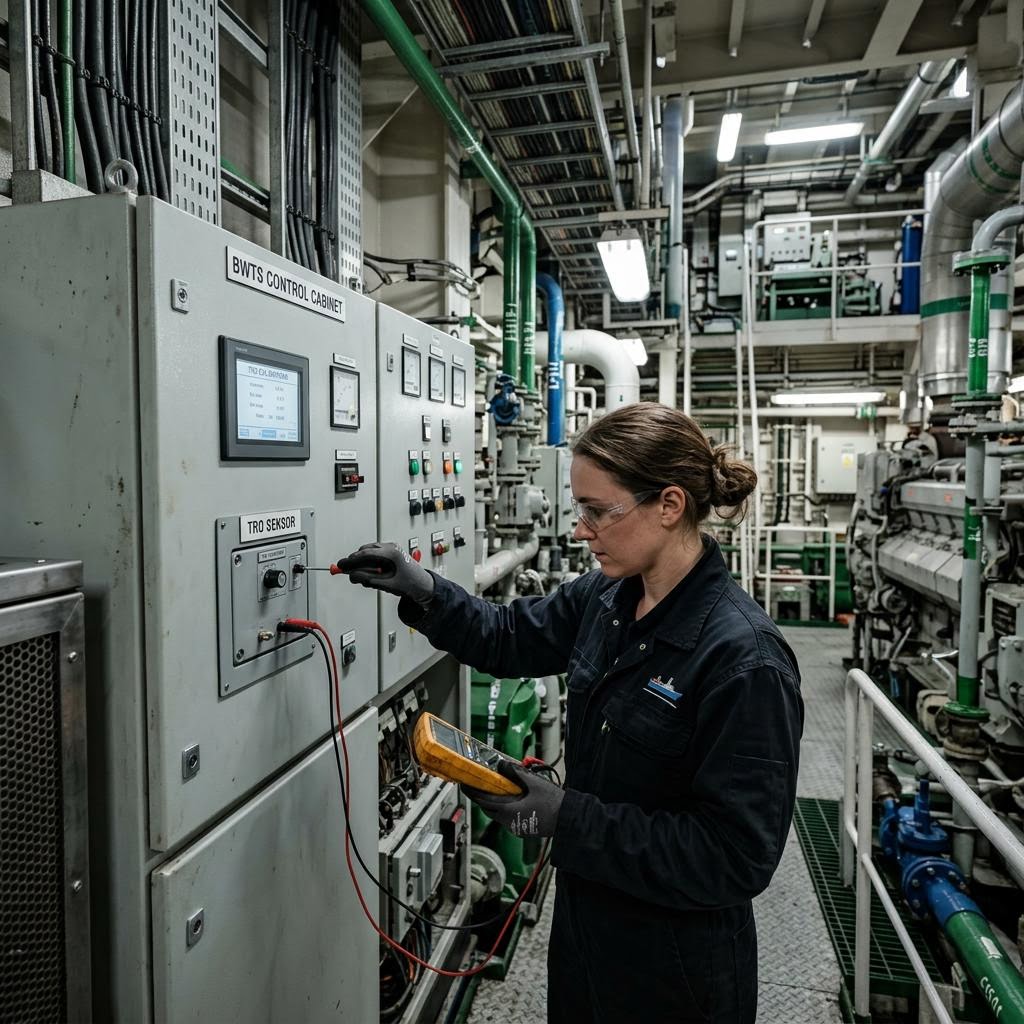
Cleaning is only successful if the cell generates its designed output again. After the cell is returned to service, the system is run and the TRO produced is checked against the expected value for the current flow, salinity and temperature, confirming that generation has recovered. A cell that still cannot reach target after cleaning points to wear and the need for replacement.
The TRO analyser that measures output is itself verified or calibrated against reagent standards as part of the work, because a cleaned cell judged by an inaccurate analyser proves nothing. Neutralisation dosing is also confirmed so that treated water meets the residual limit at discharge.
The cleaning, any parts fitted, the readings and the verification result are documented so the vessel holds evidence the system is performing. Restoration is complete only when output and neutralisation are demonstrably correct.
Parts, Reagents and Brand Scope
Sea Clean supplies replacement cells, cleaning consumables, TRO analyser reagents, sodium thiosulfate neutraliser and associated spares, dispatched against the system make, model and serial. For worldwide calls these are often shipped ahead to a local agent, and a sensible reagent and consumables holding keeps the crew able to run and monitor the system between services.
For Headway OceanGuard electrochlorination systems the cell service and parts are provided under authorized Headway Technology agency. For other electrochlorination makes such as Techcross, Erma First, Sunrui, De Nora and others, Sea Clean provides the same cell cleaning and service as independent service and parts support, without claiming OEM authorisation by those brands.
To arrange cell cleaning or order a replacement cell, send the system details and recent TRO output data to post@seaclean.no so the right approach and parts can be planned.
Frequently asked questions
Why does an electrolyser cell lose chlorine output?
The electrolysis process deposits calcium and magnesium scale on the electrodes, which insulates the surfaces and reduces generation. Electrode coatings also wear over the cell's life. A gradual fall in TRO at the same flow and salinity is the classic sign of a scaling cell.
How is a cell cleaned?
Cleaning typically uses a controlled acid wash to the maker's procedure to dissolve scale, with the cell isolated and drained first and thoroughly rinsed afterwards. Some systems clean in place automatically; others need manual cleaning by an engineer. Too aggressive a clean can damage the coating.
What safety hazards are involved?
Electrolysis produces flammable hydrogen, so the gas handling and ventilation must function and no ignition risk be introduced. The cleaning acid is corrosive and needs correct handling and disposal, and the cell must be electrically isolated before hands-on work given the high currents involved.
How is success confirmed after cleaning?
The system is run and the TRO output is checked against the expected value for the flow, salinity and temperature, with the analyser verified or calibrated and neutralisation confirmed. If output still cannot reach target, the cell is worn and needs replacement. The work is documented for class and port state.