BWTS Retrofit and Installation Support
Updated
Retrofitting a ballast water treatment system into an existing vessel is a planning and engineering exercise as much as an equipment purchase. This article covers system selection inputs, yard and class coordination, commissioning, and how Sea Clean AS supports retrofits with Headway equipment, multi-brand parts and engineer attendance.
Key takeaways
- A retrofit must fit new equipment into existing spaces, pipework and electrical capacity, so it starts with a survey of the ship.
- Ballast pump capacity sets the treatment flow rate, which sizes the equipment and constrains the technology choice.
- UV and electrochlorination each have trade-offs in power demand, reagent handling and salinity or temperature limits.
- Class approval, an updated management plan and commissioning testing sit on the retrofit critical path.
- Sea Clean supplies Headway equipment as authorized agent and provides independent support for other makers' systems.
- Sea Clean coordinates commissioning testing with accredited laboratories and authorised parties; it does not itself hold testing accreditation.
Why Retrofits Are Demanding
Most operating vessels were not designed around a treatment system, so a retrofit must fit new equipment into spaces, pipework and electrical capacity that already exist. The pump room, engine room and ballast pipework layout dictate where a filter, treatment unit, sensors and control cabinets can go, and the available electrical power constrains which technologies are practical. A retrofit therefore starts with an honest survey of the ship, not with a catalogue choice.
Ballast pump capacity sets the required treatment flow rate, which in turn sizes the equipment. Routing new pipe spools, finding cabinet space, and running power and signal cabling through an occupied machinery space all add cost and time that are easy to underestimate. A clear scope at the design stage avoids surprises during the yard period.
Class approval of the installation, an updated ballast water management plan, and commissioning testing all sit on the critical path. Treating the retrofit as a documentation and approval project, and not only an installation, keeps the vessel's certification in step with the new equipment.
Technology Choice and Vessel Constraints
The two common treatment principles are ultraviolet irradiation and electrochlorination, with side-stream and full-flow variants. UV systems are compact and suit a range of flows but draw significant power during treatment; electrochlorination systems can suit larger flows and have lower instantaneous power demand but introduce reagent handling, residual oxidant monitoring and neutralisation. Salinity and temperature limits of a given system against the vessel's trade matter for both types.
Filter selection, automatic backflush arrangement, and the location of TRO or UV sensors affect both performance and maintainability. A system that is technically capable but buried in an inaccessible space becomes a maintenance burden for the life of the ship, so access for lamp, sleeve, cell and sensor service should weigh in the selection.
Sea Clean supplies and supports Headway OceanGuard equipment as an authorized Headway agent and can advise on retrofit considerations for that system. For other makers the company provides independent parts sourcing and service support rather than OEM-authorized supply, which is made clear so owners understand the basis of any recommendation.
Yard and Class Coordination
A retrofit is normally executed during a docking or a dedicated yard period, with the yard fabricating and fitting foundations, pipe spools and cable routes to an approved drawing set. Coordination between the owner, the yard, the equipment maker and class keeps the installation aligned with the approved design and the schedule. Long-lead items such as the main treatment unit and large filters should be ordered to suit the yard slot.
Class reviews the installation drawings, witnesses key stages, and updates the vessel's documentation once the system is installed and tested. The ballast water management plan is revised to reflect the actual equipment, valves and operating procedure, and the crew need familiarisation before the system enters service.
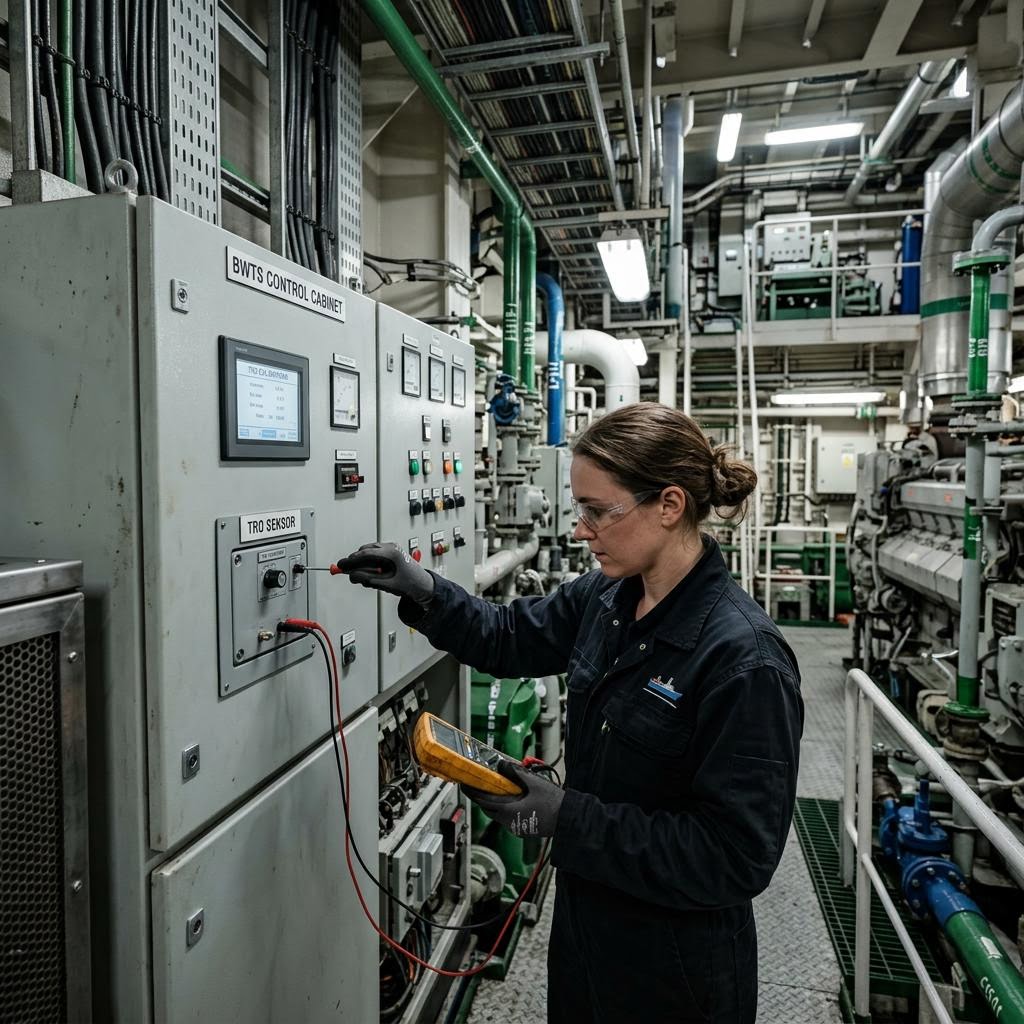
Sea Clean can supply parts and consumables to the yard period and attend to support installation and pre-commissioning checks where engaged. Coordinating parts delivery to the yard against the build schedule avoids the system standing incomplete for want of a sensor or a reagent.
Commissioning Testing After Installation
A newly installed system is subject to commissioning testing under the IMO BWMS Code as adopted in MEPC.325(75), which verifies that the installation operates and that a representative discharge sample meets the D-2 standard. This is a check of the installation, not a re-approval of the type-approved equipment, and combines a function test with sampling and analysis.
Indicative analysis gives a rapid on-board screening result, while detailed analysis is performed by an accredited laboratory to ISO/IEC 17025. The sample must be representative, taken from an appropriate point in the discharge line, and handled correctly for the result to be valid. Planning the test around a real ballast operation is essential because the system must be treating water during sampling.
Sea Clean is not an accredited testing laboratory and does not hold testing accreditation itself. It coordinates and supports commissioning testing in cooperation with accredited laboratories and parties authorised by the flag or class, supplies sampling support, TRO test kits and reagents, and attends to facilitate the test; the accredited party performs and certifies the analysis.
Crew Familiarisation and Spares
A retrofit is only successful if the crew can operate and maintain the system. Familiarisation should cover the normal ballast and de-ballast sequence, the alarms and their meaning, sensor calibration intervals, reagent handling where applicable, and the routine maintenance the planned maintenance system will schedule. An operating crew that understands the system avoids many of the faults that later draw PSC attention.
An initial spares holding sized to the maker's recommendation and the vessel's trade reduces downtime once the warranty support tapers off. Consumables such as UV lamps, quartz sleeves, sensor reagents, filter elements and seals are the items most often needed, and stocking them avoids waiting for delivery at an inconvenient port.
Sea Clean supplies initial and replacement spares and reagents and can advise on a sensible holding for the installed system. Building the spares list during the retrofit, rather than after the first failure, keeps the new system available from the start.
Planning a Retrofit With Sea Clean
The most reliable retrofits begin with early engagement: the vessel particulars, ballast pump capacity, trade pattern, available power and the intended yard period let the scope be defined before equipment is ordered. Aligning the equipment lead time with the yard slot and the commissioning-test window keeps the project on schedule and the certification current.
For Headway installations, Sea Clean acts as the authorized agent and supplies genuine equipment and parts. For other systems it supports the owner with independent parts sourcing, engineer attendance and commissioning-test coordination, without implying OEM authorization by those makers.
Contact post@seaclean.no with the vessel particulars, the intended system or technology, and the planned yard period to begin retrofit support. Early planning is the main factor that keeps a retrofit on budget and on schedule.
Frequently asked questions
What determines which BWTS suits a retrofit?
The ballast pump capacity sets the required treatment flow rate, and the available space, electrical power and the vessel's trade pattern narrow the technology choice between UV and electrochlorination. A survey of the pump room, machinery space and pipework, plus salinity and temperature limits against the trade, drives the selection rather than a catalogue choice.
Does a retrofit need commissioning testing?
Yes. A newly installed system is subject to commissioning testing under the IMO BWMS Code as adopted in MEPC.325(75). This verifies the installation operates and that a representative discharge sample meets the D-2 standard, combining a function test with sampling and analysis around a real ballast operation.
Does Sea Clean carry out the retrofit installation?
Sea Clean supports retrofits with equipment and parts supply, engineer attendance for installation support and pre-commissioning checks, and commissioning-test coordination. The structural and pipework installation is normally executed by a yard to an approved drawing set, with Sea Clean supplying parts and consumables to the yard period.
Which brands can Sea Clean support for a retrofit?
Sea Clean is the authorized Headway agent and supplies genuine Headway OceanGuard equipment and parts. For other makers such as Techcross, Erma First and Sunrui, it provides independent parts sourcing and engineer support, without implying OEM authorization by those brands.