Rectifying a BWTS-Related PSC Detention
Updated
A ballast water treatment system that is inoperative or improperly operated can lead a port state control inspection to a detainable deficiency. This article explains how PSC officers assess ballast water findings, what a detention requires before release, and how Sea Clean AS supports rectification with parts, contingency arrangements and independent engineer attendance.
Key takeaways
- A BWTS finding can range from a minor record-book deficiency to a detainable inoperative-system finding, with very different rectification paths.
- Notify class and flag early, as BWTS detentions often need a surveyor and an agreed contingency measure.
- Document any contingency measure in the ballast water record book with the rationale and the authority that accepted it.
- Sea Clean is the authorized Headway agent and provides independent parts and engineer support for Techcross, Erma First, Sunrui and other systems.
- Norway and North Sea attendance is typically within 0-24 hours; worldwide attendance is arranged as flights, visas and access allow.
- Close the deficiency with evidence: a working system, corrected records and a service report linked to the deficiency code.
How a BWTS Becomes a PSC Issue
Port state control officers check ballast water management as part of a normal inspection, looking at the Ballast Water Management Certificate, the ballast water record book, the management plan, and whether the treatment system is functioning and being used. Where documentation is in order and the system works, the check is brief. Problems arise when the record book is incomplete, the certificate does not match the installed equipment, or the system is found bypassed or inoperative.
A finding does not automatically mean detention. The officer judges severity: a minor record-keeping error usually draws a deficiency to be corrected, while a system that cannot meet the D-2 standard and has no acceptable contingency may be treated as a clear ground for detention. The distinction matters because the rectification path is very different for a paperwork deficiency than for a failed treatment chain.
Under the Paris MoU and similar regional regimes, deficiency codes are recorded against the inspection, and a detention is logged publicly. That record follows the vessel and the operator, so closing the deficiency correctly, with evidence, is as important as restoring the equipment itself.
First Actions When a Deficiency Is Raised
The master and chief engineer should record exactly what the officer found, the deficiency code applied, and the action and time limit demanded. Some deficiencies must be rectified before departure; others allow a stated period or rectification at the next port. Knowing which category applies sets the urgency and whether the vessel can sail at all.
The operator should notify class and the flag administration early, because a BWTS detention frequently needs a class surveyor's involvement and may require agreement on a contingency measure. Class can advise whether a temporary arrangement, such as discharge to a reception facility or no ballast operations in the port, is acceptable while repairs proceed.
At the same time, the technical superintendent should establish the actual fault: a tripped sensor, a failed power supply, a depleted reagent, a filter fault or a control alarm each point to different parts and different attendance needs. An accurate fault picture lets the right spares and an engineer be mobilised without a wasted trip.
Contingency Measures During Rectification
When a treatment system cannot be made compliant immediately, the recognised approach is a documented contingency measure agreed with the port state and flag. Options include taking on no ballast in the affected port, retaining ballast on board, discharging to a shore reception facility where available, or arranging treatment by an alternative accepted method. The ballast water management plan should already describe contingency options.
Contingency measures are temporary and must be recorded in the ballast water record book with the rationale and the authority that accepted them. They buy time to source parts and arrange an engineer but do not substitute for restoring the system, and the next port may expect evidence that rectification is underway.
Sea Clean helps operators frame a practical contingency around the vessel's trade and the repair lead time, and supplies the reagents and consumables a temporary arrangement may need. The aim is a defensible position for the surveyor while the permanent fix is mobilised.
Parts, Reagents and Engineer Mobilisation
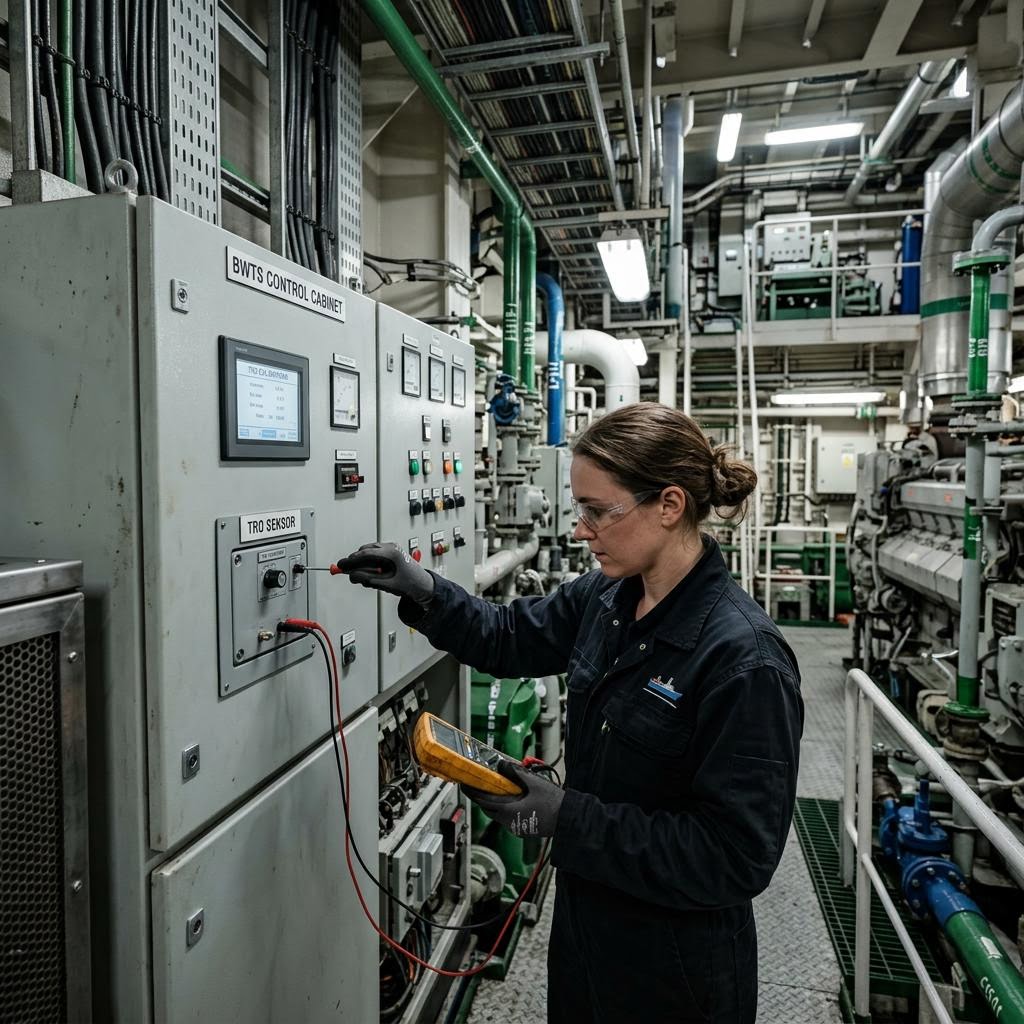
Rectification usually needs the failed component, the consumables to recommission, and an engineer competent on the specific system. Sea Clean supplies genuine Headway OceanGuard parts as an authorized Headway agent, and sources parts for Techcross, Erma First, Sunrui and other systems through its supplier network, with TRO test kits and sodium thiosulfate neutraliser for verification and neutralisation.
For Norwegian and North Sea port calls, an engineer can usually reach the vessel within 0-24 hours when scheduling and access allow. For ports further afield, attendance is arranged as flights, visas and port access permit, with parts and reagents routed by courier or freight and a local agent coordinating quay access.
Sea Clean provides independent service and parts support across brands and acts as the authorized agent only for Headway. For other makers, the attendance is independent troubleshooting and repair rather than OEM-sanctioned service, which is stated plainly so the operator and surveyor understand the basis of the work.
Closing the Deficiency With Evidence
Releasing a detention requires the port state to be satisfied that the deficiency is rectified. That means a working system demonstrated where possible, a corrected record book, and documentation of the repair: parts fitted, function test results, TRO readings and any sampling that supports compliance. A service report tied to the deficiency code gives the officer a clear basis to lift the detention.
Where full compliance cannot be demonstrated in the detention port, an agreed plan with class and flag for rectification at a named next port, plus a contingency for the voyage, is often the route to release. The plan must be specific and documented, not a general intention to repair.
Sea Clean issues a service report covering the work done, components replaced and tests performed, suitable for presentation to the surveyor and retention in the vessel's records. Linking the report to the original deficiency code helps demonstrate that the exact finding has been addressed.
Reducing the Risk of Repeat Detentions
Most BWTS detentions trace back to deferred maintenance, depleted consumables or crew unfamiliarity rather than sudden equipment failure. Keeping reagents in date, following the planned maintenance schedule, calibrating sensors on time and training the operating crew prevents the slow drift toward an inoperative system that an inspection eventually catches.
An accurate, contemporaneous ballast water record book is the single most effective protection against a paperwork detention. Entries should match the system's operation, the management plan should reflect the installed equipment, and the certificate should be current and consistent with the BWMS on board.
Sea Clean supports operators with planned service attendance, reagent restocking and spare parts supply between ports so that compliance is maintained rather than recovered under detention. Contact post@seaclean.no with the vessel name, IMO number, system make and the deficiency to start rectification support.
Frequently asked questions
Does an inoperative BWTS always mean detention?
No. The port state control officer judges severity. A minor record-keeping error is usually a deficiency to be corrected, while a system that cannot meet the D-2 standard with no acceptable contingency is a clear ground for detention. The applied deficiency code and time limit indicate which category the finding falls into.
What is a contingency measure for ballast water?
It is a temporary, documented arrangement agreed with the port state and flag while a system is repaired, such as taking on no ballast in port, retaining ballast on board, or discharge to a reception facility. It must be recorded in the ballast water record book and does not replace restoring the system.
Can Sea Clean attend a detained vessel quickly?
For Norwegian and North Sea port calls an engineer can usually reach the vessel within 0-24 hours when scheduling and access allow. For ports further afield, attendance is arranged as flights, visas and port access permit, with parts and reagents routed by courier or freight and local agent coordination.
What documentation helps lift a BWTS detention?
A demonstrated working system where possible, a corrected ballast water record book, and a service report listing parts fitted, function tests, TRO readings and any sampling. Linking the report to the original deficiency code gives the officer a clear basis to confirm the exact finding has been rectified.