Coordinating Ballast Water Sampling During a Port Call
Updated
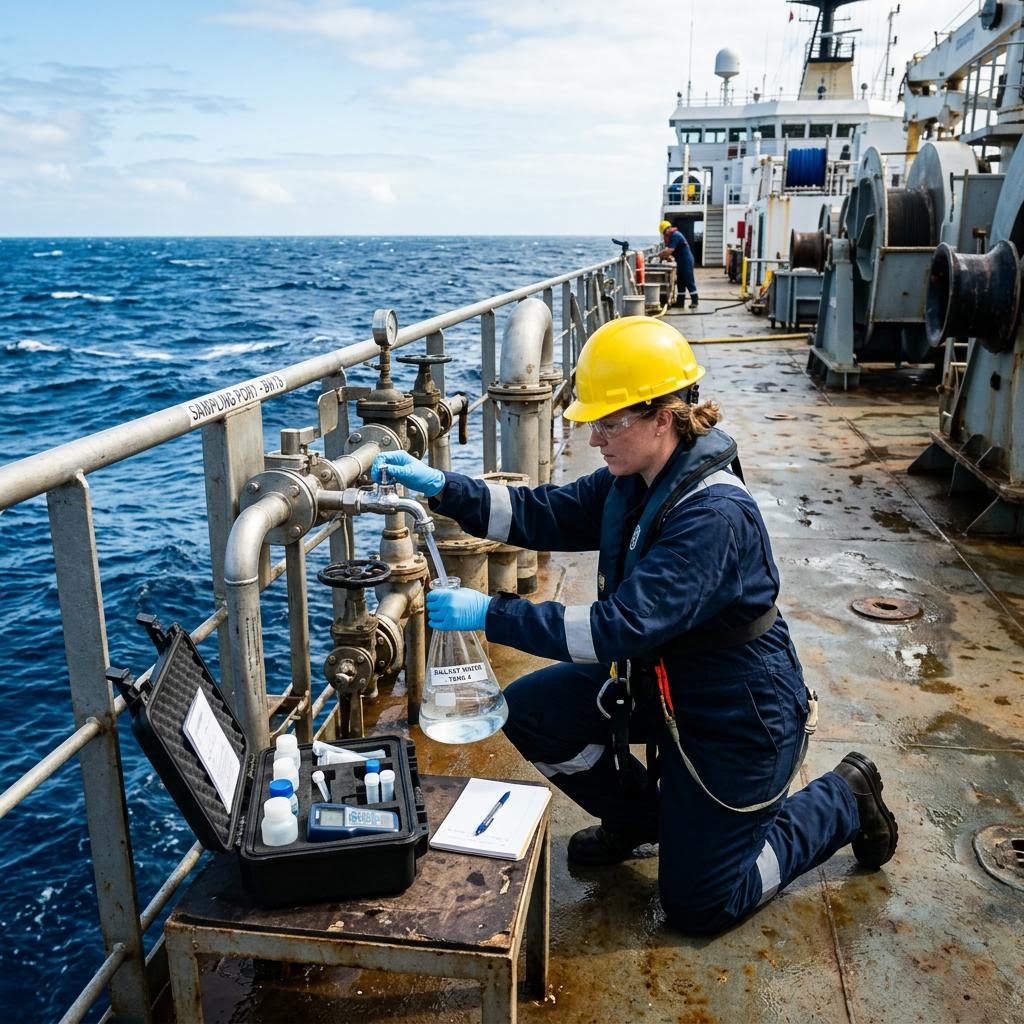
Ballast water sampling has to happen during the narrow window a vessel is in port and actually discharging, which makes coordination as important as the testing itself. This article explains how to plan a sampling event around the port call, align the vessel, agent, attending party and accredited laboratory, and avoid the timing failures that waste a test. It describes how Sea Clean AS coordinates and supports sampling and supplies the reagents and attendance needed, with accredited parties performing certified analysis.
Key takeaways
- Sampling must coincide with a real ballast discharge inside the port call, so the discharge plan anchors all timing.
- Success depends on aligning the vessel, agent, attending party and accredited laboratory in advance.
- The agent provides berth, access and port requirements; the chief engineer provides the sampling point and discharge plan.
- The accredited laboratory sets volume, container and time limits that the logistics must meet for a valid result.
- Most failed sampling events come from avoidable timing and equipment gaps, not from the testing itself.
- Sea Clean coordinates and supports sampling and supplies reagents; an accredited party certifies the analysis.
Why Coordination Decides Success
A ballast water sample can only be taken while the vessel is discharging treated water, and that discharge happens within the port call, often during cargo operations on a fixed schedule. The sampling event therefore has to be planned to coincide with a real ballast operation, not arranged loosely and hoped to fit.
Several parties have to be in the right place at the right time: the vessel ready to discharge, the attending party with equipment and reagents, and the accredited laboratory ready to receive and analyse the sample within its time limits. A failure in any one of these wastes the attempt and may mean waiting for the next suitable port.
Good coordination is mostly about information and timing agreed in advance. The most common reasons a sampling event fails are avoidable: unclear ETA, no confirmed discharge window, missing equipment, or a laboratory that cannot receive the sample in time.
Planning Around the Port Call
Planning starts with the vessel's schedule: the ETA, the expected berth, the cargo plan and, crucially, when the vessel will actually discharge ballast and for how long. The sampling window is dictated by the discharge, so the discharge plan is the anchor around which everything else is arranged.
From there the attending party and laboratory are booked to match, and the necessary equipment, reagents and sampling consumables are staged so they are on hand when discharge begins. For commissioning testing under MEPC.325(75), the plan also accounts for the surveyor's involvement and the documentation needed.
Contingency is part of planning because schedules slip. Knowing the alternatives if the berth changes or the discharge is delayed, including whether a later window the same call is possible, keeps a minor change from defeating the whole event.
Working With the Agent and Vessel
The local agent is central to coordination because they hold the berth information, arrange access to the vessel, and manage the interface with the port. Confirming with the agent how and when the attending party can board, where the sampling point is, and any port access or security requirements removes most of the practical obstacles.
On the vessel side, the chief engineer's input is essential: the location and type of sampling point, the planned discharge sequence, and any limitations of the system or fitting. Agreeing these before arrival means the attending party brings the right equipment and knows what to expect.
Clear communication of the vessel name, IMO number, ETA, berth and BWMS type to all parties is the foundation. When everyone is working from the same information, the actual sampling on the day is usually straightforward.
Aligning the Accredited Laboratory
For detailed analysis, the accredited laboratory has requirements that shape the logistics: the sample volume, container type, handling and the maximum time between collection and analysis. These have to be known and met, or the laboratory may not be able to produce a valid result.
Coordination therefore includes confirming the laboratory can receive the sample within its window, arranging transport from the quay to the laboratory, and ensuring the chain of custody is documented. For ports far from a laboratory, the time limit is a real constraint that has to be planned around.
Sea Clean coordinates this alignment in cooperation with accredited laboratories and authorised parties, who carry out and certify the analysis. Sea Clean's role is to make sure a valid, representative sample reaches the right party in time, not to certify the result.
Avoiding Common Timing Failures
The recurring failures are predictable. A sampling team that arrives before the discharge window, or after it has passed, gets no sample; a sample that misses the laboratory's time limit is invalid; and missing reagents or consumables can stop an indicative check that the plan relied on.
These are prevented by confirming the discharge window close to arrival, keeping communication open as the schedule firms up, and staging all equipment and reagents in advance. Building a small buffer into the plan absorbs the normal slippage of a port call.
A short briefing before the event, covering who does what, where the sampling point is and what happens to the sample afterwards, aligns everyone. Most wasted sampling events trace back to a gap in this basic coordination rather than to the testing itself.
How Sea Clean Coordinates Sampling Support
Sea Clean coordinates and supports ballast water sampling during port calls, working with the vessel, the agent and accredited laboratories or authorised parties. We confirm the discharge window, attend to help take representative samples, supply the TRO kits and reagents needed, and manage the handover of laboratory-bound samples.
For Norway and North Sea ports our attendance is direct and quick to arrange; for other regions we coordinate attendance and laboratory logistics as flights, visas and port access allow, with reagents and consumables forwarded as needed and local agents engaged. The accredited party performs and certifies the analysis.
To set up sampling for a port call, send the vessel name, IMO number, ETA, port, expected discharge plan and BWMS type to post@seaclean.no. The earlier the information arrives, the more reliably the sampling window can be met.
Frequently asked questions
Why is timing so important for ballast water sampling?
A sample can only be taken while the vessel is discharging treated water, which happens within a fixed port call. The attending party, equipment and accredited laboratory all have to align with that discharge window, and a miss usually means waiting for the next suitable port.
What information does Sea Clean need to coordinate sampling?
The vessel name and IMO number, the ETA and port, the expected ballast discharge plan and the BWMS type. The earlier this is provided, the more reliably the discharge window can be matched with attendance and laboratory logistics.
What role does the ship's agent play?
The agent holds berth information, arranges access to the vessel and manages the port interface, including security and access requirements. Confirming boarding arrangements and the sampling point location with the agent removes most practical obstacles on the day.
Does the accredited laboratory have to receive the sample quickly?
Yes. Detailed analysis requires the sample to reach the laboratory within a maximum time and in the right condition, or the result may be invalid. For ports far from a laboratory this time limit is a real constraint that has to be planned into the logistics.
Sources
Related articles
- Ballast Water Sampling Points and Sample Collection
- Ballast Water Commissioning Testing: What Happens On Board
- Accredited Laboratories and Authorised Parties in Ballast Water Testing
- BWTS Service and Engineer Attendance at the Port of Rotterdam
- USCG Ballast Water Compliance for Ships Calling the United States
- The US EPA VGP and VIDA Framework for Ballast Water