Ballast Water Compliance in Japan
Updated
Japan applies the IMO Ballast Water Management Convention to vessels calling its ports, with oversight from the Japan Coast Guard and the Ministry of Land, Infrastructure, Transport and Tourism, and is a leading flag and shipbuilding nation. This article explains the compliance expectations for a Japanese call, the inspection focus under the Tokyo MOU, and how Sea Clean AS supports sampling coordination, BWMS testing and reagent supply by arrangement.
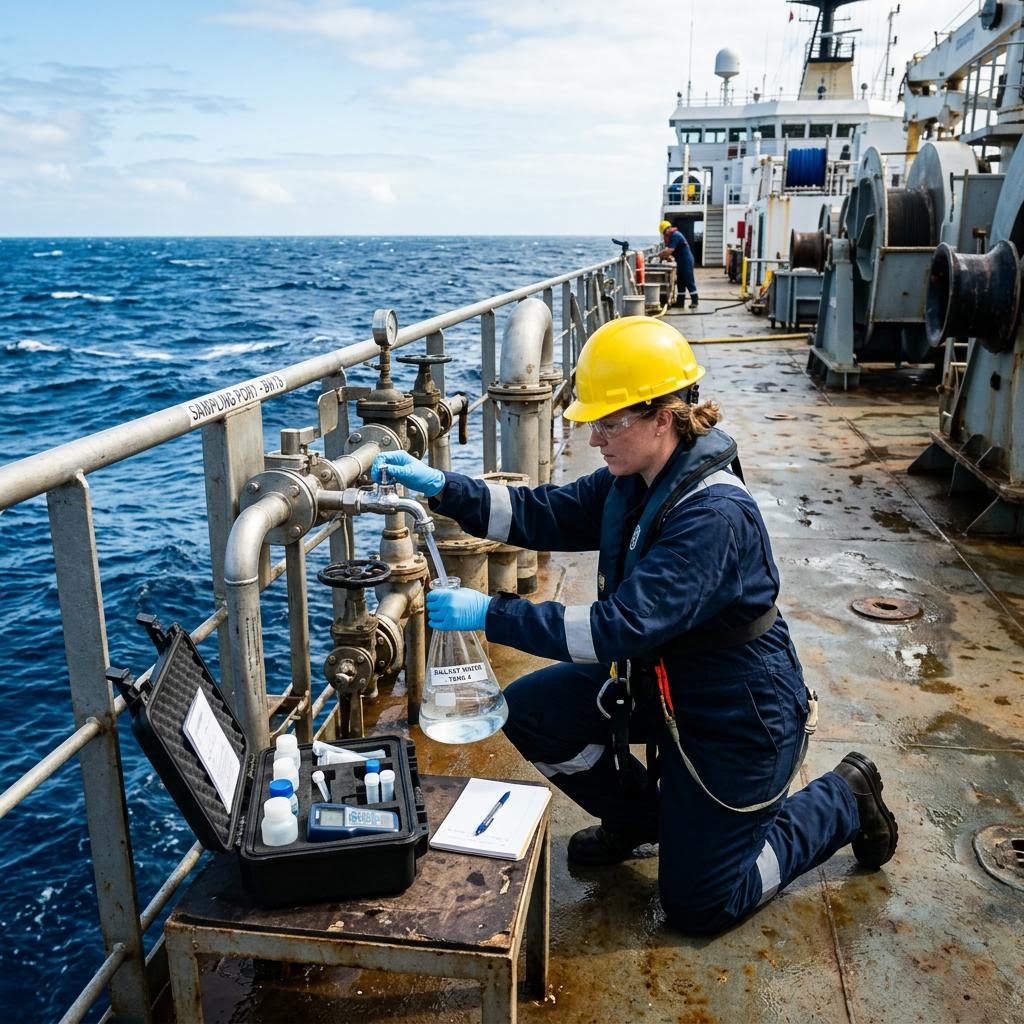
Key takeaways
- Japan applies the IMO BWM Convention as a coastal state and is a major flag and shipbuilding nation.
- The Japan Coast Guard and MLIT are involved in implementation and enforcement.
- Japan is an active Tokyo MOU Port State Control member, with thorough inspections covering ballast water.
- Vessels need a type-approved D-2 system, a valid certificate, an approved plan and an accurate record book.
- Commissioning testing under MEPC.325(75) uses authorised parties and accredited laboratories.
- Sea Clean supports Japan by arrangement, mobilising attendance and forwarding parts and reagents via agents.
Japan's Position in Ballast Water Regulation
Japan is a Party to the IMO Ballast Water Management Convention and a major flag, shipowning and shipbuilding nation, so it engages with ballast water regulation both as a coastal state and as a builder of vessels and treatment systems. The Japan Coast Guard and the Ministry of Land, Infrastructure, Transport and Tourism (MLIT) are involved in implementation and enforcement.
Vessels calling Japanese ports are expected to operate a type-approved ballast water management system meeting the IMO D-2 discharge standard, with a valid International Ballast Water Management Certificate, an approved plan and an accurate record book. Several BWMS makers are Japanese, including JFE with BallastAce, reflecting the country's shipbuilding base.
Japan's dense network of ports serving container, bulk, car-carrier, tanker and coastal trades means ballast water management applies across a wide variety of vessel types. Operators should treat Japanese calls as fully within the Convention regime.
Port State Control and the Tokyo MOU
Japan is a founding and active member of the Tokyo MOU, the regional Port State Control regime for the Asia-Pacific, and ballast water management is part of the inspection scope. Inspections cover the certificate, the approved plan, the record book and the operational status of the treatment system.
Japanese inspections are known for thoroughness, so consistency between the record book, the treatment system logs and the reported ballast operations is important. A fitted but unused system, or records that do not reconcile, are the kinds of findings that draw attention.
Where there is doubt about a discharge, sampling may be required to verify compliance. The crew should be able to identify representative sampling points and present treatment documentation during an inspection.
Operating and Monitoring the System
Vessels calling Japan use UV and electrochlorination treatment systems, including Japanese-built systems. UV systems depend on lamp condition and UV transmittance, while electrochlorination and other oxidant systems require total residual oxidant to be monitored and neutralised before discharge.
Routine self-monitoring builds an operating record demonstrating the system performed between formal tests, which supports the vessel during an inspection. Reagents for TRO measurement and neutralisation should be kept in date, with restocking planned around the call pattern.
Sea Clean supplies TRO test kits, sodium thiosulfate neutraliser and BWMS spare parts, and supports self-monitoring. We are not an accredited testing laboratory; analytical confirmation, where required, is performed by an accredited laboratory.
Commissioning Testing and Sampling
IMO BWMS Code commissioning testing under MEPC.325(75) applies to newly installed systems and is carried out by parties authorised by the flag administration or class, with analysis at an accredited laboratory. Japan's shipbuilding activity means commissioning tests are commonly arranged around its yards.
The commissioning test confirms the installed system can meet the D-2 standard in service through representative sampling. Indicative analysis gives a rapid on-board screen, but the definitive result for commissioning comes from detailed analysis at an accredited laboratory.
Sea Clean coordinates and supports representative sampling and commissioning attendance in cooperation with accredited laboratories and authorised parties. In Japan this is arranged by mobilisation as flights, visas and port access allow, with reagents and parts supplied via courier or forwarding and local agent coordination.
Logistics and Attendance
Japanese ports are served by experienced agents and a developed logistics network, so reagents and BWMS parts can be forwarded into the country and delivered to a vessel reliably. Customs treatment of ship's spares should be confirmed with the agent for each port.
Sea Clean does not maintain a standing office in Japan. Engineer attendance is arranged by mobilising from base as flights, visas and access allow, while parts and reagents are routed through couriers and forwarders with the agent coordinating delivery to the vessel.
Because Japanese port stays can be short and schedules precise, advance coordination with the agent is decisive. A clear parts or reagent list and a defined delivery point allow receipt within a tight window.
Planning a Japanese Call
Confirm before arrival that the treatment system is operable, the certificate and survey status are valid, the management plan matches the installed system, and the record book is current. If reagents are low or a commissioning test is due, raise it early so logistics and any attendance can be arranged.
Because Japanese inspections are thorough, aligning the record book, treatment logs and certificate status before arrival removes the most common reasons for a finding. Good documentation discipline is the most reliable preparation.
Send the vessel name, IMO number, ETA and requirement to post@seaclean.no to begin coordination for a Japanese call, whether for reagent supply, spare parts or sampling support arranged with accredited parties.
Frequently asked questions
Which authorities oversee ballast water in Japan?
The Japan Coast Guard and the Ministry of Land, Infrastructure, Transport and Tourism are involved in implementing and enforcing the IMO BWM Convention. Japan is also an active Tokyo MOU Port State Control member.
Are Japanese ballast water inspections strict?
Japanese inspections are known for thoroughness. Consistency between the record book, the treatment system logs and the reported ballast operations is important, and a fitted but unused system or unreconciled records can lead to findings.
Can Sea Clean supply parts and reagents in Japan?
Yes, by arrangement. Reagents and BWMS spare parts are forwarded into Japan through couriers and forwarders, with the vessel's agent coordinating delivery. Customs treatment of ship's spares is confirmed per port.
Does Sea Clean carry out ballast water analysis in Japan?
No. Sea Clean is not an accredited testing laboratory. We coordinate and support sampling and BWMS commissioning testing with accredited laboratories and authorised parties, and supply test kits, reagents and spare parts.