Ballast Water Compliance in China
Updated
China applies the IMO Ballast Water Management Convention through its maritime authorities, with the China Maritime Safety Administration overseeing inspection and enforcement in one of the world's busiest port networks. This article explains the Chinese regime, the role of domestic and international type approval, inspection practice, and how Sea Clean supports sampling, parts and reagent supply with accredited laboratories at Chinese ports by arrangement.
Key takeaways
- China is a party to the IMO Convention, with the China Maritime Safety Administration overseeing inspection and enforcement.
- The D-2 standard applies and normally requires a working type-approved treatment system.
- China has a large domestic BWMS industry, and several Chinese-made systems hold IMO and sometimes USCG type approval.
- What matters at a Chinese call is valid type approval and correct operation, not the country of manufacture.
- Inspections examine documentation, the system and record consistency, and may include sampling.
- Sea Clean serves China by arrangement through couriers and local agents, not from a standing office; accredited parties certify analysis.
China's Ballast Water Regime
China is a party to the IMO Ballast Water Management Convention and applies its standards to ships calling Chinese ports, with the China Maritime Safety Administration as the principal authority for inspection and enforcement. Given the scale of Chinese port traffic, the regime is significant for most globally trading fleets, and adherence is checked as part of normal port state and flag oversight.
Chinese requirements follow the Convention's framework, so a ship that meets the Convention with a type-approved system and proper documentation is generally positioned to comply in China. China also has a substantial domestic ballast water treatment industry, and several Chinese-made systems hold both IMO and, in some cases, USCG type approval, which is relevant for vessels fitted with such equipment.
For European-based operators, Chinese calls require the same Convention preparation as other long-haul destinations. Sea Clean supports such vessels by arrangement, supplying parts and reagents and coordinating sampling, while recognising China is outside its direct attendance range and is served through courier, forwarding and local agents.
The D-2 Standard and Treatment Systems
China applies the Convention's D-2 discharge standard, so ships discharging ballast in Chinese waters must meet the living-organism limits, normally through a working type-approved ballast water management system. The phased move from D-1 exchange to D-2 treatment has followed the Convention timeline, making treatment the standard route to compliance.
The China Maritime Safety Administration expects the installed system to be type-approved, consistent with the documentation and operated within its approved parameters. A system that is fitted but bypassed or run outside its limits is non-compliance regardless of the hardware present. Reliable operation of the equipment is central.
Many vessels trading to China are fitted with electrochlorination systems, including Chinese-made units, which generate oxidants that must be neutralised before discharge. Sea Clean supplies BWTS spare parts and the TRO test kits and sodium thiosulfate neutraliser used to keep such systems within their approved discharge envelope.
Domestic and International Type Approval
China's domestic ballast water treatment sector produces several systems that are widely fitted internationally, and a number hold IMO type approval issued by the Chinese administration as well as, for some models, USCG type approval. For an owner, what matters at a Chinese call is that the installed system holds valid type approval and is operated correctly, not the country of manufacture.
Where a vessel carries a Chinese-made system, parts and technical support are often available through the manufacturer's network, but independent parts sourcing and service remain useful for older units or where the original channel is slow. Sea Clean supplies multi-brand BWMS parts and can source components for a range of systems through its supplier network.
The key compliance point is that type approval, proper installation and correct operation travel with the vessel regardless of where it trades. Documentation showing the system's approval status should be available for inspection in China as in any other port.
Reporting, Records and Inspection
Ships calling Chinese ports must keep the Ballast Water Management Plan, Ballast Water Record Book and certificate on board, consistent with each other and with the installed equipment, and provide any ballast water information required by the authorities. The record book should allow an inspector to reconstruct each ballast operation.
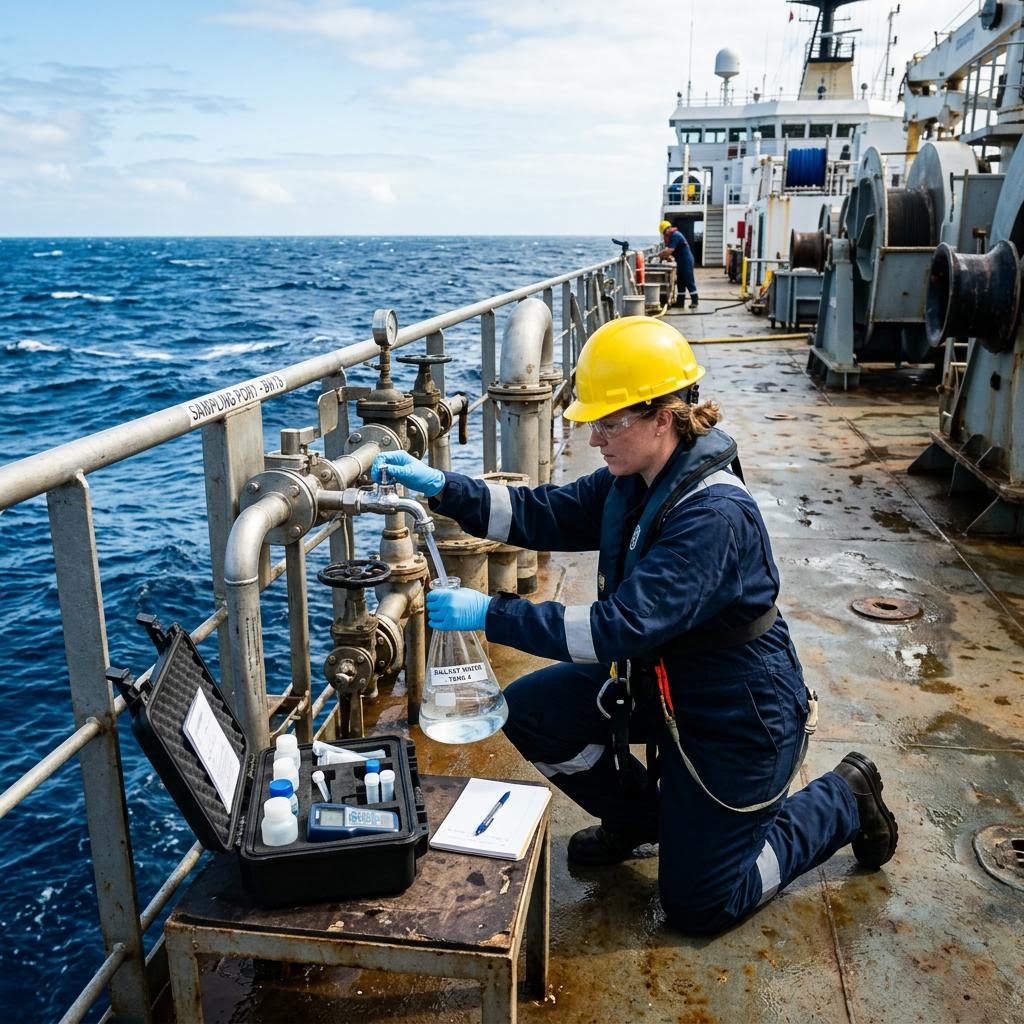
The China Maritime Safety Administration inspects ballast water as part of port checks, examining documentation, the treatment system and the consistency of records. Where doubt exists, officers may take or witness samples, using indicative analysis for a rapid indication and detailed analysis in an accredited laboratory for defensible organism counts.
Sea Clean helps operators keep TRO testing and sampling documentation aligned with the plan and records before a Chinese call so the package is internally consistent. Discrepancies between records and equipment are a common trigger for closer scrutiny in any jurisdiction.
Commissioning Testing and Sampling
Newly installed systems are commissioning tested under IMO resolution MEPC.325(75), with a representative sample of treated water analysed to confirm performance before service. This is arranged with the flag administration or recognised organisation and an accredited or authorised testing party, and the documented result is retained on board.
For routine and inspection sampling, indicative analysis provides a rapid on-board screening indication while detailed analysis in an accredited laboratory provides defensible counts. Chinese inspections may draw on either depending on the situation and the vessel's risk profile.
Sea Clean coordinates and supports sampling and commissioning testing in cooperation with accredited laboratories and authorised parties, attending to facilitate sampling and supplying the kits and reagents. Sea Clean is not an accredited testing laboratory; the authorised party issues the certified result.
How Sea Clean Supports Chinese Calls
Sea Clean is a Norwegian maritime company in Haugesund and Karmsund with a Rotterdam presence. China is outside its direct attendance range, so support is provided by arrangement: parts and reagents supplied via courier and forwarding, engineer mobilisation as flights, visas and port access allow, and coordination with local agents and accredited laboratories.
There is no standing Sea Clean office in China and no promise of instant arrival. For a vessel calling a Chinese port, the practical contribution is preparing equipment and documentation before the voyage, supplying reagents and parts, and arranging any sampling or attendance through partners on the ground.
Operators planning Chinese calls can contact post@seaclean.no with the vessel name, IMO number, installed BWMS make and itinerary. Early engagement allows reagents and parts to be staged and any commissioning or sampling support arranged with accredited parties.
Frequently asked questions
Does China follow the IMO Ballast Water Convention?
Yes. China is a party to the Convention and applies its standards to ships calling Chinese ports, with the China Maritime Safety Administration overseeing inspection and enforcement. A Convention-compliant ship with a type-approved system and proper documentation is generally positioned to comply in China.
Are Chinese-made BWMS accepted internationally?
Many are. Several Chinese-made systems hold IMO type approval and, in some cases, USCG type approval, and are fitted on vessels worldwide. What matters at any port, including in China, is that the installed system holds valid type approval and is operated correctly, not where it was made.
Can Sea Clean attend a vessel in a Chinese port?
China is outside Sea Clean's direct attendance range. Support is by arrangement: parts and reagents via courier and forwarding, engineer mobilisation as flights, visas and port access allow, and coordination with local agents and accredited laboratories. There is no standing office and no promise of instant arrival.
Does Sea Clean perform official ballast testing in China?
No. Sea Clean is not an accredited testing laboratory. It supports representative sampling and supplies kits and reagents, while accredited laboratories and authorised parties perform and certify any detailed analysis used for compliance in China.