Ballast Water Compliance in Argentina
Updated
Argentina applies ballast water management requirements to vessels calling its ports, with the Prefectura Naval Argentina as the maritime authority, and many calls involve the freshwater Paraná river system serving the upriver grain terminals. This article explains the compliance expectations, the freshwater navigation considerations, and how Sea Clean AS supports sampling coordination, BWMS testing and reagent supply by arrangement in the region.
Key takeaways
- Argentina applies the IMO BWM Convention with the Prefectura Naval Argentina as the maritime authority.
- Many calls are upriver grain terminals on the freshwater Paraná, reached by long pilotage.
- Bulk carriers discharge ballast during loading in fresh or brackish water to the D-2 standard.
- Turbid river water stresses filtration and UV, and freshwater limits electrochlorination output.
- Records must reconcile with system logs, and Argentina is sensitive to invasive species introductions.
- Sea Clean supports Argentina by arrangement, forwarding reagents and parts and coordinating sampling with accredited labs.
Argentina's Ballast Water Framework
Argentina is a Party to the IMO Ballast Water Management Convention, and the Prefectura Naval Argentina (the coast guard and maritime authority) oversees its application to vessels in Argentine waters. Vessels calling Argentine ports are expected to manage ballast water to the Convention's standards with the usual certificate, plan and record book.
The working requirement is operation of a type-approved ballast water management system meeting the IMO D-2 discharge standard, supported by a valid International Ballast Water Management Certificate. As under the Convention generally, ballast water exchange alone is not a long-term compliance route.
Argentina's export trade is dominated by agricultural bulk cargoes, so a large share of calls are bulk carriers loading grain and by-products. This shapes ballast operations, since vessels arrive in ballast to load and must manage the ballast they discharge as cargo comes aboard.
The Paraná River and Freshwater Calls
Many Argentine calls are not at coastal ports but at upriver terminals along the Paraná river around Rosario and the Up-River ports, reached by a long freshwater navigation from the River Plate estuary. This freshwater environment is relevant to ballast water management because organism profiles and water chemistry differ from marine conditions.
A vessel arriving in ballast to load grain upriver will discharge that ballast in fresh or brackish water as cargo is loaded, so the treatment system must handle the discharge to the D-2 standard in those conditions. Systems sensitive to salinity, turbidity or UV transmittance can behave differently in river water than at sea.
Planning ballast uptake on the outbound leg and discharge during loading, with the treatment system verified for the water conditions, avoids an out-of-specification discharge in a sensitive river system. The long pilotage and tight loading schedules upriver make advance planning worthwhile.
Operating and Monitoring the System
The sediment-laden, turbid water of the Paraná is demanding for filtration and can reduce UV transmittance, so UV systems need attention to lamp condition and flow, while electrochlorination systems require total residual oxidant to be monitored and neutralised before discharge. The freshwater environment also affects electrochlorination, which depends on salinity to generate oxidant.
Routine self-monitoring during loading builds an operating record demonstrating the system performed in the actual discharge conditions. Reagents for TRO measurement and neutralisation should be kept in date, since restocking upriver depends on logistics from the coast.
Sea Clean supplies TRO test kits, sodium thiosulfate neutraliser and BWMS spare parts, and supports self-monitoring. We are not an accredited testing laboratory; analytical confirmation, where required, is performed by an accredited laboratory.
Inspection and Documentation
The Prefectura and Port State Control examine the ballast water certificate, the approved plan, the record book and the operating status of the treatment system. As elsewhere, the record book entries should reconcile with the treatment system logs and the ballast operations reported during loading.
Argentina has shown particular sensitivity to invasive species, given documented introductions into the Paraná and River Plate systems, so ballast water management is taken seriously by the authorities. Complete and consistent records are the foundation for passing inspection.
Where doubt exists about a discharge, sampling may be required. The crew should know where representative samples can be drawn from the system during loading and have documentation ready.
Sampling and Commissioning Support
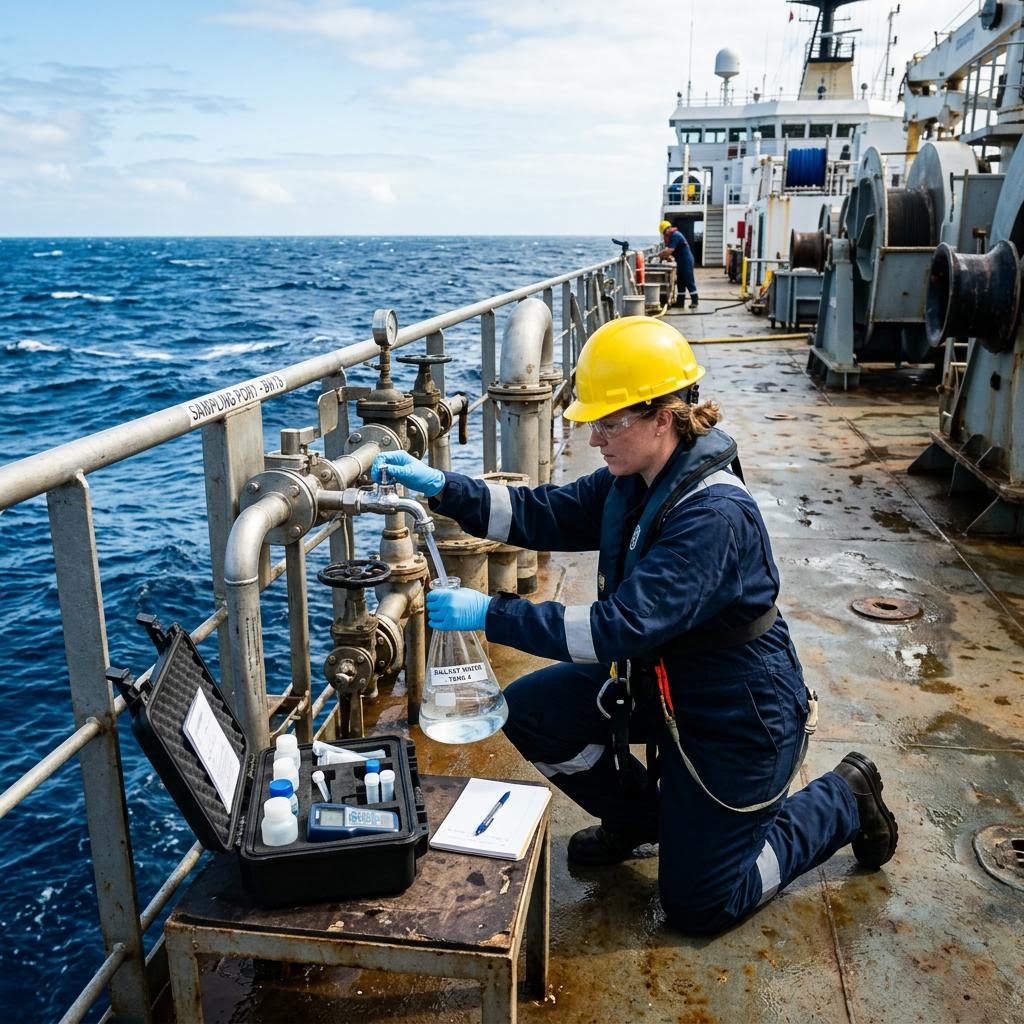
IMO BWMS Code commissioning testing under MEPC.325(75) applies to newly installed systems and is carried out by parties authorised by the flag administration or class, with analysis at an accredited laboratory. Indicative analysis can give a rapid on-board screen, while detailed analysis at an accredited laboratory provides the definitive result.
Sea Clean coordinates and supports representative sampling and commissioning attendance in cooperation with accredited laboratories and authorised parties. In Argentina this is arranged by mobilisation as flights, visas and port access allow, with reagents and parts supplied via courier or forwarding and local agent coordination.
The long upriver navigation means logistics for sampling support or parts should be planned with the agent well ahead of the loading window. Coordinating timing avoids missing a tight berth slot at a grain terminal.
Planning an Argentine Call
Confirm before arrival that the treatment system is operable in the expected discharge conditions, the certificate and survey status are valid, the plan matches the installed system, and the record book is current. Plan ballast operations around the river loading sequence rather than improvising during a tight slot.
Because upriver logistics are slower than at a coastal hub, raise any reagent or parts requirement early so it can be forwarded in time. Advance coordination with the agent is the main factor in a smooth call.
Send the vessel name, IMO number, ETA and requirement to post@seaclean.no to begin coordination for an Argentine call, whether for reagent supply, spare parts or sampling support arranged with accredited parties.
Frequently asked questions
Why does the Paraná river matter for ballast water in Argentina?
Many Argentine calls are upriver grain terminals in fresh or brackish water. Vessels discharge ballast there while loading, and treatment systems sensitive to salinity, turbidity or UV transmittance can behave differently than at sea, so the discharge must still meet the D-2 standard.
Who oversees ballast water compliance in Argentina?
The Prefectura Naval Argentina is the maritime authority overseeing implementation of the IMO BWM Convention. It and Port State Control examine the certificate, plan, record book and treatment system status.
Can Sea Clean reach a vessel at an upriver terminal?
Support is arranged by mobilising from base as flights and access allow, with reagents and BWMS parts forwarded via couriers and the agent. The long upriver navigation means logistics should be planned well ahead of the loading window.
Does Sea Clean certify the analysis in Argentina?
No. Sea Clean is not an accredited testing laboratory. We coordinate and support sampling and commissioning testing with accredited laboratories and authorised parties, and supply test kits, reagents and spare parts.