Ballast Water Compliance in Canada
Updated
Canada regulates ballast water through Transport Canada's Ballast Water Regulations, which implement the IMO Convention while adding provisions for the Great Lakes and St Lawrence system and coordination with the United States. This article explains the Canadian regime, the special situation in the Great Lakes, reporting and inspection practice, and how Sea Clean supports sampling, parts and reagent supply with accredited laboratories.
Key takeaways
- Canada implements the IMO Convention through Transport Canada's Ballast Water Regulations, with extra provisions for the Great Lakes and St Lawrence.
- The D-2 standard applies and normally requires a working type-approved treatment system.
- The Great Lakes and Seaway are a sensitive freshwater system with closely coordinated Canada-US ballast requirements.
- Reporting for the Great Lakes and Seaway is structured given the joint management of the waterway.
- Inspections, including joint Canada-US checks, examine documentation, the system and the consistency of records.
- Sea Clean serves Canada by arrangement through couriers and local agents, not from a standing office; accredited parties certify analysis.
Canada's Ballast Water Regulations
Canada gives effect to the IMO Ballast Water Management Convention through Transport Canada's Ballast Water Regulations, which set out how ships must manage ballast in waters under Canadian jurisdiction. The regulations apply the Convention's standards while addressing situations specific to Canada, in particular the shared Great Lakes and St Lawrence Seaway system with the United States.
Transport Canada is the regulator, with inspection and enforcement carried out through its marine safety functions and, in the Great Lakes, in coordination with US authorities. The cross-border nature of the Great Lakes means a vessel can encounter both Canadian and US expectations on the same waterway, so understanding which rules apply where is important.
For ships arriving from Europe, Canadian east-coast and St Lawrence calls require the same Convention-based preparation as other Atlantic destinations. Sea Clean supports such vessels by arrangement, supplying parts and reagents and coordinating sampling, while recognising Canada is outside its direct attendance range and is served through courier, forwarding and local agents.
The D-2 Standard and Treatment Systems
Canada applies the D-2 discharge standard, so ships discharging ballast in Canadian waters must meet the living-organism limits, normally through a working type-approved ballast water management system. The phased transition from D-1 exchange to D-2 treatment has progressed in line with the Convention, so treatment is the standard compliance route.
Transport Canada expects the installed system to be type-approved, consistent with the documentation and operated within its approved parameters. A bypassed or inoperative system is non-compliance regardless of the hardware fitted. Keeping the equipment serviceable underpins compliance in Canadian waters.
Sea Clean supplies BWTS spare parts and the TRO test kits and sodium thiosulfate neutraliser used in residual monitoring of oxidant-based systems. Staging these before a Canadian voyage helps crews keep the system reliable across the Atlantic passage and into the St Lawrence.
The Great Lakes and St Lawrence System
The Great Lakes and St Lawrence Seaway are a sensitive freshwater system with a long history of invasive-species problems, which is why ballast water management there has been among the most closely regulated in the world. Vessels entering the system, particularly those arriving from outside, face specific expectations on ballast management and exchange in addition to the D-2 treatment standard.
Because the waterway is shared, Canada and the United States coordinate inspections and ballast water requirements for ships transiting the Seaway, and a vessel may be checked by joint or successive inspection teams. Saltwater flushing and exchange of residual ballast in approved areas have historically been important for ships entering the freshwater system, alongside treatment.
Sea Clean helps operators keep treatment systems reliable and documentation consistent for Seaway transits, recognising that this waterway demands particular care. The detailed transit requirements are set by the Canadian and US authorities, and the vessel must follow the guidance applicable to its specific voyage.
Reporting, Records and Certificates
Vessels operating in Canadian waters must provide ballast water reporting as required and keep the Ballast Water Management Plan, Ballast Water Record Book and certificate on board, consistent with each other and with the installed equipment. Reporting for the Great Lakes and Seaway is particularly structured given the joint management of that system.
The record book must allow an inspector to reconstruct each ballast operation, and the management plan should describe the real sampling points and procedures the crew use. Gaps, contradictions or a plan describing absent equipment are common findings and weaken the vessel's position at inspection.
Sea Clean helps align TRO testing and sampling documentation with the plan and records before a Canadian call so the package is internally consistent. Accurate reporting remains the operator's duty, supported by reliable equipment and clear records.
Inspections and Sampling
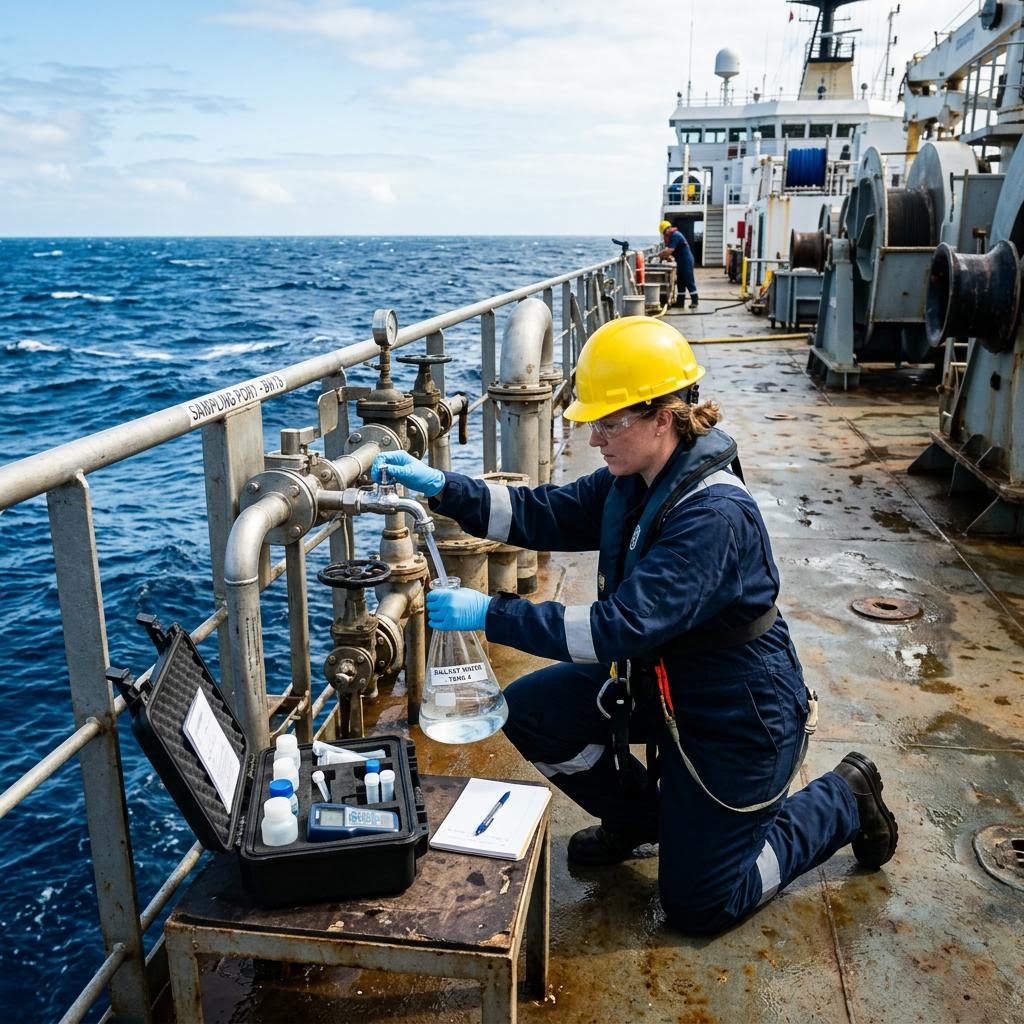
Transport Canada and, in the Great Lakes, joint Canada-US inspections check ballast water documentation, the treatment system and the consistency of records and reports. Where doubt exists, officers may take or witness samples, using indicative analysis for a rapid on-board indication and detailed analysis in an accredited laboratory for defensible organism counts.
A documented, operating system with consistent records keeps these inspections routine, while discrepancies between reports, records and equipment tend to invite closer scrutiny. The Great Lakes system, given its history, sees especially careful checking of ships entering from outside the waterway.
Sea Clean supports representative sampling and supplies consumables and reagents, while accredited laboratories and authorised parties perform and certify any detailed analysis. Sea Clean is not an accredited testing laboratory; its role is to keep the sampling and documentation reliable so the certified analysis proceeds smoothly.
How Sea Clean Supports Canadian Calls
Sea Clean is a Norwegian maritime company in Haugesund and Karmsund with a Rotterdam presence. Canada is outside its direct attendance range, so support is provided by arrangement: parts and reagents supplied via courier and forwarding, engineer mobilisation as flights, visas and port access allow, and coordination with local agents and accredited laboratories.
There is no standing Sea Clean office in Canada and no promise of instant arrival. The practical contribution for a Canadian-bound vessel is preparing equipment and documentation before the voyage, supplying reagents and parts for the passage, and arranging any sampling or attendance through partners on the ground.
Operators planning Canadian calls can contact post@seaclean.no with the vessel name, IMO number, installed BWMS make and itinerary, including any Great Lakes or Seaway transit. Early engagement lets reagents and parts be staged and any commissioning or sampling support arranged with accredited parties.
Frequently asked questions
How does Canada regulate ballast water?
Canada implements the IMO Ballast Water Management Convention through Transport Canada's Ballast Water Regulations, which apply the Convention's standards while adding provisions for the shared Great Lakes and St Lawrence Seaway system and coordination with the United States.
Why are the Great Lakes treated specially?
The Great Lakes and St Lawrence Seaway are a sensitive freshwater system with a long history of invasive species, so ballast water management there is among the most closely regulated in the world. Ships entering from outside face specific expectations on exchange and flushing in addition to the D-2 treatment standard.
Can Sea Clean attend a vessel in a Canadian port?
Canada is outside Sea Clean's direct attendance range. Support is by arrangement: parts and reagents via courier and forwarding, engineer mobilisation as flights, visas and port access allow, and coordination with local agents and accredited laboratories. There is no standing office and no promise of instant arrival.
Does Sea Clean certify ballast water analysis in Canada?
No. Sea Clean is not an accredited testing laboratory. It supports representative sampling and supplies kits and reagents, while accredited laboratories and authorised parties perform and certify any detailed analysis used for compliance in Canada.