Ballast Water Compliance Transiting the Panama Canal
Updated
Ships transiting the Panama Canal pass through freshwater Gatun Lake, which raises specific ballast water management questions on top of the IMO BWM Convention requirements that Panama applies as both a coastal state and a major flag administration. This article explains the regime around a canal transit, the freshwater discharge considerations, and how Sea Clean AS supports sampling coordination, BWMS testing and reagent supply for vessels in the region.
Key takeaways
- Panama is both the canal coastal state and the largest ship flag, applying the BWM Convention in both roles.
- A canal transit crosses freshwater Gatun Lake, which affects organism profiles and some treatment systems.
- Operation of a type-approved system to the IMO D-2 standard is the working requirement, not exchange alone.
- Treatment performance can vary across salinities, so verify the system stays within its approved envelope.
- A valid certificate, approved plan and consistent record book are central to passing inspection.
- Sea Clean coordinates sampling and commissioning with accredited labs and is not itself an accredited laboratory.
Panama's Dual Role
Panama is both the coastal state controlling the canal and the world's largest ship registry, so its relationship with ballast water regulation is significant in two directions. As a Party to the IMO Ballast Water Management Convention, Panama applies the Convention's standards to vessels in its waters and to ships flying its flag worldwide.
A vessel transiting the canal is therefore subject to the BWM Convention's D-2 discharge standard and the broader management, recordkeeping and survey obligations the Convention imposes. There is no exemption from these duties simply because a call is a transit rather than a cargo port stay.
For the very large Panama-flagged fleet, the registry's expectations on type-approved systems, commissioning testing and surveys also apply, regardless of where the vessel trades. Operators of Panama-flag ships should treat flag-state ballast water requirements as a constant, not only a canal-transit issue.
The Freshwater Transit Through Gatun Lake
A canal transit takes a vessel from saltwater through the locks into Gatun Lake, a large freshwater body, and back to saltwater on the other coast. This freshwater passage matters for ballast water because organisms and water characteristics differ markedly between marine and fresh environments, and because the canal authority is sensitive to anything affecting the lake's water system.
Operators planning ballast operations around a transit should consider when and where uptake and discharge occur relative to the freshwater section, and ensure any discharge meets the D-2 standard through the treatment system. The transit is short, so most ballast management is planned around the wider voyage rather than within the canal itself.
Treatment systems that rely on salinity, UV transmittance or specific water chemistry can behave differently in fresh versus marine water, which is relevant if ballast operations coincide with the lake passage. Understanding the system's behaviour across salinities helps avoid an out-of-specification discharge.
Discharge Standard and Treatment Operation
The working requirement for vessels in Panamanian waters is operation of a type-approved ballast water management system meeting the IMO D-2 discharge standard. Ballast water exchange alone is no longer a long-term compliance route under the Convention's timetable, so a functioning treatment system is the expectation.
Electrochlorination and other oxidant-based systems need their total residual oxidant monitored and neutralised before discharge, while UV systems depend on adequate transmittance and lamp condition. Across the salinity changes of a transit, verifying that the system remains within its approved operating envelope is good practice.
Sea Clean supplies TRO test kits, sodium thiosulfate neutraliser and BWMS spare parts, and supports self-monitoring so the operating record stands up to inspection. We are not an accredited testing laboratory; where analytical confirmation is needed it is carried out by an accredited laboratory.
Records, Surveys and Inspection
A vessel must hold a valid International Ballast Water Management Certificate, an approved Ballast Water Management Plan and a Ballast Water Record Book, with entries that match the treatment system's operating logs. These documents are the basis on which any inspection during or around a transit will be assessed.
Port State Control attention in the region, and inspection by the canal authority's surveyors where relevant, focuses on whether documentation is current and whether the recorded ballast operations are plausible. Discrepancies between the record book, the plan and the system logs are the most common findings.
Keeping the records consistent and the certificate and survey status valid before arrival is the most reliable way to pass through a transit without a ballast-water finding adding to the schedule pressure of a canal slot.
Sampling and Commissioning Support
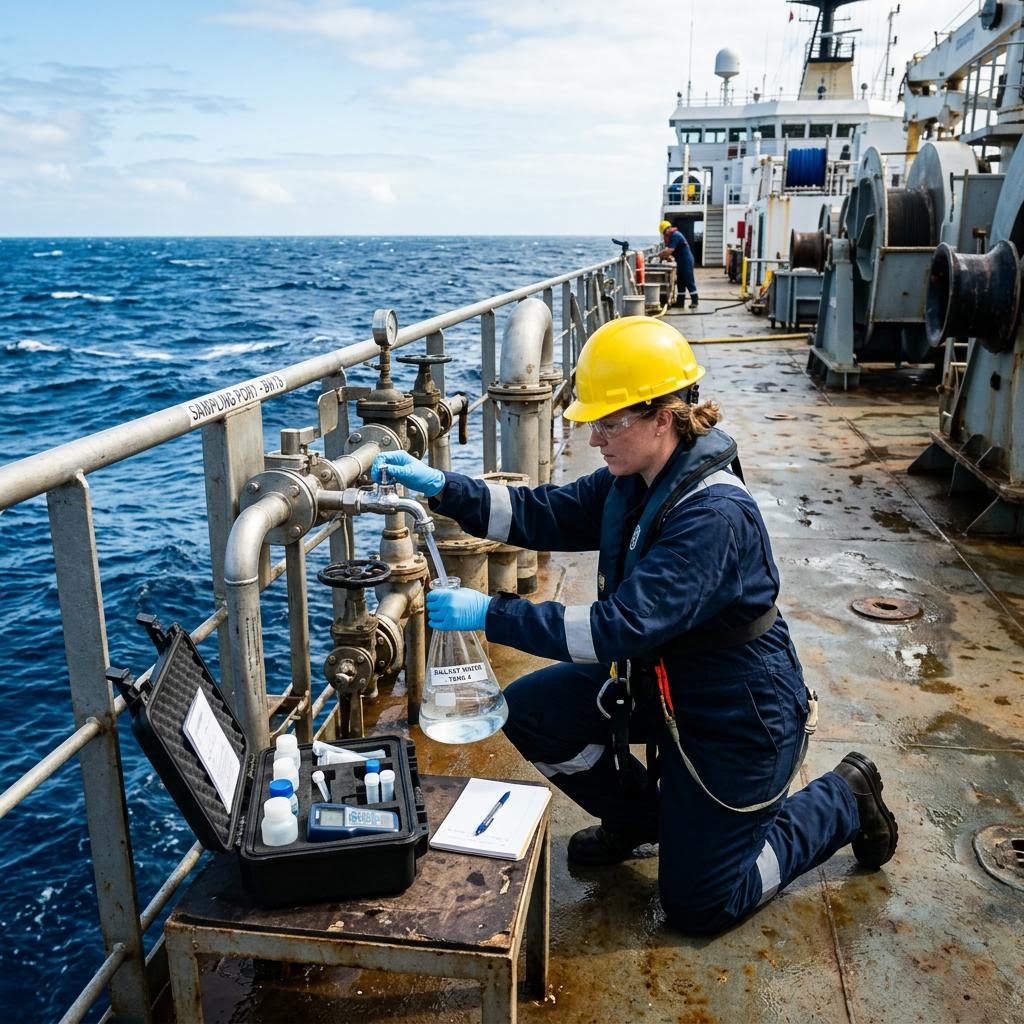
Where sampling is required, whether for commissioning a newly installed system or for verification, it is arranged with parties authorised by the flag administration or class, and analysis is performed by an accredited laboratory. IMO BWMS Code commissioning testing under MEPC.325(75) follows this route and produces documentation for the vessel's compliance file.
Indicative analysis can give a rapid on-board indication of whether a discharge is broadly within limits, while detailed analysis by an accredited laboratory provides the definitive result. The two serve different purposes and are not interchangeable for formal compliance.
Sea Clean coordinates and supports representative sampling and commissioning attendance in cooperation with accredited laboratories and authorised parties, supplying sampling support, reagents and on-board attendance. The accredited party performs and certifies the analysis.
Planning a Transit
Before a canal transit, confirm that the treatment system is operable, the certificate and survey status are valid, the ballast water plan reflects the system in use, and the record book is up to date. Plan ballast uptake and discharge around the voyage and the freshwater section rather than improvising during the transit.
Because canal slots are scheduled tightly, a ballast-water problem discovered late can be costly. Reviewing system status and documentation in advance keeps the transit on schedule.
Sea Clean can supply reagents and BWMS spare parts and coordinate verification or commissioning sampling with accredited parties for vessels in the region. Send the vessel name, IMO number, ETA and requirement to post@seaclean.no to begin coordination.
Frequently asked questions
Is ballast water exchange enough for a canal transit?
No. Under the BWM Convention timetable, exchange alone is no longer a long-term compliance route. Vessels are expected to operate a type-approved treatment system meeting the IMO D-2 discharge standard.
Why does the freshwater section of the canal matter?
The transit passes through freshwater Gatun Lake, where organisms and water chemistry differ from marine water. Some treatment systems behave differently across salinities, so operators should ensure any discharge during the passage still meets the D-2 standard.
Does Panama's flag status affect ballast water duties?
Yes. Panama is the largest ship registry and applies BWM Convention requirements to its flagged vessels worldwide, including type-approved systems, commissioning testing and surveys, regardless of where the ship trades.
Can Sea Clean perform the analysis for a Panama transit?
Sea Clean is not an accredited testing laboratory. We coordinate and support sampling and BWMS commissioning testing with accredited laboratories and authorised parties, and supply reagents, test kits and spare parts.
Sources
Related articles
- USCG Ballast Water Compliance for Ships Calling the United States
- Ballast Water Commissioning Testing: What Happens On Board
- Total Residual Oxidant (TRO) Monitoring and Neutralisation
- Ballast Water Compliance in Brazil
- Ballast Water Compliance in Australia (AMSA)
- The US EPA VGP and VIDA Framework for Ballast Water