Legacy CLX to current CLX: USB-C, Modbus and analogue-output upgrade checks
Updated
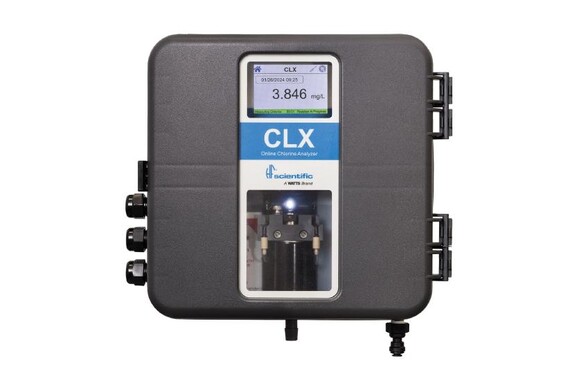
USB-C, Modbus TCP and analogue-load capacity are generation-specific. The current CLX manual must not be used as evidence that a legacy CLX-XT already supports those functions.
Key takeaways
- Identify generation and actual ports.
- Separate USB logging from Modbus TCP.
- Test normal signals, faults and standby behaviour.
Create a generation-specific interface schedule
The supplied XT manual specifies RS-485 Modbus and a powered, isolated 4–20 mA output with 600-ohm drive. The current CLX manual lists RS-485 or Modbus TCP, USB Type C for logs or firmware and a 1000-ohm analogue output. Identify the installed hardware and required signals before ordering; the shared CLX name does not establish equivalent terminals or firmware.
Do not confuse USB and network communications
The current manual documents USB options separately from Modbus TCP configuration. USB-C is described for error/data-log download and firmware updates, not as the Ethernet transport for Modbus TCP. Define the actual network port, controller protocol and connection requirements from the offered revision. A USB connector alone does not prove compatibility with the vessel's automation network.
Review the complete analogue loop
Confirm powered versus passive interfaces, total loop load, controller input arrangement, isolation and configured range. A higher stated drive capacity does not remove the need to check wiring and signal compatibility. Include fault-current behaviour and the receiving controller's response in acceptance testing; a correct process reading alone does not demonstrate that fault handling works.
Plan settings and operational handover
Record addresses, baud rate where applicable, scaling, alarms, cycle settings and standby behaviour before removing the old unit. The supplied manuals differ in default cycle time, so restoring only a measurement range is insufficient. Agree which team configures the analyser, which team changes the controller, and how both normal and fault conditions will be documented.
Illustrative procurement scenario
A replacement proposal advertises USB-C as an upgrade benefit. The engineering review confirms that the existing controller actually requires RS-485, so the purchase specification focuses on protocol, settings and acceptance checks instead of the connector headline.
Request a matched CLX quotation
Sea Clean is a Watts distributor. We source, supply and repair all CLX variants and supply normal, zig-zag and J.A.W. TRO reagent kits competitively. Stocked products are ready for delivery; confirm the exact item and quantity. Estimated DHL Express transit is 1–4 days on suitable routes, subject to dispatch, customs and final vessel handover.
For this enquiry, include: Existing and proposed model/revision; controller make; RS-485/TCP/analogue requirements; loop load; existing settings; required commissioning evidence.
Equipment enquiries: CLX monitor supply
Consumables: TRO reagent kits
Service support: BWTS service and calibration
Frequently asked questions
Does the current CLX send Modbus TCP through USB-C?
The manufacturer documentation treats USB-C logging/firmware and Modbus TCP as separate functions. Do not assume USB-C is the network connection.
Manufacturer PDFs & direct enquiries
Original manufacturer documents hosted directly by Sea Clean. Match the model and revision before use.
- Current CLX manual — 100350 Rev. 1 (PDF)
- CLX-XT installation, operation and maintenance manual (PDF)
- Current CLX engineering specification (PDF)
Email CLX enquiry to post@seaclean.no
Opens an email draft. Attach nameplate and bottle photographs, add your requirements, then send. No website form.
Explore all 15 CLX buying and service guides
- HF scientific CLX family: select the model and generation before buying
- CLX-XT 28030 datasheet: what an engineering purchase specification needs
- OEM-labelled CLX and MU units: identifying the monitor behind the BWMS label
- CLX-Ex and Ex2 supply and repair: verify the hazardous-area assembly
- CLX-XT versus XT2: enclosure and retrofit checks before replacement
- Techcross zig-zag TRO reagent kits: match the installed bottle arrangement
- J.A.W. powder reagent kits: distilled-water preparation and purchase checks
- Compare normal, zig-zag and J.A.W. TRO kits on delivered usable cost
- HF scientific CLX spare parts: avoid a near-match service kit
- CLX stock and DHL Express delivery: plan the final handover to the vessel
- CLX-XT repair or replacement: make the decision from the fault evidence
- CLX-XT cooling chamber: investigate shortened reagent life safely
- Legacy CLX to current CLX: USB-C, Modbus and analogue-output upgrade checks
- CLX DPD accuracy: turn a datasheet tolerance into an acceptance requirement
- Watts distributor CLX support: one enquiry for supply, repair and service
Sources
- Current CLX manual — 100350 Rev. 1 — Current-generation display, diagnostics and communications; 24420 is part of the source filename, not the printed manual number. Manufacturer PDF hosted by Sea Clean; reviewed 9 November 2026.
- CLX-XT installation, operation and maintenance manual — Watts-hosted 28652 revision 5 file; match the installed serial number and software. Manufacturer PDF hosted by Sea Clean; reviewed 9 November 2026.
- Current CLX engineering specification — Current-generation CLX; do not apply its interfaces to older XT instruments. Manufacturer PDF hosted by Sea Clean; reviewed 9 November 2026.
Related articles
- CLX DPD accuracy: turn a datasheet tolerance into an acceptance requirement
- Watts distributor CLX support: one enquiry for supply, repair and service
- HF scientific CLX family: select the model and generation before buying
- CLX-XT 28030 datasheet: what an engineering purchase specification needs
- OEM-labelled CLX and MU units: identifying the monitor behind the BWMS label
- CLX-Ex and Ex2 supply and repair: verify the hazardous-area assembly