CLX DPD accuracy: turn a datasheet tolerance into an acceptance requirement
Updated
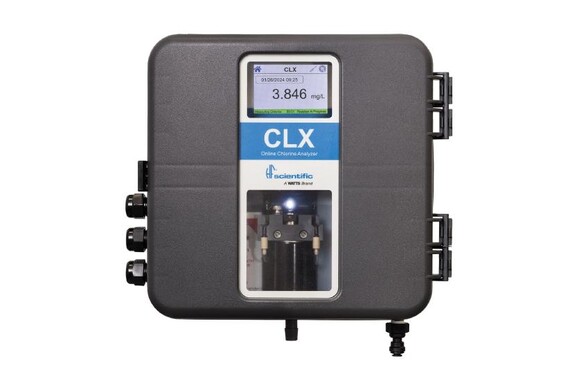
A CLX acceptance requirement should state the model, operating range, reference method and applicable tolerance. Resolution, accuracy and biological ballast-water compliance are different measures.
Key takeaways
- State model, range and applicable accuracy.
- Define sampling and reference method.
- Keep resolution, calibration and biological compliance separate.
Understand what the analyser measures
The XT manual describes DPD colorimetry using a 515 nm LED: reagent produces colour in response to oxidants, and the instrument compares the reacted sample with the unreacted sample. In a BWMS application this supports TRO monitoring. It does not directly count organisms, and a satisfactory TRO reading does not by itself demonstrate biological D-2 compliance.
Apply the larger term in the accuracy statement
For the supplied XT standard range through 6.0 mg/L, the stated tolerance is ±5% of reading or ±0.03 mg/L, whichever is greater. At 0.20 mg/L, 5% is 0.01 mg/L, so the 0.03 mg/L term governs. At 4.0 mg/L, 5% is 0.20 mg/L and governs instead. These are illustrations of the stated specification, not a complete measurement-uncertainty budget.
Avoid using display digits as acceptance evidence
A fine display resolution does not prove equally fine accuracy. The reference method has its own uncertainty, sampling can introduce differences, and changing concentrations can make non-simultaneous samples incomparable. Specify the sampling arrangement and time relationship, reference equipment and applicable procedure. Do not invent an arbitrary agreement percentage that conflicts with the monitor's specified performance.
Define certificate scope before service
An RFQ for calibration should identify the instrument and range, required reference, acceptance basis and report contents. Clarify whether the work includes adjustment, verification before and after service, or only a documented check. Sea Clean can scope instrument service and calibration; it is not an accredited laboratory, and a calibration document must not be represented as BWMS type approval or a biological test result.
Illustrative procurement scenario
A purchaser expects every reading to agree within 5%, including very low concentrations. The specification review identifies the absolute ±0.03 mg/L term and establishes a realistic, documented acceptance method before attendance.
Request a matched CLX quotation
Sea Clean is a Watts distributor. We source, supply and repair all CLX variants and supply normal, zig-zag and J.A.W. TRO reagent kits competitively. Stocked products are ready for delivery; confirm the exact item and quantity. Estimated DHL Express transit is 1–4 days on suitable routes, subject to dispatch, customs and final vessel handover.
For this enquiry, include: Monitor model/serial; range; required calibration or verification; reference method; acceptance criteria; certificate requirements; port and date.
Equipment enquiries: CLX monitor supply
Consumables: TRO reagent kits
Service support: BWTS service and calibration
Frequently asked questions
Is a 0.001 mg/L display resolution the same as ±0.001 mg/L accuracy?
No. Display resolution is the smallest displayed increment; use the manufacturer's accuracy specification and a suitable verification method.
Manufacturer PDFs & direct enquiries
Original manufacturer documents hosted directly by Sea Clean. Match the model and revision before use.
Email CLX enquiry to post@seaclean.no
Opens an email draft. Attach nameplate and bottle photographs, add your requirements, then send. No website form.
Explore all 15 CLX buying and service guides
- HF scientific CLX family: select the model and generation before buying
- CLX-XT 28030 datasheet: what an engineering purchase specification needs
- OEM-labelled CLX and MU units: identifying the monitor behind the BWMS label
- CLX-Ex and Ex2 supply and repair: verify the hazardous-area assembly
- CLX-XT versus XT2: enclosure and retrofit checks before replacement
- Techcross zig-zag TRO reagent kits: match the installed bottle arrangement
- J.A.W. powder reagent kits: distilled-water preparation and purchase checks
- Compare normal, zig-zag and J.A.W. TRO kits on delivered usable cost
- HF scientific CLX spare parts: avoid a near-match service kit
- CLX stock and DHL Express delivery: plan the final handover to the vessel
- CLX-XT repair or replacement: make the decision from the fault evidence
- CLX-XT cooling chamber: investigate shortened reagent life safely
- Legacy CLX to current CLX: USB-C, Modbus and analogue-output upgrade checks
- CLX DPD accuracy: turn a datasheet tolerance into an acceptance requirement
- Watts distributor CLX support: one enquiry for supply, repair and service
Sources
- CLX-XT installation, operation and maintenance manual — Watts-hosted 28652 revision 5 file; match the installed serial number and software. Manufacturer PDF hosted by Sea Clean; reviewed 9 November 2026.
- Current CLX manual — 100350 Rev. 1 — Current-generation display, diagnostics and communications; 24420 is part of the source filename, not the printed manual number. Manufacturer PDF hosted by Sea Clean; reviewed 9 November 2026.
Related articles
- Watts distributor CLX support: one enquiry for supply, repair and service
- HF scientific CLX family: select the model and generation before buying
- CLX-XT 28030 datasheet: what an engineering purchase specification needs
- OEM-labelled CLX and MU units: identifying the monitor behind the BWMS label
- CLX-Ex and Ex2 supply and repair: verify the hazardous-area assembly
- CLX-XT versus XT2: enclosure and retrofit checks before replacement