BWTS UV Lamp and Quartz Sleeve Replacement
Updated
UV-based ballast water systems depend on lamps delivering a validated dose through clean quartz sleeves. Lamps decay and sleeves foul, so timely replacement is central to keeping treatment effective. This article explains when to replace UV lamps and sleeves, how the job is done safely, and how Sea Clean supplies parts and verifies the result.
Key takeaways
- UV treatment depends on lamp output and clean quartz sleeves delivering a validated dose.
- Under-treatment is invisible without measurement, so UV intensity readings and lamp hours are watched together.
- Replace lamps on accumulated hours before decay drops the dose, and replace cracked or heavily fouled sleeves.
- A working wiper system is essential; a failed wiper lets fouling cut the dose quickly.
- Work is done under isolation and permit-to-work, with careful handling of fragile, contamination-sensitive parts.
- Restoration is complete only when the dose is verified back to specification and documented.
How UV Treatment Depends on Lamps and Sleeves
A UV ballast water system inactivates organisms by exposing the water to ultraviolet light at a validated dose. That dose depends on the lamps producing enough UV output and on clean quartz sleeves letting the light reach the water. If either declines, the delivered dose can fall below the level the system was approved for, even though the unit still appears to run.
This is the central risk of UV systems: under-treatment is invisible without measurement. A lamp near the end of its life or a sleeve coated with scale or fouling reduces performance silently. The UV intensity sensor exists precisely to make this visible, which is why its reading and the lamp hours are watched together.
Keeping lamps within their service life and sleeves clean is therefore not cosmetic maintenance; it is what keeps the system delivering the dose required for compliance.
When to Replace UV Lamps
UV lamps lose output gradually over their rated life, so replacement is driven by accumulated running hours rather than waiting for a lamp to fail outright. The maker specifies a service life, and lamps should be changed before their decay drops the delivered dose below the validated level. Tracking hours per lamp is the basis for this decision.
A lamp can also fail early or show unstable operation, which the system flags as a fault. Because a single failed lamp in a multi-lamp reactor can pull the whole reactor below its dose, the fault is real even when most lamps still work. Replacement of the affected lamp restores the array to full output.
Sea Clean plans lamp replacement against hours and condition so it happens during routine attendance rather than as an emergency, and supplies the correct lamps for the specific reactor.
Quartz Sleeves and the Wiper System
Quartz sleeves protect the lamps from the water while letting UV through. Over time they foul with scale, biofilm or sediment depending on the water the vessel ballasts in, which blocks UV transmission and cuts the delivered dose. Many systems have a mechanical wiper that cleans the sleeves during operation to slow this fouling.
Replacement is needed when a sleeve is cracked, etched, or so fouled that cleaning no longer restores transmission. The wiper mechanism itself must be checked and serviced, because a failed wiper lets fouling build quickly and undermines the whole UV stage. Inspecting sleeves and exercising the wiper are routine parts of UV service.
Sea Clean inspects sleeves and the wiper during service, cleans where cleaning suffices, and replaces sleeves and wiper components where they no longer perform, supplying the correct parts for the reactor.
Doing the Job Safely
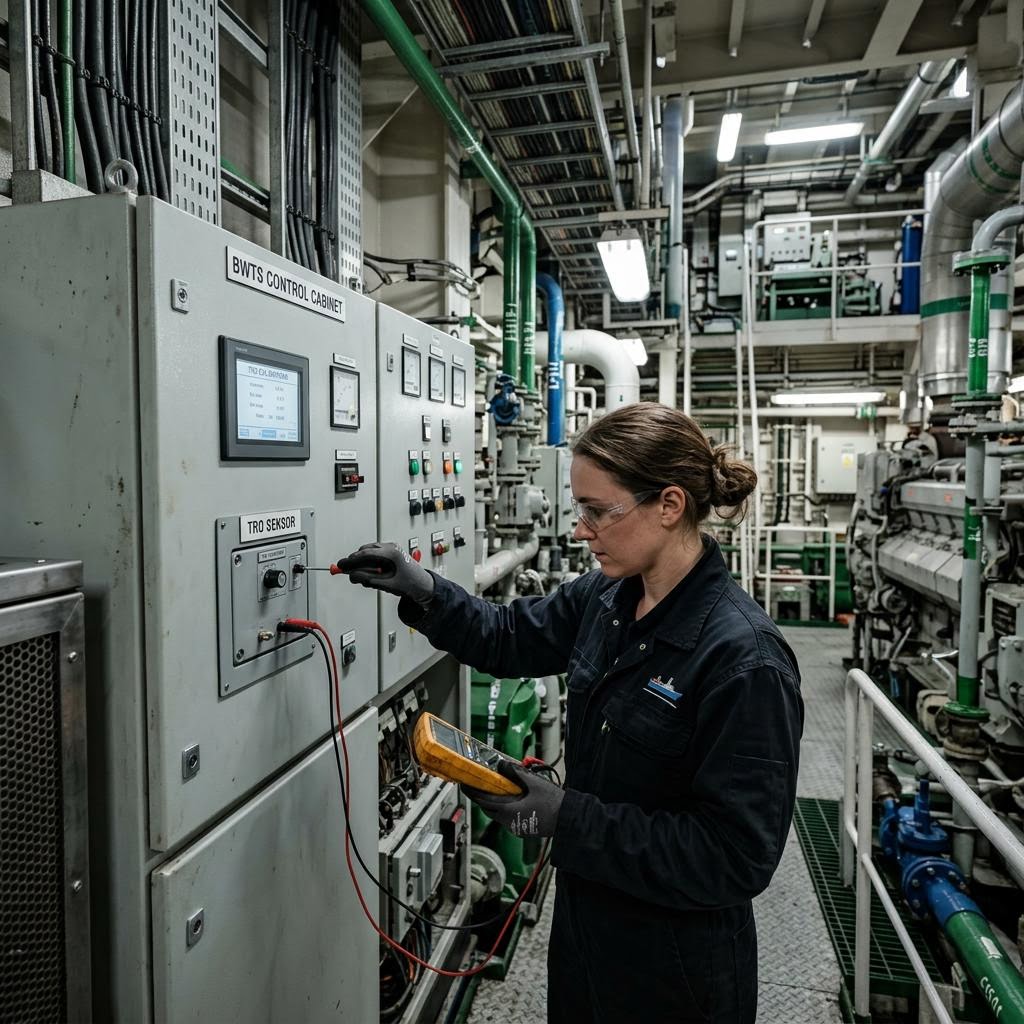
Replacing lamps and sleeves means working on electrical equipment and fragile quartz, so the work is done under the vessel's isolation and permit-to-work procedures. The reactor is isolated and drained, power is locked off, and the components are handled carefully because quartz is brittle and lamps may contain materials that require correct handling and disposal.
Cleanliness matters: fingerprints and contamination on a new lamp or sleeve can reduce UV transmission, so components are handled with the maker's recommended care. Seals and O-rings are inspected and renewed as needed to prevent leaks when the reactor is refilled.
The engineer follows these steps methodically rather than rushing within a tight port window, which is one reason larger UV refits are sometimes better suited to a sailing service.
Verification After Replacement
Fitting new lamps and sleeves is not the end of the job; the system must be confirmed to deliver its dose again. After refilling and restarting, the UV intensity sensor reading is checked against the expected value, and the system is run through a function test so the control system confirms normal operation and clears any related alarms.
Where required, the UV intensity sensor is verified or calibrated so its reading genuinely reflects the dose, since an inaccurate sensor can hide either under- or over-performance. Lamp hour counters are reset for the replaced lamps so future planning stays accurate.
The work, parts and verification results are documented so the vessel holds evidence that the UV stage is performing for class and port state. Restoration is complete only when the dose is demonstrably back to specification.
Parts Supply and Brand Scope
Sea Clean supplies UV lamps, quartz sleeves, wiper components, seals and UV intensity sensors, dispatched against the system make, model and serial to ensure the correct parts. For worldwide calls these are often shipped ahead to a local agent so they are waiting when the engineer arrives, and a sensible onboard holding of lamps and sleeves lets the crew handle minor replacements between services.
For Headway OceanGuard UV systems the work and parts are provided under authorized Headway Technology agency. For other UV makes such as Alfa Laval PureBallast, Wärtsilä, Optimarin and others, Sea Clean provides the same lamp and sleeve service as independent service and parts support, without claiming OEM authorisation by those brands.
To order parts or arrange replacement, send the system details and lamp hours to post@seaclean.no so the correct components and a realistic attendance window can be planned.
Frequently asked questions
How do I know when UV lamps need replacing?
Lamps are replaced on accumulated running hours before their gradual decay drops the delivered dose below the validated level, and immediately if one fails or runs unstably. Tracking hours per lamp and watching the UV intensity sensor is the basis for the decision.
Can quartz sleeves just be cleaned instead of replaced?
Often yes, if the wiper or a manual clean restores UV transmission. Sleeves are replaced when they are cracked, etched, or so fouled that cleaning no longer works. The wiper mechanism is also checked, since a failed wiper lets fouling build quickly.
Is verification needed after fitting new lamps?
Yes. After replacement the UV intensity reading is checked against the expected value, the system is function-tested, the sensor is verified or calibrated where required, and lamp hour counters are reset. The job is complete only when the dose is demonstrably back to specification and documented.
Does Sea Clean service non-Headway UV systems?
Yes. Headway OceanGuard UV work and parts are provided under authorized agency, and the same lamp and sleeve service is provided for other UV makes such as Alfa Laval PureBallast, Wärtsilä and Optimarin as independent service and parts support, without claiming OEM authorisation.