Alfa Laval PureBallast Service Support
Updated
Alfa Laval PureBallast is a UV-based ballast water treatment system used across many vessel types, relying on UV reactors, lamps, quartz sleeves and a cleaning-in-place routine. This article explains how the system works and its main maintenance points, and describes how Sea Clean AS provides independent PureBallast service, parts and engineer attendance.
Key takeaways
- PureBallast is a UV-based BWTS combining a filter with UV reactors and no chemical dosing.
- UV lamps are the primary consumable; replace them on hours before a low-UV alarm halts treatment.
- Fouled or cracked quartz sleeves block UV dose; the CIP routine keeps sleeves clean between intervals.
- Low water transmittance reduces ballasting rate by design and is not in itself a fault.
- Sea Clean provides independent PureBallast service and parts and does not claim Alfa Laval OEM authorization.
- Engineer ETA is typically 0-24h for Norway and North Sea, and as fast as logistics allow worldwide.
How PureBallast Treats Ballast Water
PureBallast is a UV-based ballast water management system that combines a pre-treatment filter with one or more UV reactors. During ballasting, filtered water passes through the reactor where UV light inactivates organisms; on deballasting the water passes through the UV stage again to inactivate any regrowth, with no chemical dosing involved.
Because treatment relies on delivered UV dose, the system continuously monitors UV intensity and adjusts lamp power and flow to maintain the required dose. Water transmittance, lamp condition and sleeve cleanliness all affect the delivered dose, which is why the cleaning and lamp-management functions are central to the design.
Later PureBallast generations improved energy efficiency and UV lamp technology, but the core maintenance logic is consistent across versions: keep the lamps healthy, keep the quartz sleeves clean and clear, and keep the UV sensors accurate so the controller doses correctly.
UV Lamps and Quartz Sleeves
UV lamps are the primary consumable in any UV BWTS. They lose output gradually over their rated operating hours, and the controller compensates until the lamp can no longer maintain dose, at which point a low-UV alarm appears. Tracking lamp hours and replacing lamps before they fail in service avoids losing treatment capacity during a critical ballast operation.
Quartz sleeves protect the lamps from the water while letting UV through. Fouling or scaling on the sleeve blocks UV and reduces delivered dose even with a healthy lamp, so the cleaning system and periodic manual cleaning are essential. Cracked or clouded sleeves must be replaced because they compromise both treatment and lamp protection.
Sea Clean supplies UV lamps and quartz sleeves matched to the PureBallast model and reactor type fitted. Handling these components correctly during replacement, including avoiding skin contact with the quartz, is part of the service procedure our engineers follow and advise crews on.
Cleaning-In-Place and Water Quality
PureBallast uses a cleaning-in-place (CIP) routine to keep the quartz sleeves and reactor internals free of the scale and film that build up in seawater service. A functioning CIP cycle, with the correct cleaning solution and a healthy CIP pump, is what keeps the delivered UV dose stable between manual maintenance intervals.
Water transmittance is the operating variable that most affects UV systems. In turbid or low-transmittance water the controller reduces flow to maintain dose, which can limit ballasting rate; this is normal behaviour rather than a fault, and understanding it prevents unnecessary callouts.
Where CIP performance drops, the cause is usually the CIP solution strength, pump condition or a fouled circuit rather than the reactor itself. Sea Clean can supply CIP consumables and check the cleaning circuit as part of a service attendance.
UV Sensors, Filters and Controls
UV intensity sensors tell the controller whether the required dose is being delivered, so sensor accuracy directly affects both treatment and alarms. A drifting or fouled sensor can cause the system to over-power lamps or to alarm unnecessarily, and sensor checks are a standard part of UV BWTS maintenance.
The pre-treatment filter, as on any BWTS, is a routine wear item with elements, seals and a backflush mechanism that need attention as differential pressure rises. Control faults, communication errors and power-supply issues round out the common fault set and usually require methodical checking against the alarm log.
Sea Clean supplies filter elements, sensor components and other PureBallast spares, and supports controls diagnosis during attendance. Reading the alarm history before a visit lets the engineer arrive with the parts most likely to be needed.
Independent Service and Parts Supply
Sea Clean provides independent service and parts support for Alfa Laval PureBallast systems. We are not an authorised Alfa Laval agent and make no claim of OEM approval; we source genuine and compatible PureBallast parts through our supplier network and supply them with the documentation a vessel and class need.
For owners the value of an independent route is a single contact who can combine UV lamps, sleeves, filter parts and CIP consumables with general ship spares in one delivery, often faster than a single-brand channel. Where a genuine OEM component is the right choice, we say so and source accordingly.
Correct identification matters because PureBallast exists in several generations and reactor sizes. Sending the model, reactor type, lamp specification and serial data lets us confirm parts before dispatch and avoids fitting the wrong lamp or sleeve to a reactor.
Engineer Attendance and Planning
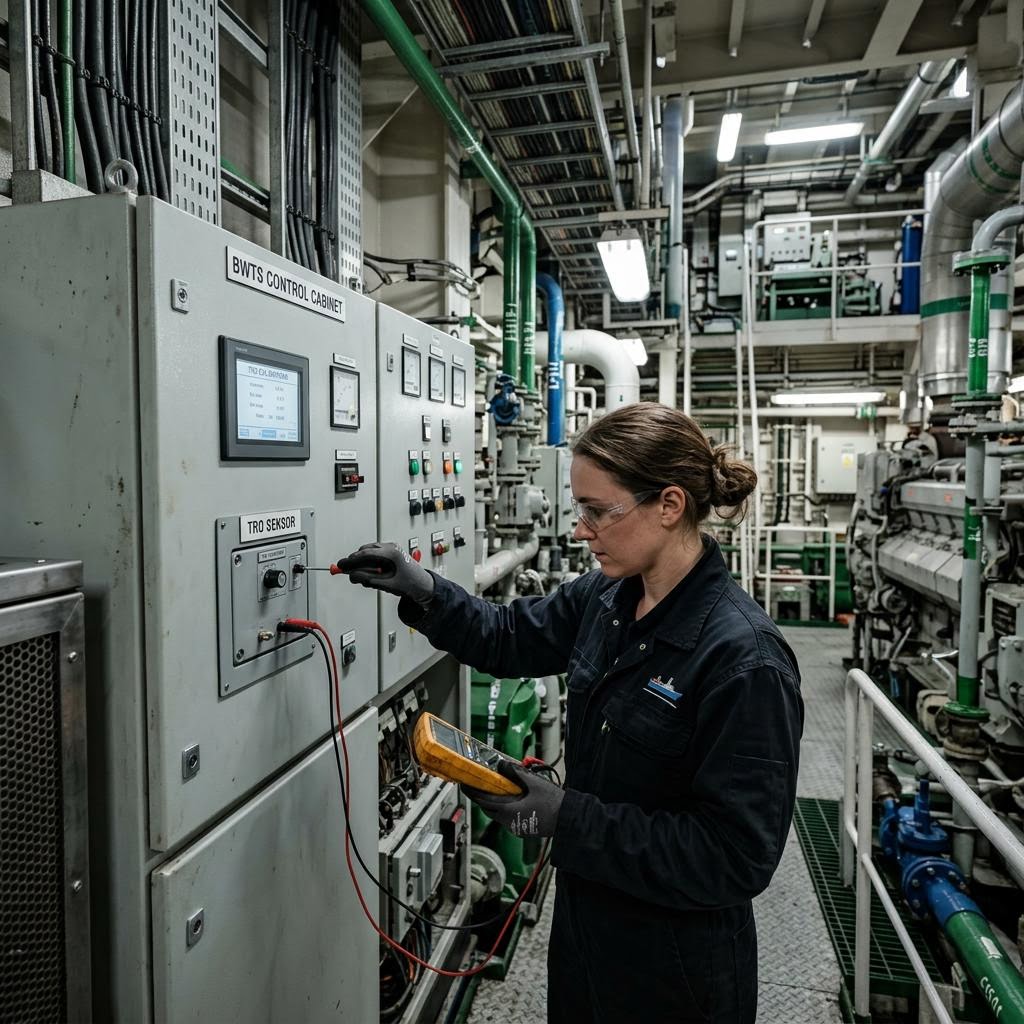
PureBallast service attendance covers lamp and sleeve replacement, CIP checks, sensor verification, filter service and fault diagnosis. Combining a planned service with a parts delivery in one visit reduces the number of port calls and keeps the system available for the next ballast operation.
For Norwegian and North Sea port calls an engineer typically reaches the vessel within 0-24 hours; for worldwide calls mobilisation is as fast as flights, visas and port access allow, with parts routed by courier or air freight to the agent. Honest scheduling means we confirm a realistic ETA rather than promising instant global arrival.
Send the vessel name, IMO number, PureBallast model and the requirement to post@seaclean.no to plan attendance and parts together. Early notice is the main factor in completing the work inside a tight port window.
Frequently asked questions
Is Sea Clean authorised by Alfa Laval for PureBallast?
No. Sea Clean provides independent service and parts support for Alfa Laval PureBallast systems and does not claim OEM authorization. We are an authorized agent only for Headway. For PureBallast we source genuine and compatible parts and supply them with the documentation a vessel and class require.
How often do PureBallast UV lamps need replacing?
UV lamps are replaced based on rated operating hours, since output falls gradually until the controller can no longer maintain dose and a low-UV alarm appears. Tracking lamp hours and replacing lamps before they fail in service prevents losing treatment capacity during a ballast operation.
Why does PureBallast slow the ballasting rate in some water?
In turbid or low-transmittance water the controller reduces flow to maintain the required UV dose. This is normal designed behaviour rather than a fault. Understanding it avoids unnecessary callouts; if dose cannot be maintained even at low flow, then lamp, sleeve or sensor condition should be checked.
What does PureBallast service attendance cover?
Attendance covers UV lamp and quartz sleeve replacement, cleaning-in-place checks, UV sensor verification, filter service and fault diagnosis. Combining a planned service with a parts delivery in one visit reduces port calls. Reading the alarm history in advance lets the engineer arrive with the likely parts.