BWMS Commissioning Testing and Sampling Coordination
Updated
Since IMO resolution MEPC.325(75) took effect, a newly installed ballast water management system must undergo commissioning testing. That testing validates whether the installation's processes — mechanical, physical, chemical and biological — are working as intended, using indicative analysis of a treated-water sample. It is an installation-validation step, not a definitive laboratory test of D-2 compliance, and it is coordination-heavy: it draws together the vessel's ballast operation, a competent sampling and analysis party, and often a class surveyor. This article explains what commissioning testing checks and how Sea Clean coordinates the engineering, sampling and documentation.
Key takeaways
- MEPC.325(75) commissioning testing validates that the installed BWMS works as intended across its mechanical, physical, chemical and biological processes — it is not a definitive D-2 compliance test.
- Commissioning uses indicative analysis of a treated-water sample for a screening-level result; a full detailed laboratory count is a separate, stricter step.
- Commissioning is distinct from type approval: a type-approved model can still show a problem if piped, sequenced or configured incorrectly on board.
- Success depends on choreographing a real ballast operation, an accessible sampling point, a competent analysis party and, where required, class attendance.
- Sea Clean is not an accredited lab; it coordinates sampling logistics and engages accredited ISO 17025 laboratories and authorised parties for analysis.
- An unsatisfactory commissioning result is a diagnostic signal — Sea Clean finds and corrects the installation cause so a repeat test validates cleanly.
What MEPC.325(75) Commissioning Testing Requires
IMO resolution MEPC.325(75) requires a newly installed BWMS to undergo commissioning testing whose purpose is to validate that the installation's processes — the mechanical, the physical, the chemical and the biological — each function correctly to the design specification. The step added over earlier practice is a check on the biological side: a representative sample of treated water is examined by indicative analysis so the engineer can confirm the treatment process is operating as intended on that particular ship, not merely that the equipment powers up.
It is important to frame this correctly. Commissioning testing is validation of the installation, not a definitive laboratory determination of whether the ship meets the D-2 standard. Indicative analysis gives a rapid, screening-level indication that the biological process is working; it is deliberately quicker and less exhaustive than a full detailed laboratory count, and the two serve different regulatory purposes.
The test also applies only at installation — to systems fitted on or after the resolution's effective dates — and is distinct from type approval. Type approval shows the model performs under standardised trial conditions; commissioning validates that this specific installation, as piped, sequenced and configured on this ship, actually runs its treatment processes correctly. A model can be type-approved yet still show a commissioning problem if the onboard installation is defective.
Why Commissioning Is a Coordination Problem
Commissioning testing only succeeds when several parties are choreographed around a real ballast operation. The vessel must actually take on and treat ballast to generate a genuine treated discharge; the sampling team must collect a representative sample from an accessible point at the right moment in the sequence; the laboratory must analyse it within the sample's short viability window; and class may attend to witness the process.
The single most frequent cause of a wasted commissioning attempt is a mismatch of timing — the ballast operation, the sampling team's availability and the vessel's port schedule not lining up. Because organism-viability samples degrade quickly, there is little tolerance for delay between collection and analysis, which is why the analysis is arranged near the port of the test rather than shipped far away.
Sampling-point access is the other perennial issue. If the installation lacks a usable sampling point on the treated discharge line, or the point named in the management plan is unreachable, the test cannot proceed. Identifying and, where necessary, arranging a compliant sampling point before the vessel arrives prevents a cancelled or invalid test.
The Sampling and Analysis Chain
A representative sample is drawn from the treated discharge line during an active deballasting or ballasting operation, using isokinetic or equivalent methods that avoid biasing the organism count. The sample is handled to preserve viability and delivered to the laboratory within the window the analysis method allows, because a mishandled or stale sample produces a result that reflects logistics rather than treatment.
Commissioning normally relies on indicative analysis — rapid, screening-level assessment of organism viability across the regulated 10-to-50µm and 50µm-and-above size ranges — which gives a timely indication of whether the biological treatment process is working. It is not the definitive detailed laboratory count; where an indicative result is borderline or disputed, a full detailed laboratory analysis can follow, taking longer and following a stricter protocol.
Whichever method is used, the work must be handled by a competent party recognised for the purpose, with laboratory analysis performed to the relevant standards, typically ISO 17025 accreditation. Sea Clean is not itself an accredited test laboratory; its role is to organise the sampling logistics and to bring in accredited ISO 17025 laboratories and flag- or class-authorised parties to carry out the analysis.
Sea Clean's Coordination Role
Sea Clean coordinates the whole commissioning exercise around the vessel's schedule: confirming the sampling point, aligning the ballast operation with the sampling team and the laboratory, and liaising with the class surveyor where attendance is required. This orchestration is what turns a commissioning test from a logistical gamble into a planned, single-visit event.
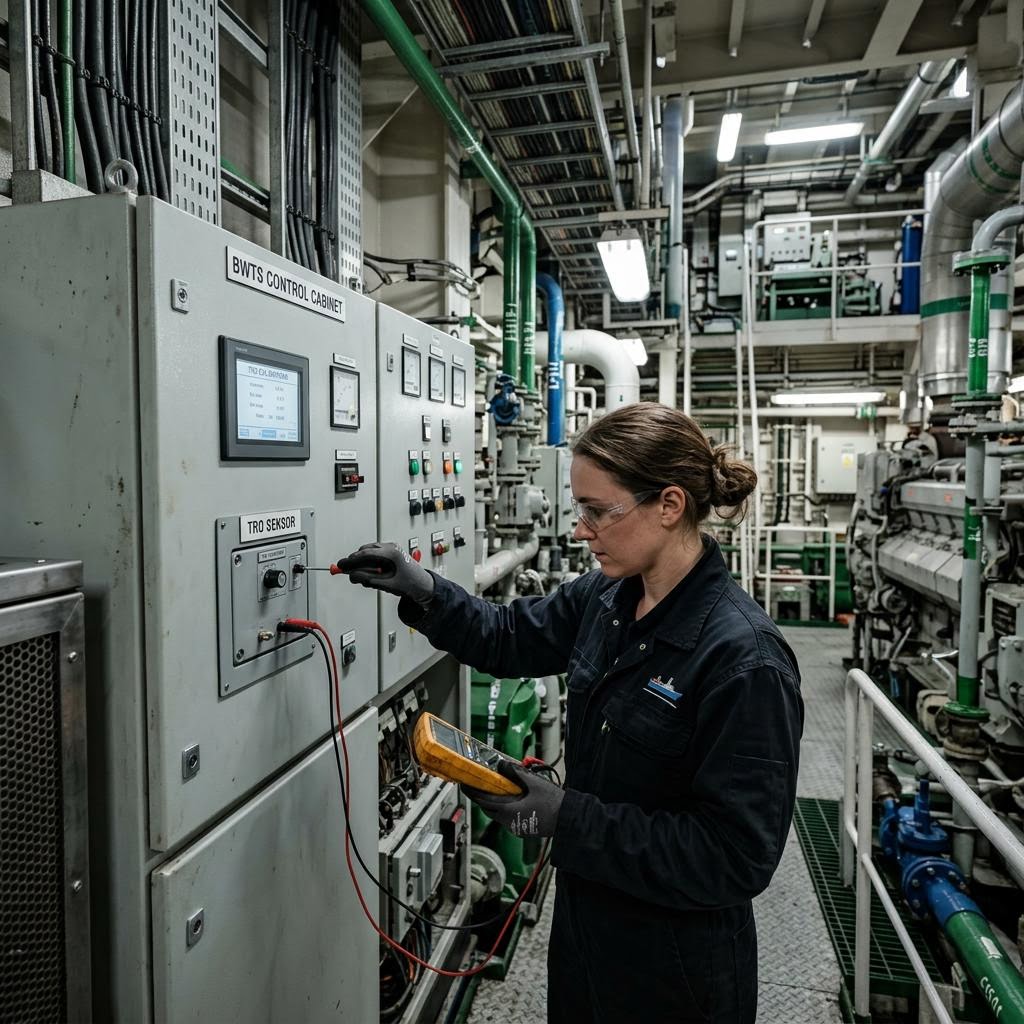
On the engineering side, Sea Clean's attending engineers confirm the installation is correctly configured, the treatment stage is dosing to design, and the sensors read true before the test — because it is far better to correct a configuration fault beforehand than to have the commissioning validation flag a problem and repeat the entire exercise. For Headway OceanGuard systems this is done with manufacturer backing; for other brands the support is independent and not manufacturer-authorized.
Sea Clean's engineers attend vessels across Norway and the North Sea, commonly within 24 hours for planned calls, and coordinate worldwide commissioning by arrangement as flights, visas and port access allow. Bringing the engineering readiness check and the sampling coordination under one contact reduces the number of moving parts the superintendent has to manage.
Documentation and What Happens on an Unsatisfactory Result
A satisfactory commissioning test produces a documented result showing the installation's treatment processes validated as working, together with records of the sampling method, the indicative analysis, and any class witnessing. This package supports the vessel's installation record and is retained with the ship's ballast water documentation for presentation to port State control and the surveyor.
An unsatisfactory commissioning result is a diagnostic signal, not a dead end. It indicates the treatment process is not operating as it should — often a filter bypass, a dosing or configuration error, a sensor problem or an installation defect — and the corrective action follows the diagnosis. Sea Clean's engineering role is to find and correct the cause so a repeat test validates cleanly, rather than simply resampling and hoping.
To arrange commissioning testing, send the vessel name and IMO number, BWTS make and model, installation status, intended port and ETA, and any class requirements to post@seaclean.no. Early engagement lets Sea Clean confirm the sampling point, bring in the accredited laboratory near the port, and schedule the ballast operation so the validation is completed in a single visit.
Retrofits, Newbuilds and Timing
For retrofits, commissioning testing usually happens at or shortly after the yard or riding-crew installation, and it is the validation that the retrofit was executed correctly on that ship before the International BWM Certificate is issued. Building the commissioning coordination into the retrofit plan avoids the common trap of a mechanically complete installation that then stalls for weeks waiting on a sampling and analysis chain that was never arranged.
For newbuilds, commissioning is part of the delivery and sea-trial programme, and the same principles apply: a real ballast operation, a representative sample, indicative analysis by a competent party and, where required, class attendance. Coordinating early with the yard's schedule keeps the sampling step from becoming the item that delays delivery.
In both cases the decisive factor is lead time. The sampling team, the accredited laboratory and the class surveyor all need to be lined up against a firm ballast operation, and the vessel needs a usable sampling point. Sea Clean coordinates these elements together so commissioning is completed cleanly and the vessel leaves with a defensible compliance record.
Frequently asked questions
What does BWMS commissioning testing actually validate?
It validates that the installation functions as intended on your specific ship across its mechanical, physical, chemical and biological processes, using indicative analysis of a treated-water sample. It is an installation-validation step rather than a definitive laboratory determination of D-2 compliance, and it goes beyond type approval, which only shows the model performs under standardised trial conditions.
Does Sea Clean run the laboratory analysis itself?
No. Sea Clean is not an accredited test laboratory. It coordinates the sampling logistics and the engineering readiness, and engages accredited ISO 17025 laboratories and flag- or class-authorised parties to carry out the analysis near the port of the test.
What causes a commissioning result to be unsatisfactory?
Common causes are a bypassing pre-treatment filter, a dosing or configuration error, a sensor reading incorrectly, or an installation defect. An unsatisfactory result identifies a real installation problem; Sea Clean's engineers diagnose and correct the cause so a repeat test validates cleanly rather than simply resampling.
How far ahead should commissioning be arranged?
As early as possible. The sampling team, accredited laboratory and any class surveyor must be lined up against a firm ballast operation, and the vessel needs a usable sampling point. Send vessel and system details plus the intended port and ETA to post@seaclean.no so the validation is completed in a single visit.
Sources
Related articles
- BWMS Commissioning Testing Under MEPC.325(75)
- Ballast Water Commissioning Testing: What Happens On Board
- BWTS Installation and Commissioning Support for Retrofits
- VGP Compliance Sampling Service for US Ballast Discharge
- Headway OceanGuard BWTS Service and Support
- Headway OceanGuard Spare Parts and Consumables