Ballast Water Compliance in Norwegian Waters
Updated
Norway implements the IMO Ballast Water Management Convention through national ballast water regulations overseen by the Norwegian Maritime Authority, with additional attention to sensitive coastal areas. As a Norwegian company based in Haugesund and Karmsund, Sea Clean is positioned to support vessels in Norwegian waters with BWTS parts, reagents, engineer attendance and sampling coordination alongside accredited laboratories.
Key takeaways
- Norway implements the IMO Convention through national ballast water regulations overseen by the Norwegian Maritime Authority.
- As an EEA state, Norway's rules align closely with the Convention applied across northern Europe.
- The D-2 standard applies and normally requires a working type-approved treatment system, with D-1 exchange phased out.
- Sensitive fjord and aquaculture areas mean ballast operations should be planned and documented with extra care.
- Commissioning testing under MEPC.325(75) and sampling are carried out with accredited or authorised parties.
- Sea Clean's Haugesund base gives short response distances for parts, reagents and engineer attendance on the west coast.
Norway's Ballast Water Regime
Norway ratified the IMO Ballast Water Management Convention and gives it effect through national ballast water regulations administered by the Norwegian Maritime Authority. Although Norway is not an EU member, it is part of the EEA, and its ballast water rules align closely with the Convention applied across the rest of northern Europe. Ships meeting the Convention will, in the main, meet Norwegian requirements.
Norway's long, ecologically varied coastline and the importance of its fisheries and aquaculture make invasive species a real concern, so the authorities pay attention to where and how ballast is exchanged or discharged. The national rules incorporate the Convention's standards while reflecting these coastal sensitivities. Operators should treat Norwegian waters as a regime where compliance is taken seriously.
Sea Clean is based in the Haugesund and Karmsund maritime cluster on the Norwegian west coast, which gives it short response distances to vessels along the coast. This local presence helps with parts, reagents and engineer attendance, while the underlying compliance obligations remain those of the Convention as implemented nationally.
The D-2 Standard and Treatment Systems
Vessels subject to the regime must meet the D-2 discharge standard, limiting living organisms in defined size classes and indicator microbes, which in practice requires a working type-approved ballast water management system. The earlier D-1 exchange standard has been phased out as the compliance dates passed, so reliance on exchange alone is no longer the norm.
The Norwegian Maritime Authority and port state control check that the installed system is type-approved, matches the documentation and is operated within its approved parameters. A bypassed or inoperative system is non-compliance regardless of the hardware fitted. Keeping the system serviceable is therefore central to trading in Norwegian waters.
Sea Clean supplies genuine Headway OceanGuard parts and multi-brand BWMS spares from its Norwegian base, along with TRO test kits and sodium thiosulfate neutraliser for residual monitoring of oxidant-based systems. Local stock and supplier relationships mean many items reach vessels on the west coast quickly.
Sensitive Areas and Special Cautions
Norwegian waters include fjords, aquaculture zones and other sensitive areas where the introduction of non-native organisms carries particular risk. The regulations and associated guidance encourage masters to plan ballast operations to minimise that risk, for example by avoiding uptake in areas with known contamination or harmful algal events and by ensuring treatment is fully effective before discharge.
Where a vessel cannot treat ballast as intended, contingency planning and clear records become important so that any deviation can be explained to the authority. The expectation is that ballast operations are deliberate and documented rather than improvised. This is consistent with the Convention but given added weight by Norway's coastal environment.
Sea Clean helps operators keep their treatment systems reliable so the question of contingency arises as rarely as possible, and supports the documentation when ballast planning needs to account for sensitive areas. Reliable equipment and clear records are the practical answer to these heightened expectations.
Commissioning Testing and Sampling
Newly installed ballast water management systems are commissioning tested under IMO resolution MEPC.325(75), with a representative sample of treated water analysed to confirm performance before the system enters service. In Norway this is arranged with the flag administration or recognised organisation and an accredited or authorised testing party. The documented result is retained on board.
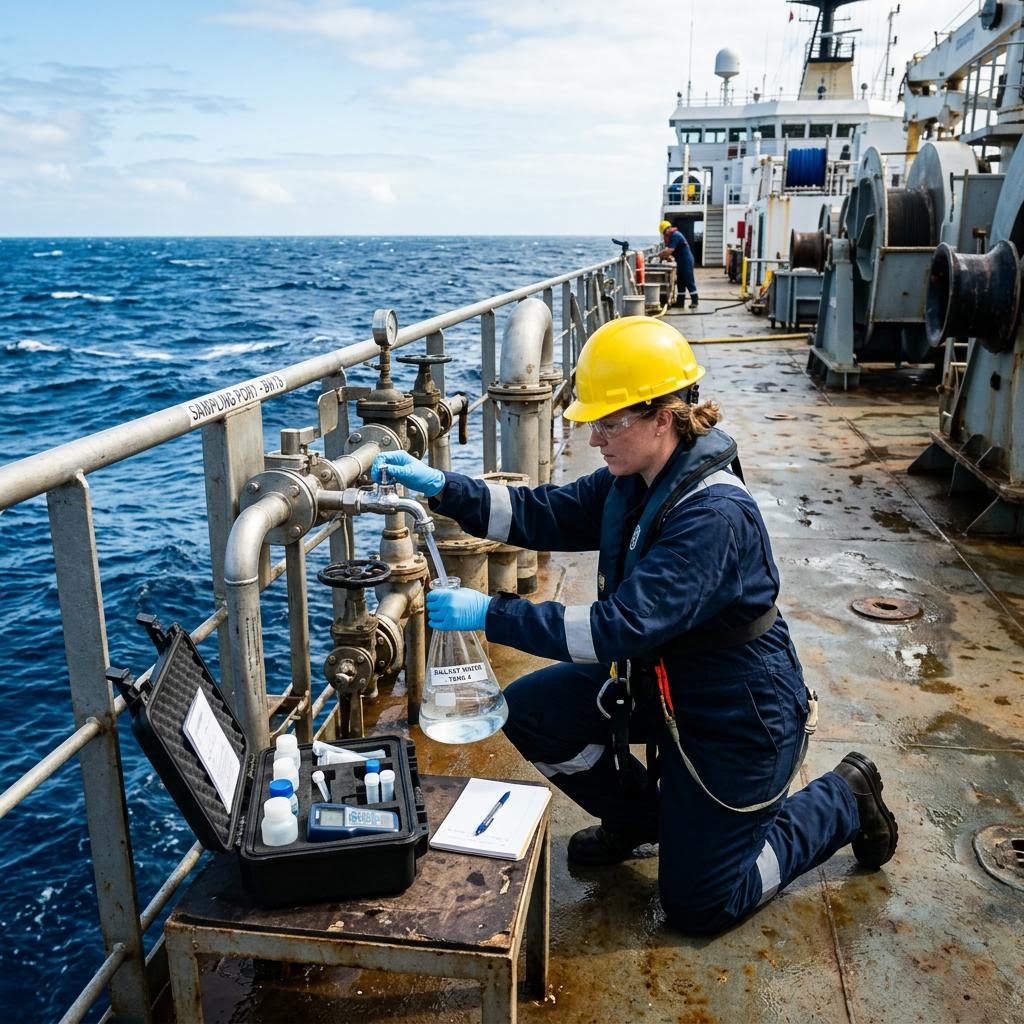
Routine and inspection-driven sampling distinguishes indicative analysis, a rapid on-board screening indication, from detailed analysis carried out in an accredited laboratory that produces defensible organism counts. Both have their place, and Norwegian inspections may draw on either depending on the situation and risk profile.
Sea Clean coordinates and supports sampling and commissioning testing in Norwegian ports, attending to facilitate representative sampling and supplying the kits and reagents, while accredited laboratories and authorised parties perform and certify the analysis. Sea Clean is not itself an accredited testing laboratory.
Records, Certificates and Inspection
Ships in Norwegian waters carry the approved Ballast Water Management Plan, the Ballast Water Record Book and the International Ballast Water Management Certificate where applicable, and these must be present, current and consistent. Norwegian Maritime Authority inspectors and port state control officers expect the documentation to match the installed equipment and the operations recorded.
The record book should capture uptake, treatment, transfer and discharge clearly enough to reconstruct each operation, and the management plan should describe the real sampling points and procedures. Gaps and inconsistencies are among the most common findings, and a plan describing absent equipment undermines the record.
Sea Clean helps align TRO testing and sampling documentation with the plan and record book, and can advise on reagent restocking and system verification before a Norwegian call. Operators can reach the team at post@seaclean.no to coordinate ahead of arrival.
How Sea Clean Supports Norwegian Calls
As a Norwegian company headquartered in Haugesund and Karmsund, Sea Clean has the shortest response distances of any port in its coverage to vessels on the west coast. We supply BWTS spare parts and ballast water reagents, provide service and engineer attendance, and coordinate commissioning and sampling support with accredited laboratories and authorised parties.
Technician attendance from the home base can typically reach west-coast ports such as Bergen, Stavanger and the Karmsund quays within a working day for planned work, and faster for urgent attendance when scheduling allows. Parts and reagents held locally often reach vessels the same or next day, with sourced items routed in by road or air freight.
Owners trading in Norwegian waters can contact post@seaclean.no with the vessel name, IMO number, installed BWMS make and intended ports. Early notice lets us stage parts and reagents, arrange any commissioning support and align documentation before the call.
Frequently asked questions
Does Norway follow the IMO Ballast Water Convention?
Yes. Norway ratified the Convention and implements it through national ballast water regulations overseen by the Norwegian Maritime Authority. As an EEA state its rules align closely with the Convention applied across northern Europe, so Convention-compliant ships generally meet Norwegian requirements.
Are there extra cautions for Norwegian sensitive areas?
Yes. Norway's fjords, aquaculture zones and other sensitive areas carry particular invasive-species risk, so masters are encouraged to plan ballast operations to minimise that risk and to document any deviation. Reliable treatment and clear records are the practical response to these heightened expectations.
How quickly can Sea Clean attend a vessel in Norway?
From its Haugesund and Karmsund base, Sea Clean can typically reach west-coast ports such as Bergen, Stavanger and the Karmsund quays within a working day for planned BWTS work, and faster for urgent attendance when scheduling allows. Locally held parts and reagents often arrive the same or next day.
Does Sea Clean certify ballast water test results in Norway?
No. Sea Clean is not an accredited testing laboratory. It coordinates and supports sampling and commissioning testing, supplying kits and reagents, while accredited laboratories and parties authorised by the flag administration or class perform and certify the analysis.
Sources
Related articles
- Ballast Water Compliance in the European Union
- Ballast Water Testing and Sampling at the Port of Bergen
- Ballast Water Commissioning Testing: What Happens On Board
- BWTS Service and Engineer Attendance on the Norwegian West Coast
- Ballast Water Compliance in Argentina
- USCG Ballast Water Compliance for Ships Calling the United States