What Is a BWMS? Ballast Water Management System Explained
Updated
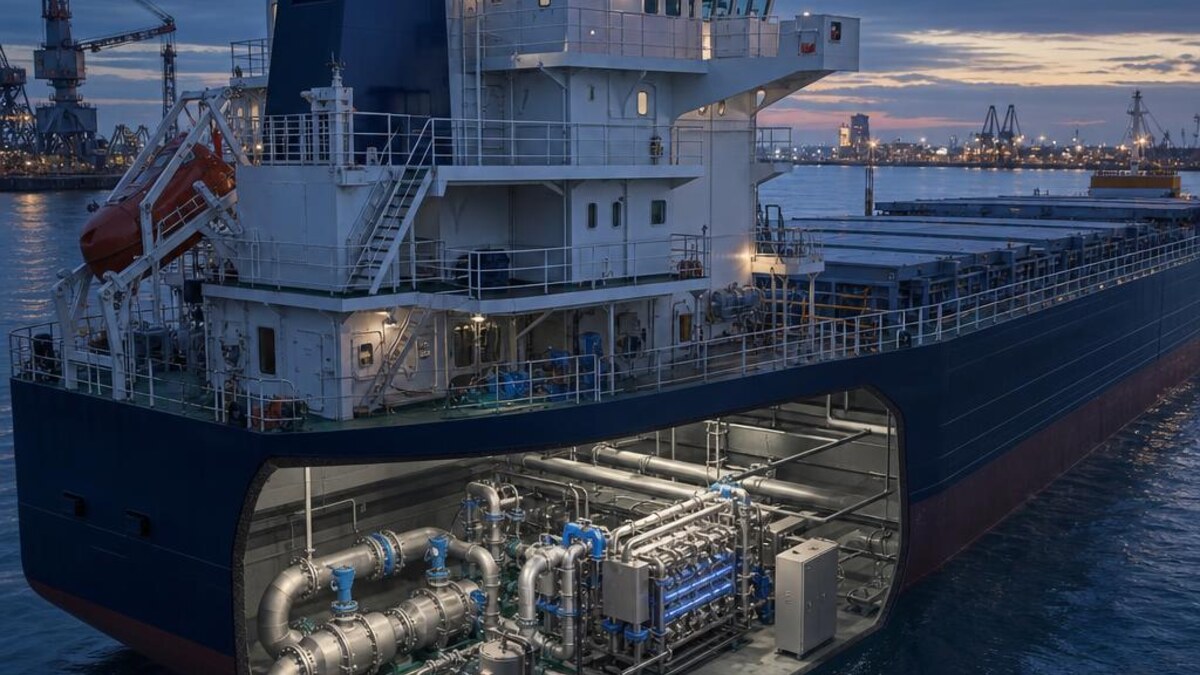
A Ballast Water Management System (BWMS) is the vessel's integrated equipment, controls and operating arrangements for managing ballast water before it is discharged. The BWM Convention supplies the regulatory framework; BWMS is the formal system term, while BWTS is often used commercially for the treatment equipment within that wider arrangement.
Request BWTS spare parts, annual calibration or ballast-water testing
Key takeaways
- BWM is the broader ballast-water management duty under the Convention; a BWMS is the installed system used to carry out that duty.
- BWMS is the formal regulatory term; BWTS is commonly used for treatment equipment and commercial systems.
- The installed maker documentation, approved configuration and vessel management plan set the operating boundary.
- UV, filtration, electrolysis, ozone and chemical injection have materially different water, power, chemistry, safety and logistics dependencies.
- Type approval and Active Substances approval support the design approval route; commissioning and operation remain vessel-specific.
- D-2 describes a biological discharge performance standard; a sensor value or service report does not independently certify it.
What a BWMS means — and how BWM differs from BWTS
A Ballast Water Management System (BWMS) is the installed shipboard system used to manage ballast water so the vessel can follow the applicable ballast-water requirements. It includes the treatment process and the connected pumps, filters, valves, sensors, control logic, alarms, sampling points, records and operating procedures that make the process usable aboard a particular ship.
BWM means ballast water management: the broader regulatory and operational duty to control ballast-water uptake, treatment, storage, discharge and sediment handling. The BWM Convention entered into force in September 2017 and applies to ships and offshore structures carrying ballast water on international voyages, subject to the Convention's scope and applicable exceptions. The vessel's flag, trading pattern and receiving jurisdiction still matter.
BWMS and ballast water treatment system (BWTS) are often used as synonyms, but they are not equally precise. BWMS is the term used in the IMO Convention and BWMS Code. BWTS commonly describes treatment equipment or a commercial product category. The label alone does not identify the technology, approved operating envelope or whether a particular discharge is acceptable.
For an operator, the useful question is not only “what is a BWMS?” but “what is installed on this vessel, what does its approved documentation permit, and what evidence must be retained?” A catalogue description cannot replace the vessel's Ballast Water Management Plan, type-approval documents, maker manuals or applicable flag, port and coastal-state instructions.
The system boundary: components that work together
The ballast line normally starts at the sea chest and ballast pump, then passes through the installed treatment train before reaching a tank or discharge line. Depending on the approved design, the train can include a self-cleaning filter, UV reactor, electrochlorination cell, oxidant injection or another treatment stage. A BWMS also relies on flow measurement, water-quality or chemistry sensors, actuated valves, sample conditioning and a control cabinet.
The system boundary extends to interfaces that are easy to miss: pump curves, power supply, cooling or flushing water, compressed air, chemical storage, neutralisation, drains, backwash routing, ventilation and the ship’s automation or alarm network. A component may appear healthy while a failed valve feedback, blocked sample line, incorrect flow signal or unavailable utility prevents the approved sequence from completing.
For a technical review, map the equipment by function: intake and pumping, solids separation, disinfection or active-substance generation, residual control, discharge, monitoring, alarms and records. This separates a true treatment-process fault from an instrument, upstream interface or evidence-chain problem.
Before troubleshooting or changing a setting, identify the exact maker, model, serialised equipment, software revision, rated capacity and approved configuration. The installed arrangement—not a similar vessel, an old drawing or an online product page—sets the starting point for operation, spares and technical decisions.
BWM technologies: different process risks, same management duty
Filter-and-UV systems separate particulates and larger organisms before UV exposure. Filters may backflush when differential pressure rises; UV dose depends on flow, reactor condition and water transmittance. Low UV transmittance can increase energy demand to achieve the target dose. Some approved arrangements expose water to UV during uptake and again during discharge, while the actual sequence remains maker-specific.
Electrolysis systems generate active substances from seawater or another specified feed arrangement. Salinity, conductivity, temperature, cell condition, electrical load, residual monitoring and neutralisation can therefore be important. Electrolysis can also generate hydrogen, so ventilation, detection and safe handling are part of the vessel interface—not optional extras.
Ozone systems generate ozone from ambient air and use oxidation to affect aquatic organisms. Ozone toxicity creates additional equipment, training and safety requirements, and residual by-products may require neutralisation before discharge. Chemical-injection systems can use liquid or granular products, often require neutralisation, closed storage and trained handling, and may create supply and operating-cost exposure at particular ports.
Technology choice and operation should be assessed against the vessel’s real flow range, power, space, hazardous-area constraints, water profile, maintenance capability, chemical logistics and trading pattern. A UV intensity, TRO value, filter differential pressure or controller “ready” indication is useful operational evidence, but none should be presented by itself as a biological compliance certificate.
What happens during uptake, treatment, storage and discharge
During ballast uptake, the crew follows the approved valve line-up and starts the treatment sequence at the documented conditions. The system may filter and treat water before it enters the tanks, monitor flow and process variables, and record alarms or operating data. Actual steps vary by maker and mode, so the vessel’s manual and management plan govern the sequence.
During storage, the treatment system may be stopped while the ballast water remains in the tanks. The vessel still needs to retain the operation’s records and any required evidence. On de-ballasting, the approved arrangement may apply treatment again, monitor residuals or require neutralisation before discharge. Some systems are designed for treatment on uptake, some on discharge, and some for both; never infer the sequence from a product name.
At each transition, confirm the conditions that make the approved process valid: pump and treatment flow, filter differential pressure, UV transmittance or intensity where fitted, salinity or conductivity, oxidant residual, neutralisation status, valve feedback, alarms and the available power or ventilation. A missed transition can be a system failure even when the treatment cabinet is energised.
The IMO D-2 performance standard concerns the biological quality of discharged ballast water, with criteria for viable organisms and specified indicator microbes. D-2 is a discharge standard, not a description of a machine. Applicability, sampling and acceptance depend on the vessel, Convention status, flag and receiving jurisdiction. A normal control reading does not replace any required authority process or biological analysis.
Type approval, commissioning, monitoring and records
Type approval evaluates a BWMS design and its documented configuration under the applicable approval framework. Under Regulation D-3, the Administration takes the BWMS Code into account; the system is tested in a land-based facility and aboard ships to show that it can meet the D-2 performance standard. The resulting Type Approval Certificate belongs to the approved design and conditions, not to every installation, voyage or future operating decision.
Systems using Active Substances have an additional approval context. IMO's G9 procedure uses Basic and Final Approval to consider unreasonable risks to the environment, human health, property or resources; the Administration determines whether that route is needed for the system. This is why a purchaser should request the exact certificate, approved configuration and Active Substances documentation rather than accepting a generic “IMO approved” statement.
Commissioning is different: it concerns bringing a particular vessel installation into service through installation checks, functional testing, documentation and any commissioning testing required by the applicable rules. Commissioning records show what was checked under stated conditions; they do not turn a service visit or one test into a permanent guarantee of D-2 performance.
Monitoring and records connect the equipment to the operation. Retain the ballast water record book entries, treatment mode, tank or volume information, locations and dates, system status, alarms, maintenance actions and communications required by the approved plan and applicable rules. Sensor data should be interpreted with calibration status, sample-path condition, water conditions and the maker’s limits in view.
Maintenance, alarms and failure escalation
Maintenance keeps the approved system capable of performing its intended sequence; it does not create approval. Follow the maker’s intervals and methods for filters, lamps, reactors, cells, pumps, valves, sensors, sample lines, reagents, neutralisation equipment and control hardware. Record as-found condition, parts or consumables, calibration references, test conditions, unresolved limitations and the person responsible.
When an alarm occurs, preserve the timestamp, operating mode, water conditions, trend data and alarm history before resetting anything. Check the documented cause and safe response in the right order: protect people and the vessel, stabilise or suspend the operation where required, avoid defeating an interlock, and distinguish a genuine process condition from an instrument, sample-path, power, ventilation or communications fault.
If the BWMS cannot be returned to its documented operating condition, the master and responsible shore team should follow the vessel’s approved contingency and notification route. Flag, port or coastal-state direction may be needed before an alternative operation. Do not treat exchange, extended holding, bypassing treatment or discharge elsewhere as a universally available fallback.
Sea Clean has confirmed Headway authorisation for relevant Headway service and parts support. For other makes it may coordinate manufacturer-specific parties, but coordination is not OEM authorisation, type approval, certification or an independent compliance finding. Sea Clean is not an accredited laboratory, independent certifier, class, flag, port authority or approving body.
Frequently asked questions
What are BWM and BWMS in simple terms?
BWM means ballast water management: the wider duty to control uptake, treatment, storage, discharge and records under the applicable rules. A BWMS is the shipboard equipment and operating arrangement used to carry out that duty before discharge, including treatment equipment, pumps, valves, sensors, controls, alarms and procedures.
What is the difference between BWMS and BWTS?
The terms are often used interchangeably. BWMS is the formal term used by the IMO Convention and BWMS Code, while BWTS is commonly used for ballast-water treatment equipment or a commercial system. Neither term alone identifies the approved configuration or proves compliance.
Does a type-approved BWMS automatically meet the D-2 standard on every vessel?
No. Type approval concerns the documented system design and approval route under the BWMS Code and, where relevant, Active Substances approval. The vessel must install, commission, operate and maintain the actual system within its approved limits and follow the applicable management plan, flag, port and coastal-state requirements.
What should the crew do if a BWMS alarm or failure occurs?
Protect people and the vessel, preserve the alarm and operating evidence, follow the maker’s documented response without bypassing safeguards, and notify the responsible vessel-management and authority contacts through the approved contingency route. Do not assume that exchange, bypass or discharge elsewhere is permitted; the correct alternative depends on the vessel and jurisdiction.
Sources
- IMO — Ballast Water Management — Convention, implementation and current IMO reference material.
- IMO — Ballast Water Management Technologies — Regulation D-3, BWMS Code, land-based and shipboard testing, and Active Substances approval context.
- IMO — International Convention for the Control and Management of Ships' Ballast Water and Sediments — Use the Convention and applicable amendments as the controlling regulatory reference.
- US Coast Guard — Ballast Water Management — US requirements and type-approval information are jurisdiction-specific.
- DNV — BWM Type Approval — Type-approval overview and practical technology descriptions; DNV's statements describe its own services.
- Headway Technology Group — Manufacturer source; installed-system manuals and approvals remain controlling.
- Sea Clean AS — Headway Ballast Service — Sea Clean's confirmed Headway service relationship and support scope.
Related articles
Request spares, calibration or ballast-water testing
Include BWMS brand/model, vessel/IMO number, port/terminal, date/ETA and scope or part numbers. These links prepare an email draft; you must send it yourself.
- Request a parts quote — Sensors, TRO reagents, calibration kits and replacement parts. Confirm compatibility, availability and delivery for your installed system.
- Request a calibration booking — Annual instrument calibration with a calibration certificate for the work completed. OEM instructions, drift or applicable rules may require earlier work.
- Request testing coordination — Arrange sampling and testing with an appropriately qualified party for your IMO D-2, commissioning or other stated purpose.
Authorised Headway agent. Other-brand enquiries are independently reviewed; no OEM authorisation is claimed. Sea Clean is not an accredited laboratory or approving authority. Calibration does not demonstrate biological D-2 compliance. Attendance, testing scope and parts delivery are confirmed per enquiry.