IMO D-2 Ballast Water Standard Explained
Updated
The IMO D-2 standard specifies concentration limits for viable organisms and indicator microbes in discharged ballast water. Whether it applies and how evidence is assessed depend on the vessel’s Convention status, implementation schedule and the relevant authority.
Request BWTS spare parts, annual calibration or ballast-water testing
Key takeaways
- D-2 is a biological discharge standard.
- Applicability depends on the vessel and regulatory context.
- The standard includes organism and microbe criteria.
- Operational records remain important evidence.
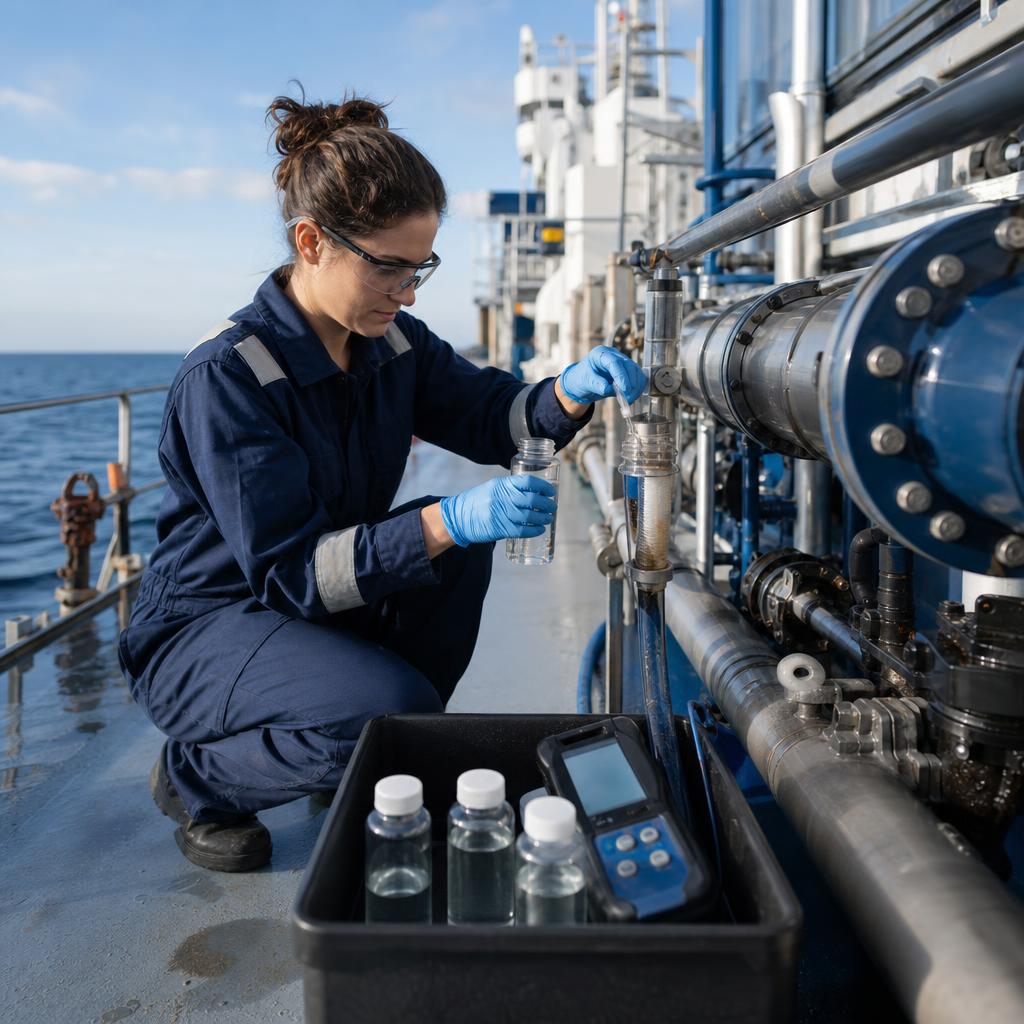
- Sampling purpose and method affect what a result means.
- Authority acceptance is not created by a service provider.
The rule in practical terms
Regulation D-2 sets numerical biological discharge limits, including separate size classes for viable organisms and limits for specified indicator microbes. It should be read with the vessel’s approved ballast water management plan, type-approved equipment documentation and the requirements applying at the intended call.
The rule does not itself show that a particular operation is acceptable. Flag, port, coastal-state and class expectations can add reporting, record or operating constraints, so the applicable jurisdiction must be identified before ballast is moved.
What the vessel team should establish
Teams should first establish whether the ship must meet D-2 for the planned discharge and whether its BWMS can operate inside approved limits. Start with the intended voyage, ballast sequence, system status and discharge location rather than a generic compliance assumption.
Confirm the plan revision carried onboard, alarm and sensor status, treatment mode, salinity or temperature limitations where relevant, and the responsible master’s decision path. A shore-side adviser cannot replace the vessel’s required onboard controls.
How to use the technical information
Manufacturer manuals and the type-approval certificate are the primary references for equipment-specific limits, operating modes and required maintenance. Compare the actual configuration and software status against those controlled documents.
Where a sample, meter reading or log is used, document its purpose and limitations. A result may support an operational assessment, but it does not automatically establish regulatory compliance or substitute for an authority’s inspection process.
Records and traceability
Connect the ballast operation, system operating data, record-book entry and any authority communication to the particular discharge. Entries should be contemporaneous, legible and consistent across the ballast water record book, engine-room logs, alarms, maintenance records and correspondence.
Keep the underlying evidence with the voyage file: timestamps, volumes, location, personnel, sample identifiers and instructions received. If an exception occurs, explain the factual sequence and corrective action without retrospectively changing the record.
Coordination without overstating authority
Sea Clean has confirmed Headway authorisation for relevant Headway service and parts support. That authorisation is distinct from coordinating work around other makes of BWTS, which depends on the manufacturer, vessel documentation and project scope.
Sea Clean can help organise technical dialogue and, where needed, coordinate with appropriately qualified laboratories or authorised parties. Sea Clean is not an accredited laboratory, independent certifier, class, flag, port authority or approving body.
Decision checks before the next operation
Do not describe an indicative screen, a port sample or treatment equipment as a D-2 certification or guarantee. Obtain written clarification from the competent authority or manufacturer when the plan, equipment status or local requirement leaves a material uncertainty.
Brief the bridge and engine teams on the selected sequence, stop points and communications. A documented decision is stronger when it identifies what was known at the time and which assumptions remain subject to flag, class, port, manufacturer or jurisdictional confirmation.
Frequently asked questions
What is the main point of IMO D-2 Ballast Water Standard Explained?
The IMO D-2 standard specifies concentration limits for viable organisms and indicator microbes in discharged ballast water. Whether it applies and how evidence is assessed depend on the vessel’s Convention status, implementation schedule and the relevant authority.
Can a test or log alone prove compliance?
No. Its significance depends on the applicable rule, sampling method, vessel operation and the authority’s process. Keep it as traceable supporting evidence.
Who decides whether an alternative operation is acceptable?
That depends on the vessel’s flag, the port or coastal-state jurisdiction, the approved plan and sometimes class or manufacturer instructions. Obtain the relevant direction before proceeding.
Can Sea Clean approve or certify the result?
No. Sea Clean is not an accredited laboratory, independent certifier or approving authority. It has confirmed Headway authorisation and can coordinate multi-brand discussions where the responsible parties agree.
Sources
Related articles
Request spares, calibration or ballast-water testing
Include BWMS brand/model, vessel/IMO number, port/terminal, date/ETA and scope or part numbers. These links prepare an email draft; you must send it yourself.
- Request a parts quote — Sensors, TRO reagents, calibration kits and replacement parts. Confirm compatibility, availability and delivery for your installed system.
- Request a calibration booking — Annual instrument calibration with a calibration certificate for the work completed. OEM instructions, drift or applicable rules may require earlier work.
- Request testing coordination — Arrange sampling and testing with an appropriately qualified party for your IMO D-2, commissioning or other stated purpose.
Authorised Headway agent. Other-brand enquiries are independently reviewed; no OEM authorisation is claimed. Sea Clean is not an accredited laboratory or approving authority. Calibration does not demonstrate biological D-2 compliance. Attendance, testing scope and parts delivery are confirmed per enquiry.