TRO Sensor Calibration: A Step-by-Step Guide
Updated
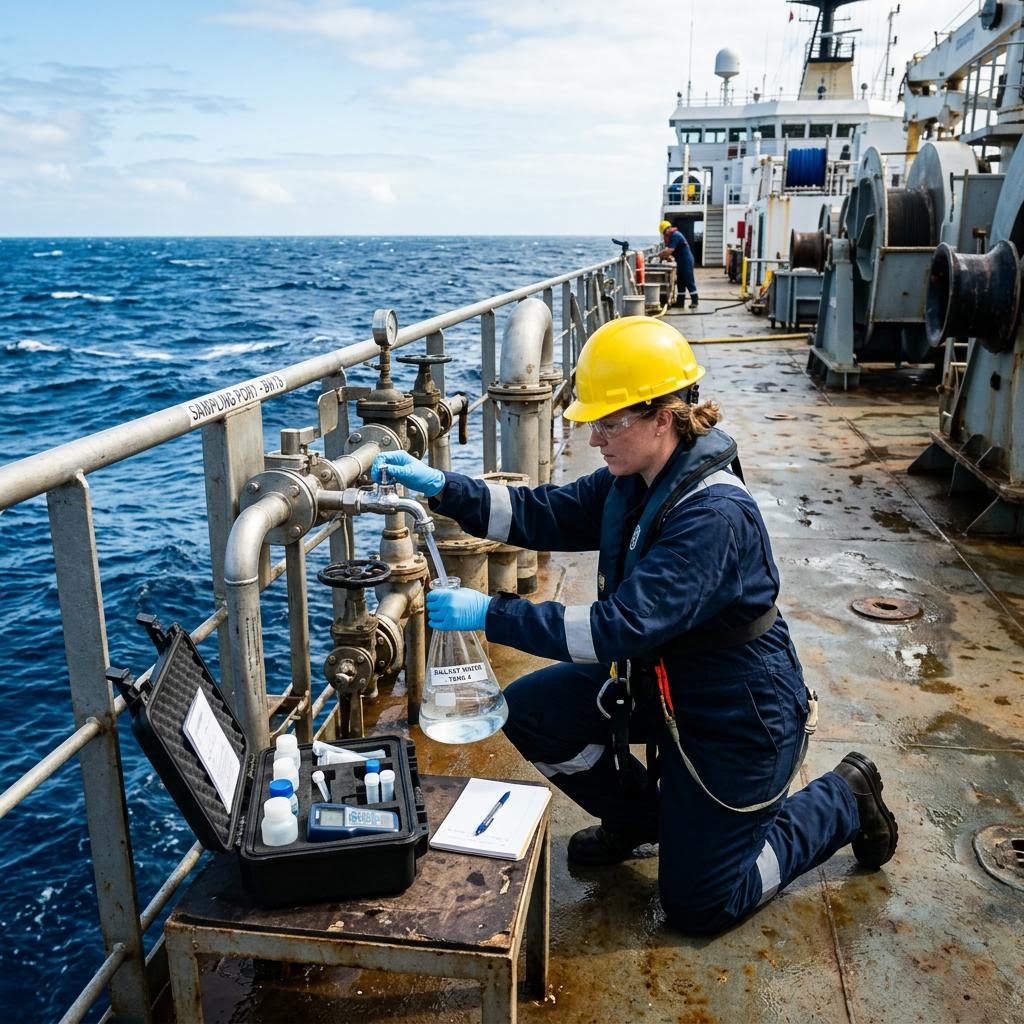
Calibrating a BWTS TRO analyser follows a fixed sequence: confirm in-date reagents, run a zero on oxidant-free water, set the span against a known TRO standard (or a verified DPD reference), record the offset and slope, and log the reagent lot. Do a full calibration every 3-6 months and on every reagent change; the exact procedure is set by the analyser make - colorimetric and amperometric differ.
Request BWTS spare parts, annual calibration or ballast-water testing
Key takeaways
- TRO calibration sequence is: confirm in-date reagents, run a zero on oxidant-free water, set span against a known standard or verified DPD reference, then re-check zero.
- Record date, analyser serial, standard used, zero/span results and reagent lot/expiry, and file it with the ballast water records.
- Colorimetric analysers calibrate against reagent-based DPD chemistry; amperometric sensors calibrate around membrane and electrolyte condition at operating flow.
- A large or growing span correction warns the sensor or reagent is near end of life even if it can be forced to read correctly today.
- Never widen the alarm band to silence a low-TRO alarm that survives a correct calibration - diagnose the reactor, salinity and flow instead.
- Full calibration every 3-6 months and on every reagent change keeps the self-monitoring log defensible against a PSC detailed sample.
Why Calibrate the TRO Sensor at All?
On electrochlorination, electrocatalysis and chemical-injection ballast systems, total residual oxidant is the control variable. It confirms the reactor is dosing to target on ballasting - typically a band in the low single-digit mg/L as Cl2 equivalent - and it decides whether neutralisation is needed on discharge, where the residual limit is commonly around 0.1 mg/L. If that measurement is wrong, both dosing and discharge decisions are wrong.
TRO analysers drift for predictable reasons: reagent ageing on colorimetric units, and membrane fouling or electrolyte depletion on amperometric units. Calibration re-establishes the relationship between what the sensor reports and the true oxidant concentration, which is why it is not optional housekeeping but a core compliance task.
The self-monitoring log a TRO analyser produces is the vessel's own evidence that discharge met the D-2 residual limit. An uncalibrated sensor makes that evidence indefensible at a port state control detailed sample, so the calibration itself must be documented as carefully as the readings.
What Do You Need Before Starting?
Gather the system-specific manual, in-date TRO reagents matched to the analyser chemistry, a known TRO calibration standard or a verified DPD reference method, oxidant-free (zero) water, and the calibration log or certificate template. Confirm reagent lot numbers and expiry dates before touching anything - calibrating with an expired reagent simply bakes the error into the reference.
Isolate the analyser from live sampling per the manual so you are measuring the standard and not a live ballast stream. Ensure the sample cell or flow cell is clean; a fouled cell on a colorimetric unit reads as an offset that no calibration will fully remove, and a fouled membrane on an amperometric unit reads slow and low.
Note the ambient conditions and the water the system normally treats. Some analysers compensate for temperature and salinity, and calibrating far from operating conditions can introduce its own error. If the manual specifies a warm-up or flush period, honour it before recording any values.
How Do You Run the Zero and Span?
Start with the zero. Introduce oxidant-free water and let the reading stabilise, then set or record the zero point per the manual. A zero that will not settle near zero points to a contaminated cell, a light-source or detector fault on colorimetric units, or a spent membrane on amperometric units - fix that before proceeding rather than forcing the zero.
Next set the span. Introduce a known TRO standard, or run a parallel DPD measurement of the actual sample as the reference, and adjust the analyser to read the known value. Record both the offset (zero) and the slope or span factor the calibration produces; a large slope correction is a warning that the sensor or reagent is near the end of its useful life even if it can be forced to read correctly today.
Where a discrete DPD test kit is used as the reference, run it carefully and in duplicate, because the calibration is only as good as the reference it is set against. After setting span, re-run the zero to confirm it has not shifted, then return the analyser to service and take a live reading to sanity-check against expected process values.
How Is Amperometric Calibration Different?
Amperometric TRO sensors measure current proportional to oxidant at a membrane-covered electrode, so their service and calibration centre on the membrane and electrolyte rather than reagents. Periodically the electrolyte is replaced and the membrane inspected or renewed, after which the sensor needs conditioning time before it reads stably - rushing the calibration before conditioning gives a slope that drifts within days.
Because amperometric cells respond to flow and temperature, the calibration must be done at, or compensated to, operating flow and temperature per the manual. A cell calibrated in still standard solution can read differently in a live flowing sample, so many systems calibrate against a live DPD reference under normal flow rather than against a static bottle standard.
Log the membrane and electrolyte change alongside the calibration, because the two are linked: the useful life of an amperometric calibration is bounded by the membrane condition. When the sensor can no longer hold a stable zero and span after a membrane and electrolyte service, it is replaced rather than repeatedly recalibrated.
What Must You Record?
Every calibration should produce a record showing the date, the analyser make, model and serial, the standard or reference method used, the zero and span results, and the reagent or electrolyte lot and expiry. This record is the defensible evidence that the self-monitoring log is trustworthy, and it should be filed with the ballast water records, not in a separate maintenance archive.
Trend the offset and slope over successive calibrations. A steadily growing correction is an early warning of sensor ageing that lets you plan a replacement before it fails at an inconvenient port. A sudden large jump usually means the previous reagent had already expired or the cell was fouled.
If the vessel uses a DPD kit as the calibration reference, log the kit lot and expiry too. The whole calibration chain - analyser, reagent, reference method - must be in date and documented for the record to withstand scrutiny at survey or inspection.
When Should You Call for Support?
Call for OEM or independent support when the analyser will not hold a zero after a clean cell and fresh reagent, when the span correction is implausibly large, or when live readings remain inconsistent with expected dosing after a good calibration. These point to a hardware fault - light source, detector, pump, or electrode - rather than a calibration issue.
Persistent low-TRO alarms that survive a correct calibration should never be resolved by widening the alarm band. That masks a real under-dosing condition and creates a record that will not survive a detailed sample. Diagnose the reactor, the salinity envelope and the flow before touching the alarm limits.
Sea Clean AS supplies in-date TRO reagents and calibration standards and provides calibration attendance - as an authorized Headway agent for OceanGuard and as independent, brand-agnostic support for other systems. Attendance is 0-24h in Norway and the North Sea and by arrangement elsewhere; send the analyser make, model and serial with any enquiry.
Frequently asked questions
What do I zero a TRO analyser against?
Use oxidant-free (zero) water so the analyser reads the absence of oxidant. If the reading will not settle near zero, the cell is contaminated, the reagent is spent, or the detector/membrane is faulty - fix that before setting the span rather than forcing the zero.
Can I use a DPD test kit as the calibration reference?
Yes. A carefully run, in-date DPD measurement of the actual sample is a valid span reference, especially for amperometric sensors calibrated under live flow. Run it in duplicate and log the kit lot and expiry, because the calibration is only as good as its reference.
How do I know when to replace rather than recalibrate a TRO sensor?
Replace it when it cannot hold a stable zero and span after a clean cell, fresh reagent or a new membrane and electrolyte, or when the span correction has grown implausibly large over successive calibrations. Repeatedly forcing an ageing sensor to read correctly is not defensible.
How often should I fully calibrate the TRO analyser?
Perform a full calibration every three to six months and always after a reagent lot change. Verify against a standard about monthly in between, and increase frequency if the vessel trades in variable salinity or has had frequent alarms.
Sources
- IMO MEPC.300(72) BWMS Code — BWMS type approval and self-monitoring
- IMO BWM Convention (D-2 standard) — Ballast Water Management Convention
Related articles
Request spares, calibration or ballast-water testing
Include BWMS brand/model, vessel/IMO number, port/terminal, date/ETA and scope or part numbers. These links prepare an email draft; you must send it yourself.
- Request a parts quote — Sensors, TRO reagents, calibration kits and replacement parts. Confirm compatibility, availability and delivery for your installed system.
- Request a calibration booking — Annual instrument calibration with a calibration certificate for the work completed. OEM instructions, drift or applicable rules may require earlier work.
- Request testing coordination — Arrange sampling and testing with an appropriately qualified party for your IMO D-2, commissioning or other stated purpose.
Authorised Headway agent. Other-brand enquiries are independently reviewed; no OEM authorisation is claimed. Sea Clean is not an accredited laboratory or approving authority. Calibration does not demonstrate biological D-2 compliance. Attendance, testing scope and parts delivery are confirmed per enquiry.