Techcross BWTS Spare Parts
Updated
Techcross ECS and HYCHLOR systems share a set of critical spare parts: electrolysis electrodes and chamber components, TRO analyser parts and reagents, dosing-system components, instrumentation, valves and control items. Sea Clean AS sources Techcross parts independently and matches them to the installed model and variant. This article covers the main part groups and how independent sourcing and delivery are arranged.
Key takeaways
- Sea Clean sources Techcross parts independently and does not claim OEM authorization (authorized for Headway only).
- Electrodes and chamber seals are the main consumables; replacements must match the chamber design and rating.
- TRO sensor parts, reagents and sodium thiosulfate neutraliser are critical consumables supplied in date for the vessel.
- HYCHLOR adds dosing pumps, lines and injection fittings whose faults under-treat ballast even with a healthy generator.
- Rectifiers and power components present differently from electrode wear and need separate electrical diagnosis.
- Quote model, variant and serial number to receive the correct part; consolidate parts into one delivery for short calls.
Independent Sourcing, Correctly Specified
Sea Clean sources Techcross spare parts independently; we are an authorized agent for Headway only and do not claim OEM authorization for Techcross. Independent sourcing still requires precise specification, because a BWTS is type-approved as a configured system and the wrong electrode set or analyser part can affect treatment and the validity of the approval the vessel relies on.
Techcross has produced multiple ECS and HYCHLOR capacities and revisions, so the same functional part can differ between installations. Identifying the correct item starts with the system nameplate, the unit serial number and the configuration, and supplying these with an enquiry is the most reliable route to the right part.
Where a component is proprietary or genuinely manufacturer-restricted, Sea Clean is clear about that so the owner can decide how to proceed rather than receiving a substitute that will not perform.
Electrolysis Electrodes and Chamber Parts
Electrodes are the principal consumable on both ECS and HYCHLOR. They carry the electrical load that generates oxidant and they wear through scaling, erosion and coating loss, which eventually reduces treatment output and raises power demand. Replacement electrodes must match the chamber design and rating for the installation.
Chamber seals, connections and internal components are replaced alongside electrodes during a major service, because reassembling a chamber with worn seals risks leaks and electrical faults. Carrying a matched electrode and seal set lets an engineer complete the replacement in one attendance.
Sea Clean sources electrodes and chamber components for the relevant Techcross variants and verifies output after fitting, so the unit returns to its design operating window rather than being left untested.
TRO Analyser Parts and Reagents
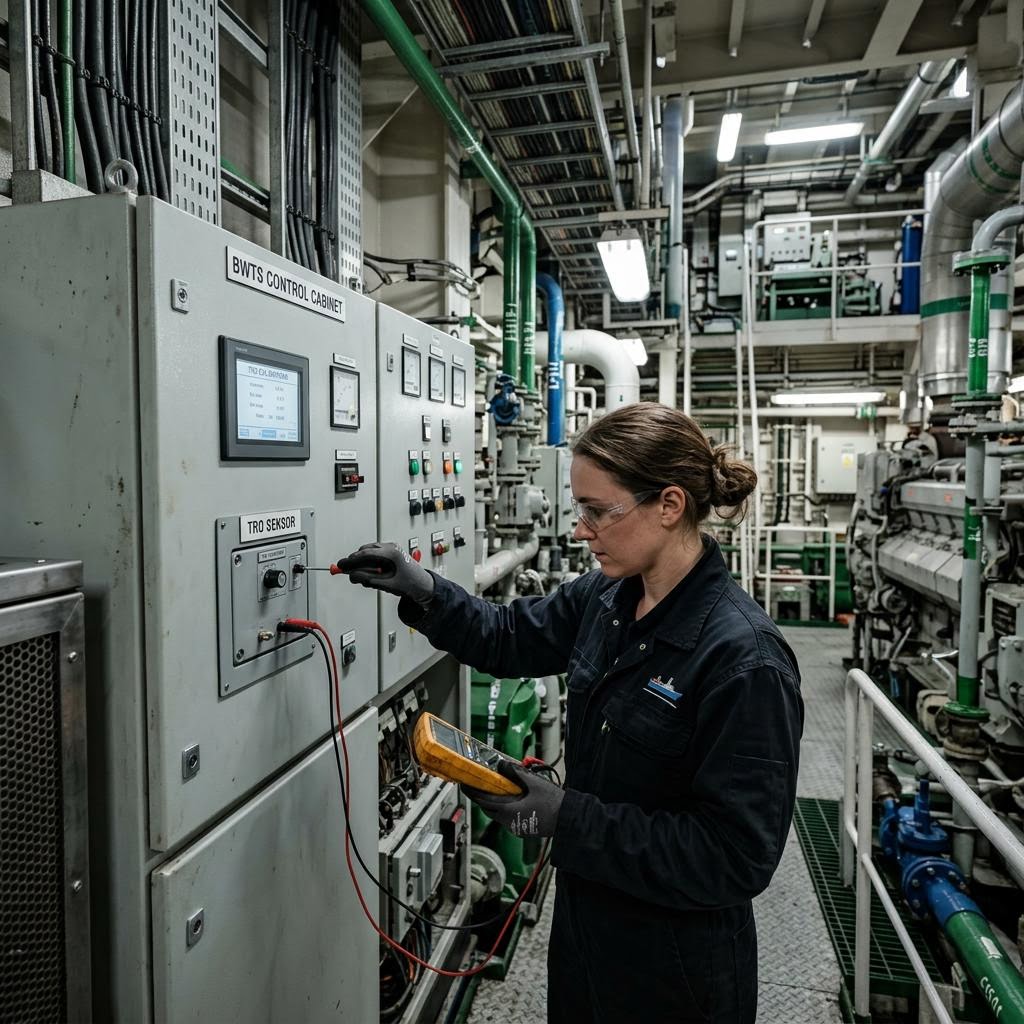
The TRO analyser governs dose confirmation and safe discharge, so its parts and reagents are essential consumables. Sensor components, reagent packs, measuring-cell parts and sample-line fittings are replaced on schedule because a drifting or starved analyser produces unreliable readings and nuisance alarms.
Sea Clean supplies TRO sensor parts and reagents and sodium thiosulfate neutraliser used on discharge, supplied in date and labelled for the receiving vessel with attention to shelf life. Keeping a verified analyser and in-date reagents on board reduces discharge-related alarms and supports a PSC check on residual oxidant control.
Because analyser behaviour is often mistaken for treatment failure, having spare analyser consumables aboard lets the crew rule out the most common false-alarm causes quickly.
Dosing, Valves and Flow Components
HYCHLOR's side-stream design adds dosing-system parts to the spares list: dosing pumps, lines, injection fittings and associated controls that deliver the hypochlorite solution into the main flow. A dosing fault under-treats the ballast even when the generator is healthy, so these components matter to compliance.
Both ECS and HYCHLOR rely on flow meters, pressure instrumentation, control valves and actuators that keep the system within its operating window. A flow meter reading low or a valve not stroking fully can trip the system or cause sequence alarms that look like treatment faults.
Sea Clean sources dosing components, flow instrumentation, valves and actuators for Techcross systems, matched to the configuration, so a single supporting-component fault does not hold the vessel in non-compliant operation.
Electrical, Power and Control Items
The electrolysis process draws significant power, so rectifiers, power-supply components, contactors and electrical connections are part of the spares picture. Power-supply faults present differently from electrode wear and require electrical diagnosis, so the correct power component must be identified rather than the electrodes replaced speculatively.
Control and PLC components, sensors and signal items round out the list. Many apparent treatment faults trace to a control or signal problem, so spares for these keep the system available and avoid a single fault holding the vessel.
Sea Clean sources electrical, power and control components for Techcross installations. Where a control or software lock is genuinely manufacturer-bound, we are clear about the limit so the owner can plan accordingly.
Ordering and Delivery Logistics
An efficient Techcross parts order quotes the system model (ECS or HYCHLOR), variant, serial number and a description of the symptom or part position. With these, Sea Clean identifies the correct item, confirms availability and advises lead time.
For Norwegian and North Sea calls, parts can often reach the vessel quickly by road or short freight; for worldwide calls, items are routed by courier or air freight and coordinated with the local agent, so lead time depends on freight and customs. Consolidating several parts and reagents into one delivery simplifies receipt during a short stay.
Send enquiries with vessel name, IMO number and the Techcross details to post@seaclean.no. Notice of an upcoming service interval lets parts be staged against the schedule rather than ordered after a breakdown.
Frequently asked questions
Can Sea Clean supply Techcross electrodes?
Yes. Sea Clean sources electrolysis electrodes and chamber components for Techcross ECS and HYCHLOR systems through its supplier network, matched to the chamber design and rating for the installation. Output is verified after fitting so the unit returns to its design operating window.
Are these genuine Techcross parts?
Sea Clean sources parts independently and is not a Techcross-authorized agent; authorization applies to Headway only. Parts are specified to match the installed model and variant. Where a component is genuinely manufacturer-restricted, Sea Clean is clear about that so the owner can decide how to proceed.
What parts does HYCHLOR need that ECS does not?
HYCHLOR is a side-stream electrochlorination system, so it adds dosing-system parts: dosing pumps, lines, injection fittings and associated controls that deliver hypochlorite into the main flow. A dosing fault under-treats ballast even when the generator is healthy.
How long does delivery of Techcross parts take?
For Norway and North Sea calls, parts can often reach the vessel quickly. For worldwide calls, items are routed by courier or air freight and coordinated with the local agent, so lead time depends on freight and customs. Provide model, variant and serial number to speed identification.