How to Supply and Install a Complete BWTS System
Updated
Supplying and installing a BWTS is a managed vessel-modification project, not just delivery of a skid. A controlled scope connects survey data, engineering, procurement, shipyard interfaces, installation, testing and crew handover.
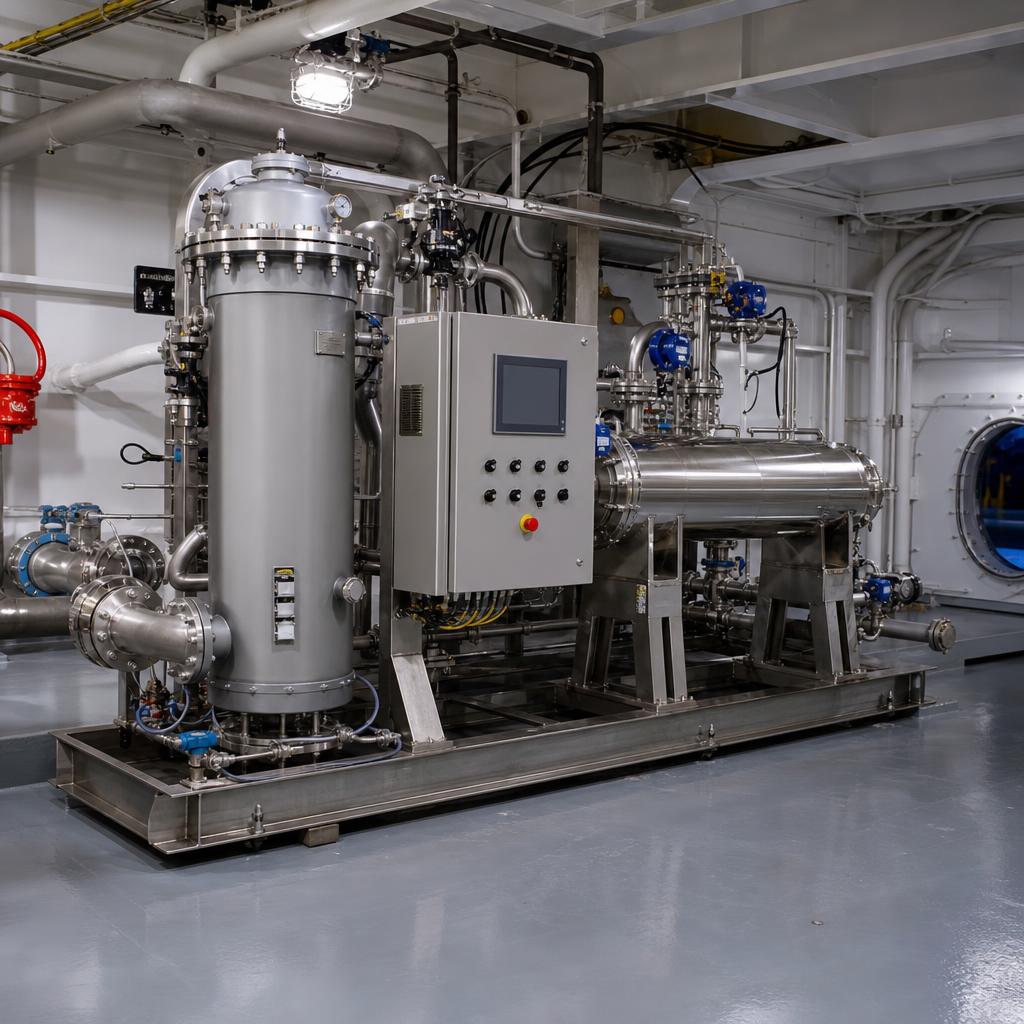
Key takeaways
- Start with a documented vessel, berth and operating case for the supply and installation plan.
- Confirm hose routing, access, isolation, power and control interfaces before mobilisation.
- Size transfer activity around verified flow, pressure, time window and drainage constraints.
- Assign responsibility for monitoring, solids, records and emergency response in writing.
- Check applicable flag, port, class, authority, permit and approval requirements project by project.
- Use the final operating plan and evidence pack to support a controlled handover.
Freeze the Technical Scope
Freeze a scope that states treatment duty, vessel data, exclusions, class interfaces, work location and the documents needed before procurement starts. For a bwts supply and installation project, that point belongs under “Freeze the Technical Scope” rather than in a late site query. It directly shapes the supply and installation plan.
Turn the requirement into a measurable check: identify the responsible party, the source document and the point at which it will be verified. Review it with ship and shore teams before the ballast sequence starts. Escalate a mismatch rather than relying on an operational workaround.
Keep the resulting evidence with the operating plan, including drawings, readings, photographs or signed interface checks as appropriate. The applicable flag, port, class, authority, permit and approval requirements still require project-specific confirmation. This record helps distinguish a controlled limitation from an undocumented assumption.
Survey and Model Vessel Interfaces
Survey pipe sizes, material, valve accessibility, electrical supply, control signals and structural constraints so field changes do not become the default installation method. For a bwts supply and installation project, that point belongs under “Survey and Model Vessel Interfaces” rather than in a late site query. It directly shapes the supply and installation plan.
Turn the requirement into a measurable check: identify the responsible party, the source document and the point at which it will be verified. Review it with ship and shore teams before the ballast sequence starts. Escalate a mismatch rather than relying on an operational workaround.
Keep the resulting evidence with the operating plan, including drawings, readings, photographs or signed interface checks as appropriate. The applicable flag, port, class, authority, permit and approval requirements still require project-specific confirmation. This record helps distinguish a controlled limitation from an undocumented assumption.
Coordinate Procurement and Logistics
Coordinate delivery, preservation, lifting, customs, storage and access dates with the yard and vessel, especially where equipment must be installed through restricted openings. For a bwts supply and installation project, that point belongs under “Coordinate Procurement and Logistics” rather than in a late site query. It directly shapes the supply and installation plan.
Turn the requirement into a measurable check: identify the responsible party, the source document and the point at which it will be verified. Review it with ship and shore teams before the ballast sequence starts. Escalate a mismatch rather than relying on an operational workaround.
Keep the resulting evidence with the operating plan, including drawings, readings, photographs or signed interface checks as appropriate. The applicable flag, port, class, authority, permit and approval requirements still require project-specific confirmation. This record helps distinguish a controlled limitation from an undocumented assumption.
Control Installation Work Packs
Use approved work packs for steel, piping, electrical and automation tasks, with hold points for pressure testing, flushing, insulation and reinstatement. For a bwts supply and installation project, that point belongs under “Control Installation Work Packs” rather than in a late site query. It directly shapes the supply and installation plan.
Turn the requirement into a measurable check: identify the responsible party, the source document and the point at which it will be verified. Review it with ship and shore teams before the ballast sequence starts. Escalate a mismatch rather than relying on an operational workaround.
Keep the resulting evidence with the operating plan, including drawings, readings, photographs or signed interface checks as appropriate. The applicable flag, port, class, authority, permit and approval requirements still require project-specific confirmation. This record helps distinguish a controlled limitation from an undocumented assumption.
Test Interfaces Before Handover
Test signal paths, permissives, alarms, isolation and intended operating sequences before declaring the package ready for handover. For a bwts supply and installation project, that point belongs under “Test Interfaces Before Handover” rather than in a late site query. It directly shapes the supply and installation plan.
Turn the requirement into a measurable check: identify the responsible party, the source document and the point at which it will be verified. Review it with ship and shore teams before the ballast sequence starts. Escalate a mismatch rather than relying on an operational workaround.
Keep the resulting evidence with the operating plan, including drawings, readings, photographs or signed interface checks as appropriate. The applicable flag, port, class, authority, permit and approval requirements still require project-specific confirmation. This record helps distinguish a controlled limitation from an undocumented assumption.
Transfer Documents and Training
Provide controlled drawings, manuals, certificates where applicable, spares lists and practical crew training records as part of the final turnover. For a bwts supply and installation project, that point belongs under “Transfer Documents and Training” rather than in a late site query. It directly shapes the supply and installation plan.
Turn the requirement into a measurable check: identify the responsible party, the source document and the point at which it will be verified. Review it with ship and shore teams before the ballast sequence starts. Escalate a mismatch rather than relying on an operational workaround.
Keep the resulting evidence with the operating plan, including drawings, readings, photographs or signed interface checks as appropriate. The applicable flag, port, class, authority, permit and approval requirements still require project-specific confirmation. This record helps distinguish a controlled limitation from an undocumented assumption.
Frequently asked questions
What is included in BWTS supply and installation?
Freeze a scope that states treatment duty, vessel data, exclusions, class interfaces, work location and the documents needed before procurement starts. The answer must be confirmed against the actual vessel, berth and local acceptance route. Sea Clean can help coordinate the technical scope and appropriate project stakeholders, but it does not replace required authority, class or laboratory decisions.
What survey data is required?
Survey pipe sizes, material, valve accessibility, electrical supply, control signals and structural constraints so field changes do not become the default installation method. The answer must be confirmed against the actual vessel, berth and local acceptance route. Sea Clean can help coordinate the technical scope and appropriate project stakeholders, but it does not replace required authority, class or laboratory decisions.
Who coordinates shipyard interfaces?
Coordinate delivery, preservation, lifting, customs, storage and access dates with the yard and vessel, especially where equipment must be installed through restricted openings. The answer must be confirmed against the actual vessel, berth and local acceptance route. Sea Clean can help coordinate the technical scope and appropriate project stakeholders, but it does not replace required authority, class or laboratory decisions.
What should be handed to the crew?
Use approved work packs for steel, piping, electrical and automation tasks, with hold points for pressure testing, flushing, insulation and reinstatement. The answer must be confirmed against the actual vessel, berth and local acceptance route. Sea Clean can help coordinate the technical scope and appropriate project stakeholders, but it does not replace required authority, class or laboratory decisions.