BWTS Service Training for Port Operators
Updated
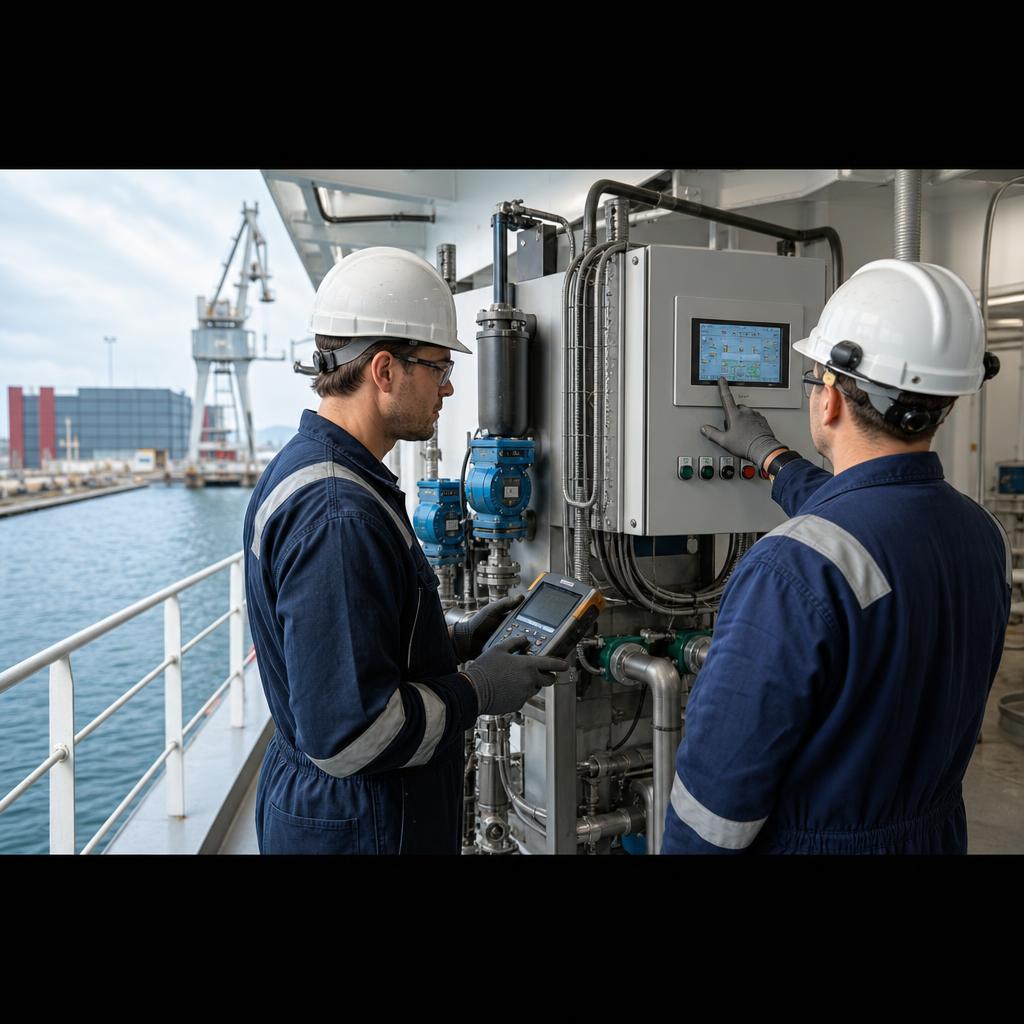
Service training should enable each berth role to perform a defined action during connection, transfer, alarms and shutdown. It should be based on local equipment and procedures rather than classroom recall alone.
Key takeaways
- Assign each operator a defined berth duty and stop-work authority.
- Train with local hose routes, drawings and safety controls.
- Drill realistic alarms and restart decisions.
- Assess observed tasks rather than attendance alone.
- Keep procedure revision and retraining records.
- Confirm planned-facility status before relying on it for training.
Define Roles
Separate hose handler, control operator, vessel liaison and supervisor duties. Give each role a stop-work authority. Avoid leaving handovers to informal practice.
Build training around the actual shift pattern. Night and relief crews need the same decision information. Record who is competent for each role.
Use a responsibility matrix for valve authority and communications. Conflicting instructions delay emergency response. Review it with vessel and terminal representatives.
Teach Connection Safety
Walk the route for hoses, lifting gear and exclusion zones. Point out pinch points and trip hazards. Practise a safe stop during connection.
Confirm flange, gasket and pressure-limit checks before live transfer. Show where isolation is physically made. Use the local drawing, not a generic image.
Include weather and traffic constraints in drills. Wind, vessel movement and berth activity change hose risk. Define who suspends work.
Practise Control Actions
Use the normal start-up checklist in a supervised drill. Operators should explain each hold point. Correct unclear steps before authorisation.
Simulate abnormal pressure, utility loss and communications failure. Ask for the first safe action, not only the final report. Measure response against the procedure.
Teach controlled shutdown and restart authority. A restart can require inspection or permission. Record the conditions that must be restored.
Include Sampling and Records
Train collectors on safe sample access and labels. Explain why custody records matter. Stop a collection that cannot follow the agreed method.
Show how flow, alarms and transfer time are entered. Incomplete logs reduce later investigation value. Check entries during the drill.
Explain when an independent laboratory or authorised party is required. Sea Clean can coordinate with independent ISO 17025 laboratories and flag or class-authorised parties where required. Do not present Sea Clean as a laboratory.
Assess Competence
Assess observed tasks, not attendance alone. Use criteria for connection, communication and alarm response. Give feedback while the scenario is fresh.
Record procedure revision, instructor and retraining date. A changed drawing can invalidate earlier competence. Link records to the controlled procedure.
Use targeted refreshers after an incident or extended inactivity. Repeating every topic may hide the real gap. Analyse observed errors first.
Maintain the Programme
Review drills after operating campaigns. Add lessons from actual berth conditions. Remove steps that no longer reflect the equipment.
Coordinate terminal induction with BWTS-specific work. Site safety rules and treatment procedures must agree. Resolve conflicts before the next shift.
The planned European technical training facility should not be assumed available now. Confirm future readiness and programme scope before travel commitments. Use project-specific training arrangements meanwhile.
Frequently asked questions
Who needs BWTS service training?
Any person with a connection, control, liaison, sampling or supervisory duty needs role-appropriate instruction. The exact roles follow the local operating procedure.
How should alarms be taught?
Use supervised scenarios based on credible local failures. Assess the first safe action, communications and escalation as well as reset steps.
Can training cover sampling?
Yes, where a project sample plan requires it. Training should cover safe access, labels, custody and when specialist parties are needed.
Is the European training facility open?
No operating facility should be assumed. Sea Clean's European technical training facility is planned for mid-September 2026, subject to readiness confirmation.