BWTS Retrofit: Questions Shipowners Should Ask
Updated
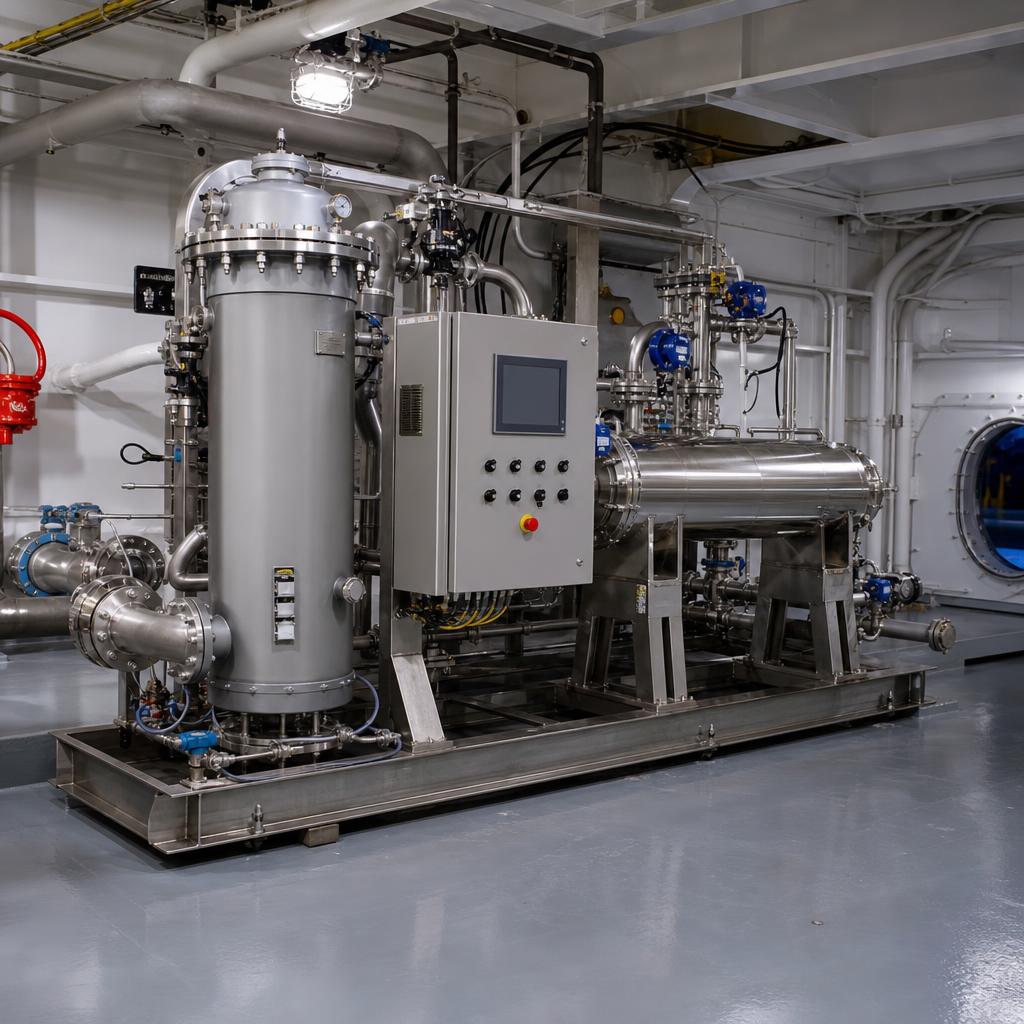
A BWTS retrofit succeeds when the owner tests ship-specific constraints before selecting hardware. Ask about flow and head, available power, space, steelwork, class process, installation access, testing and long-term support as one connected scope.
Key takeaways
- Start with a documented vessel, berth and operating case for the retrofit investment.
- Confirm hose routing, access, isolation, power and control interfaces before mobilisation.
- Size transfer activity around verified flow, pressure, time window and drainage constraints.
- Assign responsibility for monitoring, solids, records and emergency response in writing.
- Check applicable flag, port, class, authority, permit and approval requirements project by project.
- Use the final operating plan and evidence pack to support a controlled handover.
Confirm the Vessel Baseline
Ask for current ballast diagrams, pump curves, tank sequence, electrical load data and trading profile before comparing treatment concepts or quotations. For a shipowner bwts retrofit review, that point belongs under “Confirm the Vessel Baseline” rather than in a late site query. It directly shapes the retrofit investment.
Turn the requirement into a measurable check: identify the responsible party, the source document and the point at which it will be verified. Review it with ship and shore teams before the ballast sequence starts. Escalate a mismatch rather than relying on an operational workaround.
Keep the resulting evidence with the operating plan, including drawings, readings, photographs or signed interface checks as appropriate. The applicable flag, port, class, authority, permit and approval requirements still require project-specific confirmation. This record helps distinguish a controlled limitation from an undocumented assumption.
Challenge Hydraulic Assumptions
Check available head at the treatment location, likely filter pressure loss, bypass arrangements and the consequences of low-flow or high-flow ballast modes. For a shipowner bwts retrofit review, that point belongs under “Challenge Hydraulic Assumptions” rather than in a late site query. It directly shapes the retrofit investment.
Turn the requirement into a measurable check: identify the responsible party, the source document and the point at which it will be verified. Review it with ship and shore teams before the ballast sequence starts. Escalate a mismatch rather than relying on an operational workaround.
Keep the resulting evidence with the operating plan, including drawings, readings, photographs or signed interface checks as appropriate. The applicable flag, port, class, authority, permit and approval requirements still require project-specific confirmation. This record helps distinguish a controlled limitation from an undocumented assumption.
Check Space and Access
A credible survey identifies lifting routes, door sizes, foundations, hot-work zones, cable trays and the access needed later to replace service items. For a shipowner bwts retrofit review, that point belongs under “Check Space and Access” rather than in a late site query. It directly shapes the retrofit investment.
Turn the requirement into a measurable check: identify the responsible party, the source document and the point at which it will be verified. Review it with ship and shore teams before the ballast sequence starts. Escalate a mismatch rather than relying on an operational workaround.
Keep the resulting evidence with the operating plan, including drawings, readings, photographs or signed interface checks as appropriate. The applicable flag, port, class, authority, permit and approval requirements still require project-specific confirmation. This record helps distinguish a controlled limitation from an undocumented assumption.
Coordinate Class and Drawings
Bring class and design-review requirements into the programme early, because drawing approval and change control can affect both scope and yard timing. For a shipowner bwts retrofit review, that point belongs under “Coordinate Class and Drawings” rather than in a late site query. It directly shapes the retrofit investment.
Turn the requirement into a measurable check: identify the responsible party, the source document and the point at which it will be verified. Review it with ship and shore teams before the ballast sequence starts. Escalate a mismatch rather than relying on an operational workaround.
Keep the resulting evidence with the operating plan, including drawings, readings, photographs or signed interface checks as appropriate. The applicable flag, port, class, authority, permit and approval requirements still require project-specific confirmation. This record helps distinguish a controlled limitation from an undocumented assumption.
Define Installation and Testing Scope
Define who supplies engineering, fabrication, installation supervision, functional checks, commissioning evidence and crew instruction instead of leaving interfaces implicit. For a shipowner bwts retrofit review, that point belongs under “Define Installation and Testing Scope” rather than in a late site query. It directly shapes the retrofit investment.
Turn the requirement into a measurable check: identify the responsible party, the source document and the point at which it will be verified. Review it with ship and shore teams before the ballast sequence starts. Escalate a mismatch rather than relying on an operational workaround.
Keep the resulting evidence with the operating plan, including drawings, readings, photographs or signed interface checks as appropriate. The applicable flag, port, class, authority, permit and approval requirements still require project-specific confirmation. This record helps distinguish a controlled limitation from an undocumented assumption.
Plan Support After Handover
Evaluate parts supply, remote support, planned service and fault escalation over the operating life, not only the initial purchase price. For a shipowner bwts retrofit review, that point belongs under “Plan Support After Handover” rather than in a late site query. It directly shapes the retrofit investment.
Turn the requirement into a measurable check: identify the responsible party, the source document and the point at which it will be verified. Review it with ship and shore teams before the ballast sequence starts. Escalate a mismatch rather than relying on an operational workaround.
Keep the resulting evidence with the operating plan, including drawings, readings, photographs or signed interface checks as appropriate. The applicable flag, port, class, authority, permit and approval requirements still require project-specific confirmation. This record helps distinguish a controlled limitation from an undocumented assumption.
Frequently asked questions
What should a shipowner ask before BWTS retrofit?
Ask for current ballast diagrams, pump curves, tank sequence, electrical load data and trading profile before comparing treatment concepts or quotations. The answer must be confirmed against the actual vessel, berth and local acceptance route. Sea Clean can help coordinate the technical scope and appropriate project stakeholders, but it does not replace required authority, class or laboratory decisions.
Why is hydraulic data important?
Check available head at the treatment location, likely filter pressure loss, bypass arrangements and the consequences of low-flow or high-flow ballast modes. The answer must be confirmed against the actual vessel, berth and local acceptance route. Sea Clean can help coordinate the technical scope and appropriate project stakeholders, but it does not replace required authority, class or laboratory decisions.
How early should class be involved?
A credible survey identifies lifting routes, door sizes, foundations, hot-work zones, cable trays and the access needed later to replace service items. The answer must be confirmed against the actual vessel, berth and local acceptance route. Sea Clean can help coordinate the technical scope and appropriate project stakeholders, but it does not replace required authority, class or laboratory decisions.
What happens after installation is complete?
Bring class and design-review requirements into the programme early, because drawing approval and change control can affect both scope and yard timing. The answer must be confirmed against the actual vessel, berth and local acceptance route. Sea Clean can help coordinate the technical scope and appropriate project stakeholders, but it does not replace required authority, class or laboratory decisions.