What Port-Side BWTS Water Testing Proves
Updated
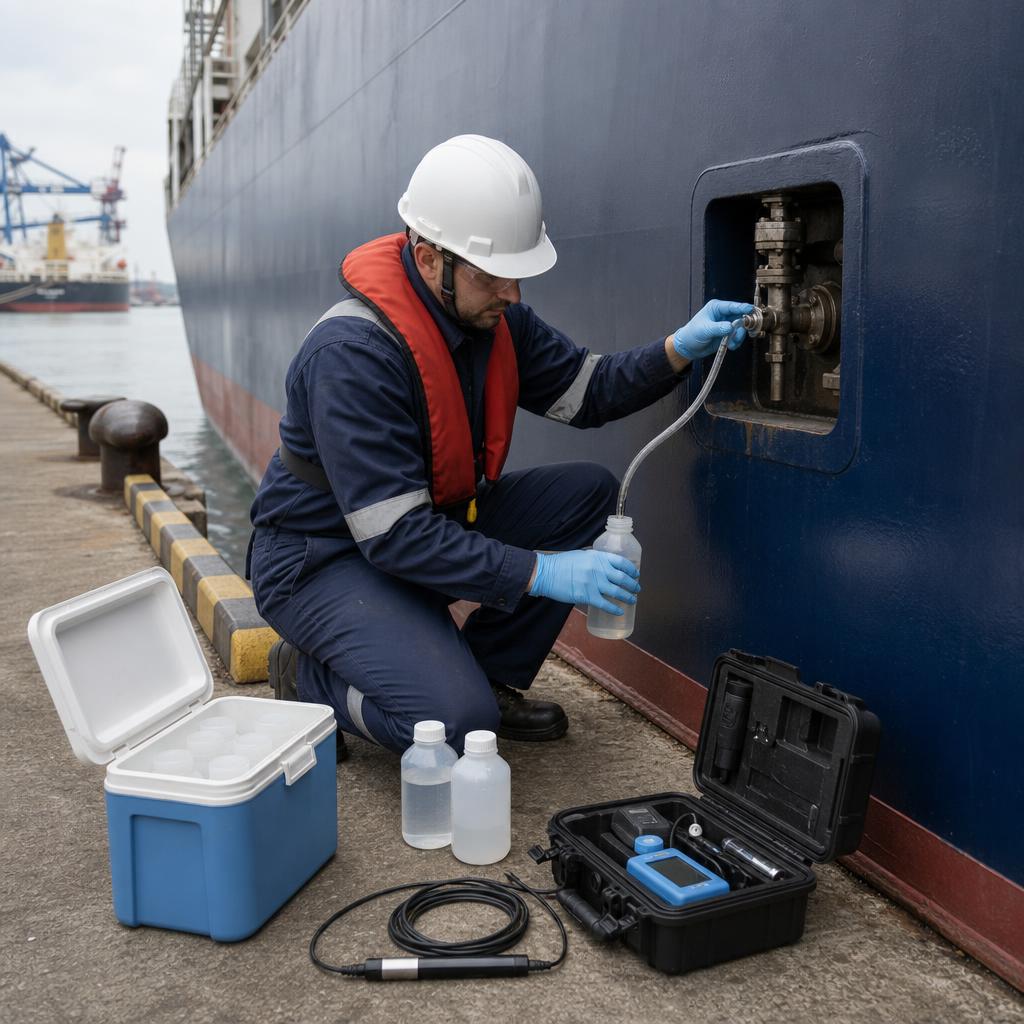
Water testing evidences the result of a defined sample collected by a defined method. It cannot alone establish universal compliance, performance under every condition, or local acceptance.
Key takeaways
- A test result evidences a defined sample, not all operations.
- Method limits and field conditions determine the meaning of a result.
- Link reports to transfer logs and process status.
- Testing does not itself create approval or port acceptance.
- Use independent laboratory coordination where the project requires it.
- Report limitations as clearly as results.
State the Claim
Match the proposed claim to the sample and method. A single result can evidence a sampled condition. It cannot prove every vessel or operating season.
Decide whether evidence is operational, contractual or regulatory. The required method and reviewer may differ. Write the limitation beside the claimed use.
Avoid using a laboratory result as marketing shorthand. It needs context to be meaningful. Keep the original report available to reviewers.
Understand Method Limits
Ask for detection limits, uncertainty and sample handling constraints. These affect what a non-detect can mean. Compare the method with the acceptance question.
Record flow, pressure and process status at collection. A sample taken during transition may not represent stable operation. Include relevant alarms and interventions.
Confirm whether preservation and transport affect the parameter. Follow the agreed protocol exactly. A late sample may answer a different question.
Link Testing to Operations
Pair the report with transfer volume and time records. This shows the operational context. It also makes later investigation possible.
Use test results to investigate a defined deviation, not to replace routine monitoring. Check instruments and procedures where results are unexpected. Assign corrective actions.
Retest only with a justified method and timing. Repeated unplanned sampling can create incomparable data. Document why the second sample was needed.
Set Acceptance Properly
Confirm applicable flag, port, class, authority, discharge permit and approval requirements for each operation. A test result does not create approval. Keep the local route visible in the plan.
IMO G5 provides reception-facility guidance. It is not an automatic licence or a universal technical design. Project-specific assessment remains necessary.
MEPC.325(75) commissioning testing, if used, is indicative only. It is not full D-2 compliance validation. Describe it accurately in reports.
Use Independent Parties
Sea Clean can coordinate with independent ISO 17025 laboratories and flag or class-authorised parties where required. Agree their scope before mobilisation. Independence does not remove the need for a sound sample plan.
Confirm laboratory access, courier handover and chain-of-custody forms. These practical details can decide whether testing is usable. Plan them with berth security.
Identify who interprets results for the project. A laboratory generally reports its method result. The acceptance decision follows the agreed authority and contract route.
Report Without Overclaiming
Report what was sampled, when and under which conditions. Include method limitations and deviations. Use plain language for the decision maker.
Store raw reports with field sheets and operating logs. A summary alone loses traceability. Protect version control when results are revised.
Review whether the evidence changed a procedure or maintenance plan. If it did not, question the test purpose. Testing should inform an action.
Frequently asked questions
Can water testing prove D-2 compliance?
Not by itself. The evidence depends on the agreed method and applicable regulatory route; indicative commissioning testing is not a full D-2 validation.
What should accompany a report?
Include the field sheet, custody record, operating log and any deviations. Together they explain what condition the result represents.
Who decides if a result is accepted?
The acceptance plan should name that party. It may depend on contract and applicable flag, port, class, authority or permit requirements.
Why record detection limits?
They define what the method could observe. A result without method context can be misinterpreted.