Ballast Water Sampling for Port Treatment Projects
Updated
A sampling plan is useful only when it answers a named decision with a representative, traceable sample. Establish the method, access and laboratory logistics before transfer starts.
Key takeaways
- Start with the decision a result must support.
- Use a documented representative point and sample timing.
- Protect traceability through labels, custody and transport records.
- Agree laboratory method and detection limits before collection.
- Interpret reports with operating conditions and method limits.
- Verify local acceptance separately from a sampling exercise.
Define the Decision
Write the question the result will inform. It may concern process troubleshooting, contractual evidence or a regulatory requirement. Each question can require a different method.
Name the decision maker and report recipient. A laboratory report without a recipient may not resolve an operational issue. Set result turnaround expectations realistically.
Do not sample merely because water is available. Sampling can disrupt a berth operation. Balance evidence value against safety and traffic constraints.
Select a Representative Point
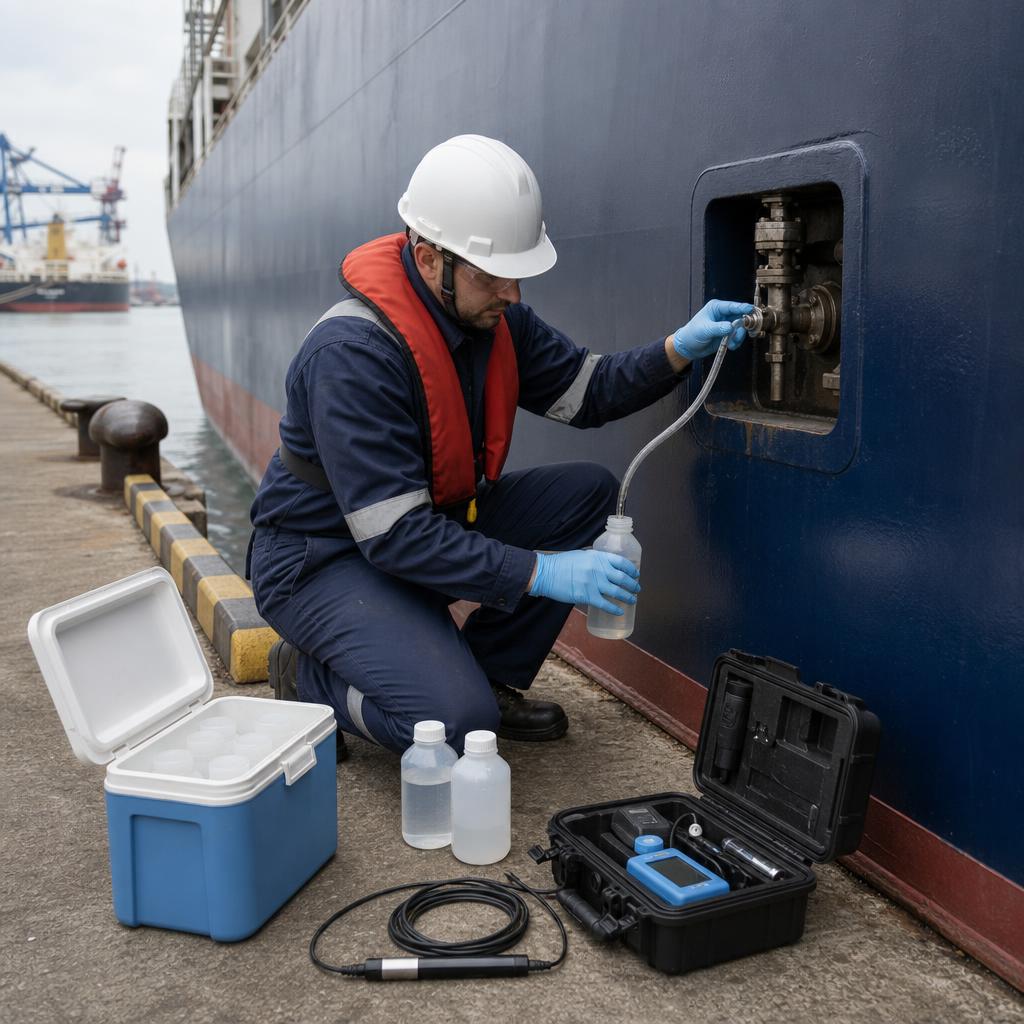
Identify a point with safe, controlled access and representative flow. Avoid dead legs and unverified hose pockets. Document the point on the connection drawing.
Confirm when sampling occurs relative to treatment and transfer. Changing flow or valve position can change what the sample represents. Record those conditions on the field sheet.
Plan flushing of the sample line where the method requires it. Record the volume and procedure used. Protect personnel from pressure and splashing.
Control Custody
Use labelled containers matched to the agreed laboratory method. Record collector, time, location and sample identifier. Correct an error before dispatch, not after reporting.
Seal and transfer samples through named custodians. Log temperature or preservation where required. Store duplicate documentation with the project file.
Arrange transport around method holding times. A delayed courier can invalidate the intended use. Have a documented contingency for missed collection.
Coordinate the Laboratory
Confirm the laboratory method, reporting units and detection limits before collection. Ask whether matrix conditions affect analysis. Do not assume every laboratory report answers the same question.
Sea Clean can coordinate with independent ISO 17025 laboratories and flag or class-authorised parties where required. Sea Clean is not an accredited laboratory or independent certifier. The agreed method governs interpretation.
Book collection windows around vessel movement and berth security. Give the laboratory safe-access requirements. Confirm who releases samples at the gate.
Read Results Carefully
Interpret a result with its sample conditions and method limits. A result speaks to that sample, not every future operation. Compare only like methods and conditions.
Keep operational logs with the report. Flow, alarms, weather and valve status can explain anomalies. Do not substitute anecdote for documented conditions.
Confirm local acceptance requirements separately. Flag, port, class, authority, discharge permit and approval conditions remain project-specific. IMO G5 is guidance, not a licence.
Improve the Next Sample
Review access difficulty and timing after each collection. Update the plan before the next vessel. Small route changes can improve safety and repeatability.
Train the collecting team on labels, custody and stop-work authority. Competence includes knowing when a sample is not representative. Retain observed-task records.
Use trends only when collection methods remain comparable. Record changes in equipment or procedure. Otherwise apparent trends can be artifacts.
Frequently asked questions
What makes a ballast-water sample representative?
It is collected at an agreed point and time under recorded flow conditions. The method must suit the decision the result is intended to support.
Can Sea Clean analyse samples?
Sea Clean can coordinate with independent ISO 17025 laboratories and authorised parties where required. It does not represent itself as an accredited laboratory.
Why is chain of custody important?
It records who controlled the sample from collection to receipt. Without it, a report may not provide credible project evidence.
Does a sample prove port acceptance?
No. Acceptance depends on the applicable project requirements. Confirm requirements with the relevant flag, port, class, authority and permit route.