BWM Convention Explained: D-1 Ballast Water Exchange vs D-2 Performance Standard
Updated
The International Convention for the Control and Management of Ships' Ballast Water and Sediments sets two compliance standards: Regulation D-1 mid-ocean exchange and Regulation D-2 numeric discharge limits met by a type-approved treatment system. This article explains both standards, their organism limits, the exchange-to-treatment transition, and what operators must do to stay compliant.
Key takeaways
- The BWM Convention entered into force on 8 September 2017 and applies to vessels of 400 GT and above trading internationally.
- Regulation D-1 requires at least 95 percent volumetric ballast water exchange, generally 200 nm from land in water 200 m deep.
- Regulation D-2 limits discharge to <10 viable organisms/m³ for ≥50 µm and <10/mL for 10-50 µm, plus indicator microbe limits.
- All affected ships must meet D-2 by 8 September 2024; D-1 is no longer a standalone route after the compliance date.
- Meeting D-2 requires a type-approved BWMS combining filtration with UV, electrochlorination or chemical disinfection.
- Ships must carry an approved BWM Plan, a Ballast Water Record Book and a valid International BWM Certificate.
Why the BWM Convention Exists
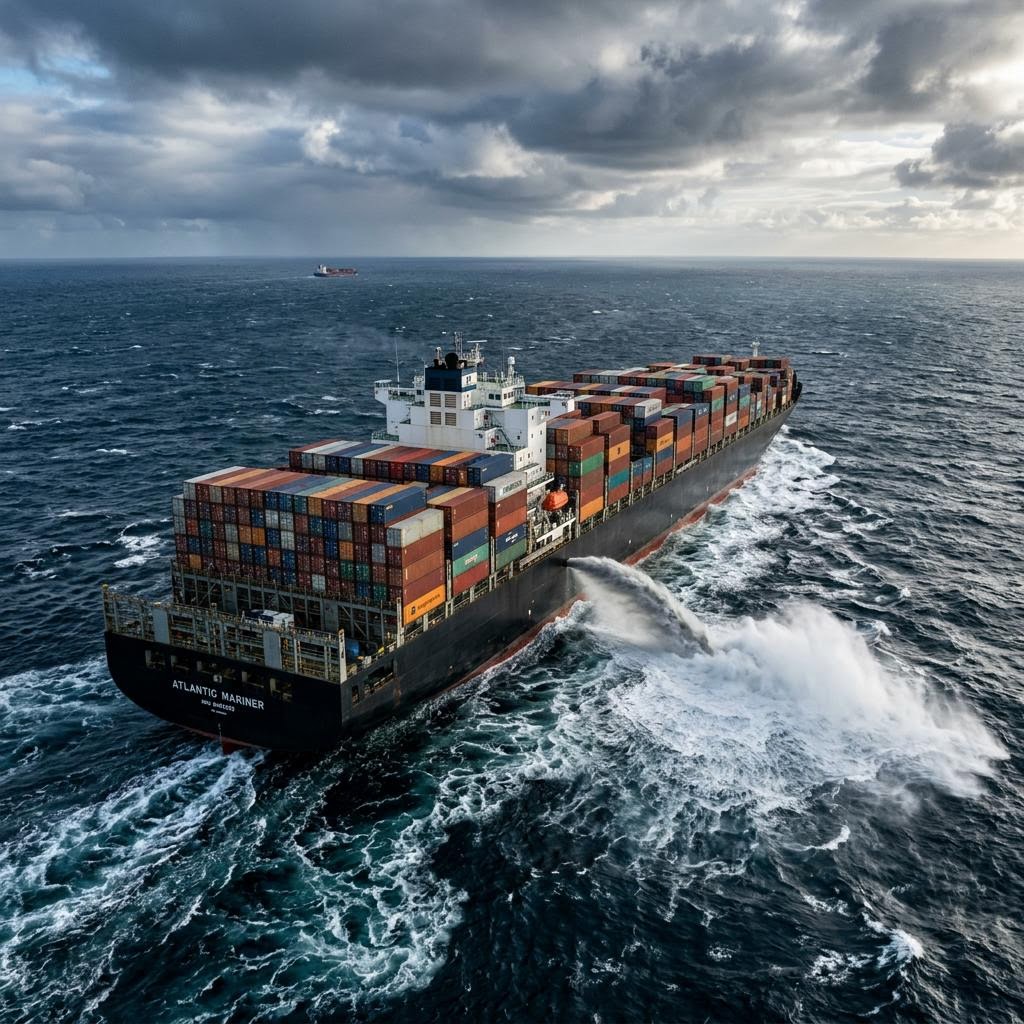
Ships carry an estimated several billion tonnes of ballast water across the globe each year to maintain trim, stability and structural integrity when cargo is loaded or discharged. That water carries bacteria, microalgae, cysts, larvae and adult organisms that can establish as invasive species in new ports, with documented cases such as the North American zebra mussel and toxic dinoflagellate blooms causing ecological and economic harm.
The IMO adopted the International Convention for the Control and Management of Ships' Ballast Water and Sediments (the BWM Convention) in 2004, and it entered into force on 8 September 2017 after the tonnage and flag-state thresholds were met. The Convention applies to vessels of 400 GT and above that are designed to carry ballast water and operate internationally, with some exemptions for vessels operating exclusively within waters under one Party's jurisdiction.
Two technical standards sit at the core of the Convention: Regulation D-1, which governs ballast water exchange, and Regulation D-2, which sets a numeric performance standard for discharged water. Every affected ship must carry an approved Ballast Water Management Plan and a Ballast Water Record Book, and must hold an International Ballast Water Management Certificate issued by or on behalf of the flag administration.
Regulation D-1: Ballast Water Exchange
Regulation D-1 requires ships to exchange ballast water in open ocean, replacing coastal water (rich in organisms adapted to coastal conditions) with deep-sea water where most organisms cannot survive in port environments. The exchange must achieve at least 95 percent volumetric exchange efficiency. When the sequential method (empty-refill) is used, pumping through three times the tank volume is considered to meet the 95 percent standard.
Exchange should be conducted at least 200 nautical miles from the nearest land in water at least 200 metres deep. Where that is not possible, exchange should occur as far from land as practicable but no less than 50 nautical miles from the nearest land and in water at least 200 metres deep. Three methods are recognized: sequential, flow-through (pumping at least three tank volumes through), and dilution.
D-1 is a transitional standard. It is operationally simple but offers no guarantee of biological cleanliness, depends on weather and route, and carries ship stability and structural loading risks during the exchange operation. For these reasons the Convention treats D-1 as a stepping stone toward the more rigorous D-2 standard.
Regulation D-2: The Performance Standard
Regulation D-2 sets numeric limits on the organisms a ship may discharge. The discharge must contain fewer than 10 viable organisms per cubic metre that are 50 micrometres or greater in minimum dimension, and fewer than 10 viable organisms per millilitre that are between 10 and 50 micrometres in minimum dimension.
D-2 also limits indicator microbes for human health: toxicogenic Vibrio cholerae (serotypes O1 and O139) below 1 colony-forming unit (cfu) per 100 mL, Escherichia coli below 250 cfu per 100 mL, and intestinal Enterococci below 100 cfu per 100 mL. These limits are the practical reason ships fit a Ballast Water Management System (BWMS), since exchange alone cannot reliably meet them.
Meeting D-2 in practice requires a type-approved BWMS, typically combining filtration (commonly 40 to 50 micrometre screens) with a disinfection stage such as ultraviolet irradiation or electrochlorination producing total residual oxidant (TRO). The headline numbers are deceptively small, which is why correct operation, filtration, holding times and neutralization all matter for the discharge to actually fall within the limits.
The Transition from D-1 to D-2
Originally the implementation schedule was tied to renewal of the IOPP certificate, but MEPC.297(72) amended the timeline to anchor it to the International Oil Pollution Prevention (IOPP) renewal survey. Existing ships had to comply with D-2 by the first IOPP renewal survey after 8 September 2017, with a final backstop date of 8 September 2024 by which all affected ships must meet D-2.
New ships, defined as those constructed on or after 8 September 2017, have had to comply with D-2 from delivery. As of 8 September 2024 the transition window closed, so D-1 exchange is no longer a standalone compliance route for vessels that have passed their compliance date; the fleet is now expected to be on D-2.
Owners who planned retrofits around their IOPP renewal schedule generally fitted systems during a scheduled dry-docking to minimize off-hire. Vessels that have not yet completed installation should treat compliance as overdue and engage class and flag immediately, because Port State Control increasingly expects functional, type-approved systems.
Choosing a Compliance Method
For most operators the only durable answer is a type-approved BWMS that meets D-2 on every voyage. The main treatment families are UV-based systems (for example Alfa Laval PureBallast, Optimarin OBS), electrochlorination/electrolysis systems generating TRO (for example Techcross ECS, Sunrui BalClor, Headway OceanGuard), and chemical injection systems (for example JFE BallastAce).
System selection depends on installed pump capacity, available space and power, the salinity and temperature range of trading waters, and UV transmittance (UVT) of typical source water for UV systems. Electrolytic systems need adequate salinity to generate oxidant and may require brine or salinity adjustment in fresh water, while UV systems are salinity-independent but sensitive to turbidity and low UVT.
Sea Clean AS, an authorized Headway agent, supports owners with system selection guidance, commissioning, spare parts and service for Headway OceanGuard and multi-brand fleets. Whatever system is chosen, the goal is consistent D-2 discharge with full traceability in the Ballast Water Record Book.
Documentation and Certification
Every affected ship must carry an approved Ballast Water Management Plan specific to the vessel, a Ballast Water Record Book recording all ballast operations, and the International Ballast Water Management Certificate. The certificate is issued following an initial survey and maintained through annual, intermediate and renewal surveys aligned with the vessel's other statutory certificates.
From 8 September 2017 newly installed systems also need commissioning testing under MEPC.325(75), which requires representative sampling and analysis to confirm the system functions to D-2 at installation. Records of this test should be retained and presented to surveyors and Port State Control as evidence the system was verified, not just installed.
Frequently asked questions
What is the difference between D-1 and D-2?
D-1 is a process standard requiring mid-ocean ballast water exchange of at least 95 percent by volume. D-2 is a numeric performance standard limiting the concentration of viable organisms and indicator microbes in the discharge, which in practice requires a type-approved treatment system.
When did D-2 become mandatory for all ships?
Existing ships had to comply with D-2 by their first IOPP renewal survey after 8 September 2017, with a final deadline of 8 September 2024. New ships built on or after 8 September 2017 have had to comply from delivery.
Can I still use ballast water exchange instead of a treatment system?
Only until your vessel's individual D-2 compliance date, which for the entire affected fleet has now passed (8 September 2024). After that date a type-approved BWMS meeting D-2 is required, and exchange alone is not a compliant route.
What are the exact D-2 organism limits?
Less than 10 viable organisms per cubic metre for organisms 50 µm or larger, and less than 10 viable organisms per millilitre for organisms between 10 and 50 µm. Indicator limits are <1 cfu/100 mL toxicogenic Vibrio cholerae, <250 cfu/100 mL E. coli and <100 cfu/100 mL intestinal Enterococci.
Sources
Related articles
- The IMO BWMS Code (Formerly G8) and How Type Approval Works
- BWM Convention Compliance Timeline and Key Dates
- BWMS Commissioning Testing Under MEPC.325(75)
- Ballast Water Management Plan: Required Content and Approval
- USCG Type Approval vs IMO Type Approval: Key Differences for Owners
- Ballast Water Record Book: Entries, Format and PSC Expectations