Panasia GloEn-Patrol BWTS Service Support
Updated
Panasia GloEn-Patrol is a UV-based ballast water management system from a Korean maker, widely fitted across merchant fleets. This article covers the system's filtration and UV stages, its main maintenance points and fault modes, and explains how Sea Clean AS provides independent GloEn-Patrol service, parts sourcing and engineer attendance.
Key takeaways
- GloEn-Patrol is a Panasia UV-based BWTS combining a filter with UV reactors and no chemical dosing.
- UV lamps are the main consumable; replace on hours before a low-UV alarm halts treatment.
- Quartz sleeves must stay clean and intact; fouling or cracks reduce delivered UV dose.
- Filter high-pressure trips in turbid water are managed by slowing the ballasting rate.
- Sea Clean provides independent GloEn-Patrol service and parts and does not claim Panasia OEM authorization.
- Engineer ETA is typically 0-24h for Norway and North Sea, and as fast as logistics allow worldwide.
The GloEn-Patrol System
Panasia GloEn-Patrol is a UV-based ballast water management system that pairs a pre-treatment filter with UV reactors to inactivate organisms during ballasting and deballasting. As a chemical-free UV design, its compliant operation depends on delivering the required UV dose across the full ballast flow, managed by the controller against measured UV intensity.
The system is common across many vessel types because it was supplied in a wide range of capacities. The maintenance logic is shared with other UV systems: keep the lamps healthy, keep the quartz sleeves clean and intact, keep the UV sensors accurate and service the filter as a routine wear item.
Identifying the GloEn-Patrol generation, reactor type and lamp specification is the starting point for any parts or service work, because lamp and sleeve dimensions and the control arrangement vary between models.
UV Lamps and Quartz Sleeves
UV lamps are the primary consumable on GloEn-Patrol and lose output gradually over their rated hours until the controller can no longer maintain dose, producing a low-UV alarm. Tracking lamp hours and replacing lamps before they fail keeps treatment capacity available for critical ballast operations.
Quartz sleeves protect the lamps and must stay clean and intact to transmit UV efficiently. Fouling or scaling reduces delivered dose even with healthy lamps, and a cracked or clouded sleeve must be replaced. Correct handling during replacement, including keeping the quartz free of contamination, is part of the procedure.
Sea Clean supplies UV lamps and quartz sleeves matched to the GloEn-Patrol model and reactor. Carrying a set of lamps and sleeves on board allows the crew to restore full capacity without waiting for a port delivery when a lamp reaches end of life.
Filter, Sensors and Controls
The pre-treatment filter protects the UV reactors and is a routine wear item, with elements, seals and a backflush mechanism that need attention as differential pressure rises. In turbid water the filter may limit ballasting rate, managed by slowing the operation rather than treating it as a fault.
UV intensity sensors govern the controller's dosing decisions, so a fouled or drifting sensor causes nuisance alarms or incorrect lamp power. Periodic sensor checks and cleaning keep the dose calculation accurate. Control, communication and power-supply faults are worked through against the alarm history.
Sea Clean supplies filter elements, sensor components and other GloEn-Patrol spares, and supports controls diagnosis during attendance. Reviewing the alarm log before a visit helps target the likely cause.
Common GloEn-Patrol Faults
The most frequent issues are low-UV alarms from aged lamps or fouled sleeves, filter high-pressure trips in sediment-laden water, and sensor or control faults that produce alarms not reflecting the real treatment state. Reading the alarm history rather than reacting to the latest alarm usually reveals the root cause.
Lamp-driver (electronic ballast) and power-supply faults can take individual lamps offline, reducing reactor capacity. The controller flags affected lamps, and determining whether the fault is the lamp, the driver or the wiring guides the correct repair.
Many faults are within crew capability with spares aboard and the manuals to hand. Engineer attendance is warranted for recurring faults, unclear diagnosis, repairs beyond the crew's tools, or an imminent commissioning test or PSC inspection.
Independent Service and Parts Supply
Sea Clean provides independent service and parts support for Panasia GloEn-Patrol systems. We are not an authorised Panasia agent and claim no OEM approval; we source genuine and compatible GloEn-Patrol parts through our supplier network and supply them with the documentation a vessel and class need.
For owners, an independent route gives a single contact who can combine UV lamps, sleeves, filter parts and general ship spares in one delivery, often faster than a single-brand channel. Where a genuine OEM component is the right choice, we say so and source accordingly.
Accurate identification is essential because GloEn-Patrol exists in several generations and reactor sizes. Sending the model, reactor type, lamp specification and nameplate photographs lets us confirm the correct part before dispatch.
Engineer Attendance and Planning
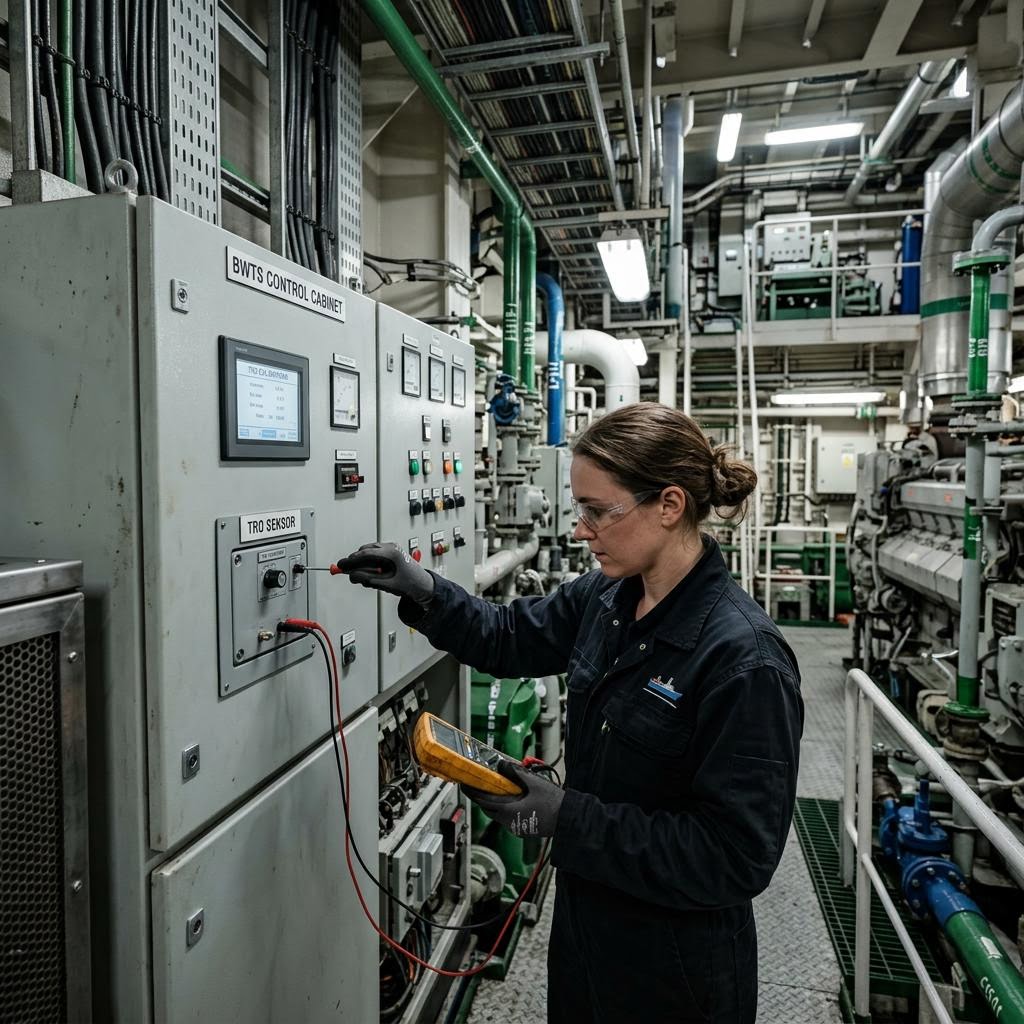
GloEn-Patrol service attendance covers lamp and sleeve replacement, filter service, sensor verification and fault diagnosis. Combining a planned service with a parts delivery in one visit reduces port calls and keeps the system ready for the next ballast operation.
For Norwegian and North Sea port calls an engineer typically reaches the vessel within 0-24 hours; for worldwide calls, mobilisation is as fast as flights, visas and port access allow, with parts routed by courier or air freight to the agent. We confirm a realistic ETA rather than promising instant global arrival.
Send the vessel name, IMO number, GloEn-Patrol model and the requirement to post@seaclean.no to plan attendance and parts together. Early notice is the main factor in meeting a port window.
Frequently asked questions
Is Sea Clean authorised by Panasia for GloEn-Patrol?
No. Sea Clean provides independent service and parts support for Panasia GloEn-Patrol systems and claims no OEM approval. We are an authorized agent only for Headway. For GloEn-Patrol we source genuine and compatible parts and supply them with the documentation a vessel and class require.
What are the main consumables on a GloEn-Patrol?
The main consumables are UV lamps and quartz sleeves, plus the pre-treatment filter element and seals. Lamps are replaced on rated hours, sleeves when fouled or cracked, and filter elements as differential pressure rises. Carrying a set on board lets the crew restore capacity without waiting for delivery.
Why does GloEn-Patrol show a low-UV alarm?
A low-UV alarm usually means aged lamps, fouled or cracked quartz sleeves, or a fouled UV sensor. Check lamp hours, sleeve condition and the sensor first. A lamp-driver or power-supply fault can also take individual lamps offline; the controller flags which lamps are affected to guide the repair.
How quickly can Sea Clean attend a GloEn-Patrol system?
For Norwegian and North Sea calls an engineer typically reaches the vessel within 0-24 hours. For worldwide calls, mobilisation is as fast as flights, visas and port access allow, with parts routed by courier or air freight to the agent. We confirm a realistic ETA rather than promising instant arrival.