BWTS Crew Training: Onboard and Online Operator Support
Updated
A correctly installed and maintained ballast water treatment system still fails inspections when the crew does not know how to operate it, respond to its alarms or complete the record book correctly. Crew turnover means operating knowledge leaves the ship regularly, and generic seminars rarely cover the specific system on board. This article explains what effective BWTS crew training should cover, why it directly affects compliance, and how Sea Clean delivers onboard and online training tailored to the installed system.
Key takeaways
- PSC tests operator knowledge; a working system with a crew that cannot operate or explain it is a detention risk under Regulation B-6.
- Effective training covers normal operation, the D-2 standard, record-book entries and alarm handling on the specific installed system.
- Alarm training teaches the correct first response and the boundary between what crews resolve themselves and when to call an engineer.
- Contingency training rehearses the approved temporary non-compliance procedure and notifications for a real system failure in a regulated port.
- Onboard training uses the vessel's own system; online training gives consistent fleet baseline knowledge — many operators combine both.
- Sea Clean tailors training to the make and model — Headway with agent backing, other brands independently — reflecting real service experience.
Why Crew Training Is a Compliance Issue
Regulation B-6 of the BWM Convention places responsibility for ballast water management on the ship's officers and crew, and port State control routinely tests operator knowledge as part of an inspection — asking the responsible officer to explain the system, demonstrate operation and produce correct record-book entries. A system that works but a crew that cannot operate or explain it is a detention risk in its own right.
Ballast water systems are also genuinely more complex than the pumps and valves crews were traditionally responsible for: oxidant generation, UV dose, dosing chemistry, neutralisation and a control system with its own alarm philosophy. Without specific training, well-meaning crews suppress alarms, bypass treatment, or make record-book entries that contradict what the system actually did — each of which converts a compliant ship into a finding.
Crew turnover compounds the problem: the officer trained at commissioning may have left, and the current watchkeepers may never have received system-specific instruction. Training is therefore not a one-off event but a recurring need that tracks the crew, and it is most valuable delivered against the exact system the current crew must operate.
What Effective Training Covers
Effective training starts with the installed system's normal operation: how to line up, start, run and stop treatment through a ballast and deballast cycle, what the control system is doing at each step, and what normal readings look like. Crews operate a system far more safely when they understand what the equipment is trying to achieve, not just which buttons to press in which order.
It then covers the D-2 standard and why it matters: what compliant discharge means, the role of TRO or UV dose, the importance of neutralisation before overboard discharge, and the conditions under which the system may not be used. This connects the daily operation to the regulatory outcome the crew is responsible for delivering.
Record-keeping is a central module because the ballast water record book is what an inspector reads first. Training covers correct entries for each ballast operation, how the entries must match the system's actual behaviour and the management plan, and how to document a bypass or contingency situation properly rather than leaving a gap an inspector will question.
Alarm Handling and Contingency
Alarm handling is where training pays off most, because the wrong response to an alarm is a frequent cause of both damage and non-compliance. Training distinguishes nuisance alarms from genuine faults, sets out the correct first response to each common alarm on the installed system, and makes clear which alarms require the treatment to stop and which allow continued operation.
Crews learn what they can safely address themselves — a fouled sample line, a filter backflush, a reagent top-up — and where they must stop and call for engineer support rather than working around the problem. Knowing the boundary prevents the two opposite failures: crews who ignore real faults and crews who call out an engineer for something they could resolve in minutes.
Contingency training covers what to do when the system genuinely cannot be used: the approved temporary non-compliance procedure in the ship's management plan, the notifications the master must make, and the records to keep. A crew rehearsed in the contingency procedure handles a real system failure in a regulated port calmly and defensibly instead of improvising.
Onboard Versus Online Delivery
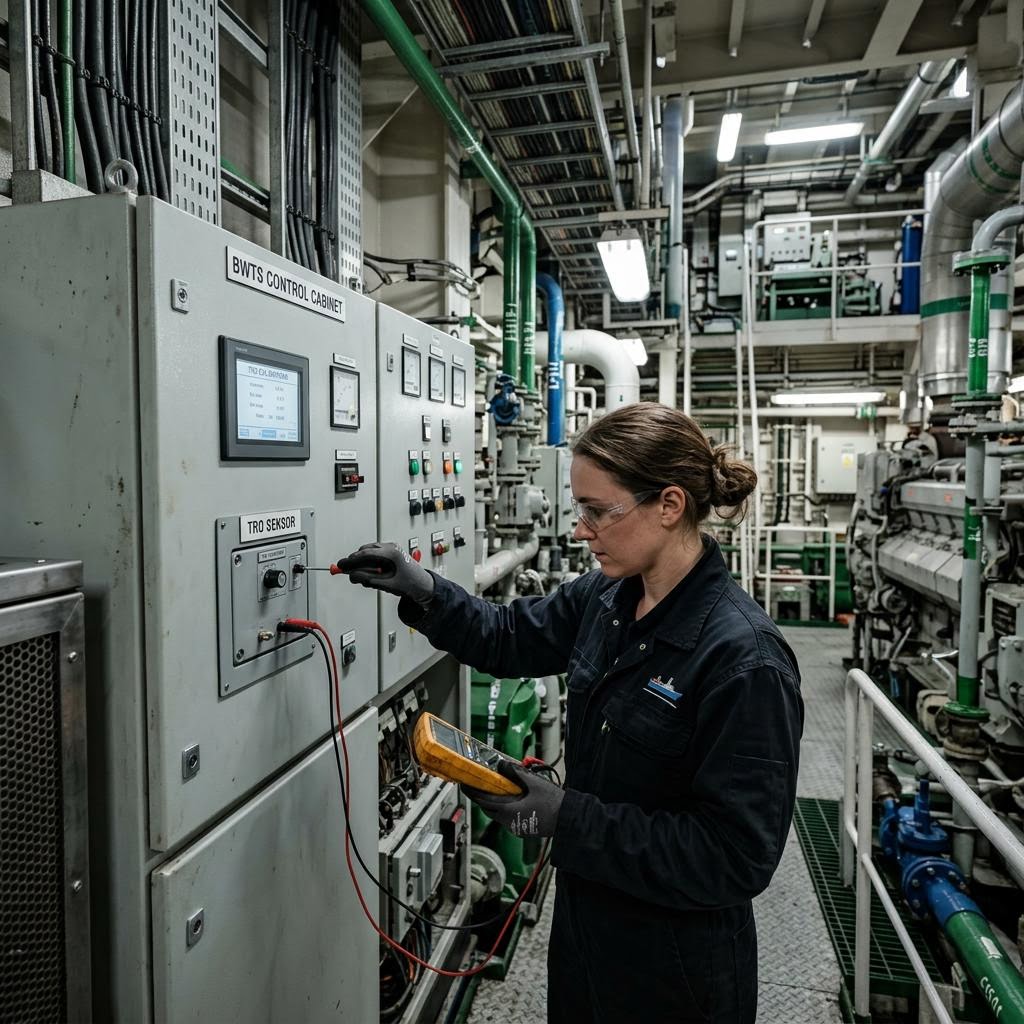
Onboard training is delivered by an engineer during a service attendance or a dedicated visit, using the vessel's actual system as the training aid. This is the most effective format because the crew practises on the equipment they operate, in their own machinery space, and the engineer can address the specific quirks of that installation and its trading pattern.
Online training suits situations where an engineer cannot attend, where crew join at short notice, or where a fleet needs consistent baseline instruction across many ships. It covers the operating principles, the D-2 requirements, record-keeping and alarm philosophy, and prepares crews so that onboard familiarisation can then focus on the hands-on specifics.
Many operators combine the two: online modules for the theory and consistent fleet knowledge, and onboard familiarisation timed to a service visit for the practical, system-specific element. Sea Clean can deliver either or both, tailored to the make and model fitted so the training reflects the crew's real equipment.
Tailoring Training to the Installed System
Generic ballast water training has limited value because the operating detail, the alarms and the maintenance actions differ substantially between an electrochlorination system, a UV system and a chemical-dosing system. Sea Clean tailors training to the specific make and model — Headway OceanGuard with manufacturer backing as an authorized agent, and other brands on an independent basis — so the crew learns the system they actually run.
Because Sea Clean services and supplies parts for these systems, the training reflects real operating experience: the alarms that actually recur, the maintenance actions that matter, and the record-book pitfalls that draw inspection findings. This practical grounding is what distinguishes system-specific training from a generic regulatory briefing.
For brands other than Headway, the training is provided as independent support and does not carry manufacturer authorization, but it is built on hands-on service experience across UV, electrochlorination and dosing designs. The goal in every case is a crew that can operate, maintain within their scope, and document the installed system correctly.
Arranging Crew Training
To arrange training, send the vessel name and IMO number, BWTS make and model, the number of crew to be trained, and whether onboard or online delivery is preferred, to post@seaclean.no. Timing onboard training to coincide with a service visit or a crew change makes the most of the engineer's attendance and reaches the crew who most need it.
Sea Clean's engineers attend vessels across Norway and the North Sea, commonly within 24 hours for planned calls, and coordinate worldwide onboard training by arrangement as flights, visas and port access allow, while online training can be delivered irrespective of the vessel's location. Fleet operators can standardise a training programme across ships so operating knowledge is consistent regardless of crew rotation.
Building training into the vessel's routine after each significant crew change keeps operating competence on board rather than assuming it survives rotation. Combined with a maintained system and correct records, a well-trained crew is one of the most cost-effective compliance investments an operator can make.
Frequently asked questions
Why isn't generic ballast water training enough?
Operating detail, alarms and maintenance actions differ substantially between electrochlorination, UV and chemical-dosing systems. Generic training does not prepare a crew for the specific alarms and record-book entries of the system they operate, which is exactly what port State control tests.
Can training be done remotely?
Yes. Sea Clean delivers online training covering operating principles, D-2 requirements, record-keeping and alarm philosophy, which suits short-notice crew changes and consistent fleet baseline knowledge. Many operators combine online theory with onboard familiarisation timed to a service visit.
Does Sea Clean train crews on non-Headway systems?
Yes. Headway OceanGuard training is provided with manufacturer backing as an authorized agent, and training for Techcross, Erma First, Sunrui and other brands is provided as independent support, not manufacturer-authorized, built on hands-on service experience across the main technologies.
How do I arrange crew training?
Send the vessel name and IMO number, BWTS make and model, the number of crew to train and whether onboard or online delivery is preferred to post@seaclean.no. Timing onboard training to a service visit or crew change reaches the crew who most need it.