Ballast Water Testing and Sampling at Dubai and Jebel Ali
Updated
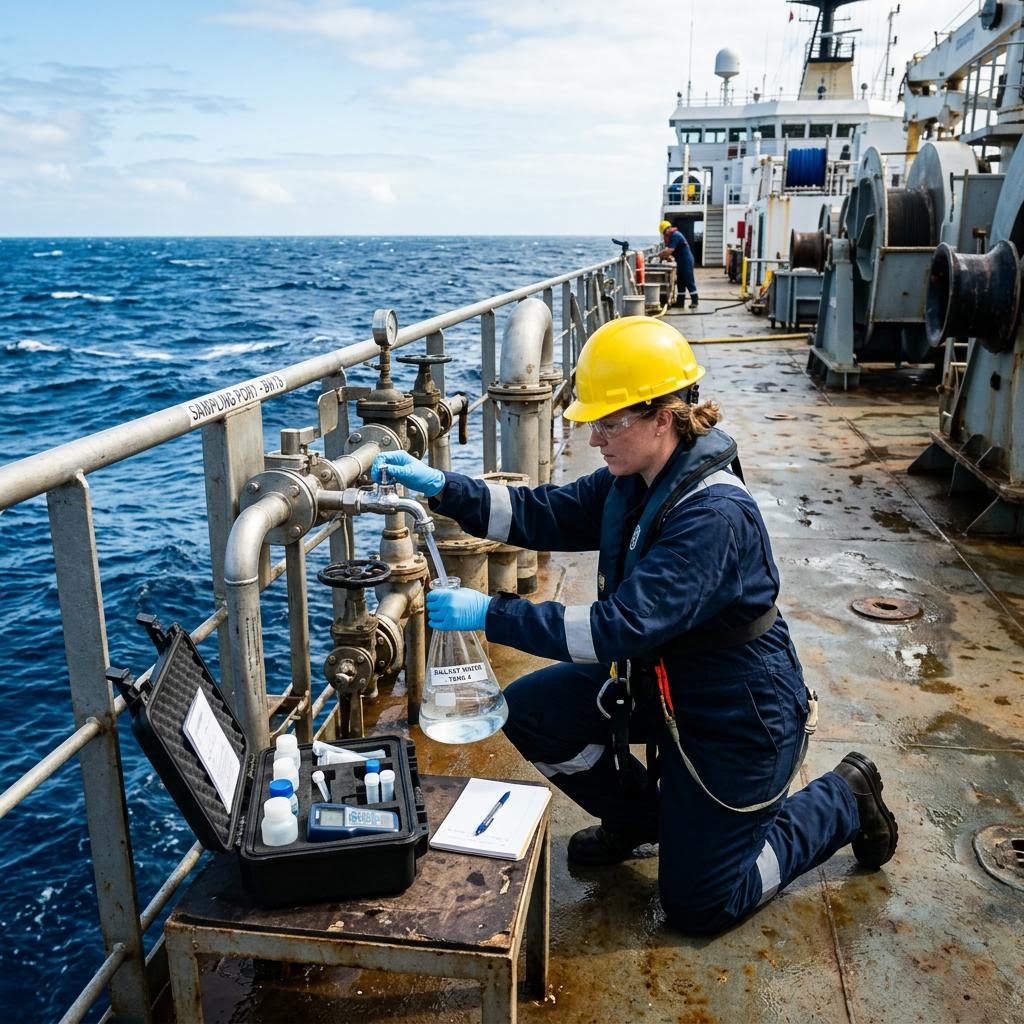
Dubai's ports, led by the Jebel Ali container terminal and the Dubai drydocks and maritime city, form a major Arabian Gulf hub for cargo, repair and offshore support. This guide explains how the IMO Convention applies, how sampling fits container and drydock calls, and how Sea Clean AS supports sampling and BWMS commissioning testing in cooperation with accredited laboratories rather than certifying analysis itself.
Key takeaways
- Jebel Ali is a leading Middle East container hub, with the Dubai drydocks adding repair and retrofit activity.
- The UAE is a party to the IMO Convention, so vessels must meet D-2 and keep a record book and management plan.
- Commissioning testing under MEPC.325(75) is relevant after retrofit at the Dubai drydocks.
- Container calls need a precise window; drydock periods allow more flexible sampling scheduling.
- Indicative screening suits fast turnarounds; accredited labs provide certified detailed analysis for retrofits.
- Sea Clean coordinates sampling with accredited labs and supplies kits and reagents, without certifying results.
Dubai and Jebel Ali in the Gulf
Jebel Ali is one of the largest container terminals in the Middle East and a leading transhipment hub for the Arabian Gulf and Indian Ocean trades, while Port Rashid, the Dubai drydocks and the maritime city add repair, cruise and offshore activity. Together they make Dubai a significant call for cargo, stores and ship repair.
The United Arab Emirates is a party to the IMO Ballast Water Management Convention, so vessels are expected to meet the D-2 standard, operate a type-approved system and hold the supporting documentation. Port state control may examine ballast water records and system condition during a call.
The mix of fast container turnarounds at Jebel Ali and longer repair periods at the drydocks means sampling here supports both quick verification during transhipment and commissioning testing after retrofit or repair.
The Convention and Commissioning Testing
Under the IMO Convention a vessel must meet the D-2 discharge standard, normally with a type-approved ballast water management system, and keep a ballast water record book and approved management plan. These records and the apparent condition of the system are the first things an inspector checks.
Commissioning testing under MEPC.325(75) is relevant at the Dubai drydocks, where ballast water systems are installed during retrofit. The test confirms, using representative samples from an actual ballast operation, that the installed system delivers treated water meeting D-2 on the specific vessel before it returns to service.
For a vessel completing repair or retrofit at Dubai, arranging commissioning sampling before departure helps demonstrate the new installation performs as intended. The sampling is planned around a real ballast operation and coordinated with the yard and commissioning engineers.
Sampling at Jebel Ali and the Drydocks
At Jebel Ali, container calls are on tight rotations, so sampling has to fit the part of the stay when ballast water is being processed, coordinated with the agent and the terminal around the cargo schedule. Terminal access and induction are arranged in advance so the attending party can board within the window.
At the Dubai drydocks a vessel in a repair or retrofit period is alongside or in dock for longer, giving more scope to schedule sampling around a controlled ballast operation. The attending party coordinates with the yard, the agent and the commissioning engineers for access and timing.
In both settings representative samples are taken at a defined point on the treated line so the result reflects normal operation. The sampling point and window are confirmed with the chief engineer or commissioning team before the attendance.
Indicative and Detailed Analysis
Indicative analysis gives rapid on-board screening of whether treated water is broadly within D-2 limits, using fluorometry, viability checks and TRO measurement. It suits the fast container turnarounds at Jebel Ali where a quick answer is needed during the call.
Detailed analysis through an accredited laboratory provides the certified result for commissioning and formal compliance questions, using methods that count living organisms in the regulated classes. The longer turnaround fits a drydock period where a documented commissioning result is required.
Using both routes gives flexibility: indicative screening confirms performance quickly during transhipment, while accredited detailed analysis supplies the certified proof for a retrofit completed at the drydocks.
How Sea Clean Supports Dubai
Sea Clean is not an accredited laboratory and does not certify ballast water results. It coordinates and supports sampling and commissioning testing in cooperation with accredited laboratories and parties authorised by the flag administration or class, supplies TRO test kits, sodium thiosulfate neutraliser and reagents, and helps the crew or commissioning team prepare the system and records.
For Dubai and Jebel Ali, attendance is arranged by prior agreement, with mobilisation depending on flights, visas and terminal or yard access, and reagents and kits supplied via courier and forwarding through the local agent. The support is organised for the specific call rather than from a standing office.
The accredited laboratory or authorised party performs and certifies the analysis, while Sea Clean makes the sampling fit the schedule, whether a fast Jebel Ali container call or a longer drydock period, and keeps the vessel supplied with in-date kits and reagents.
Planning a Dubai Call
Begin with the vessel name, IMO number, ETA, whether the call is a Jebel Ali container stop or a drydock period, and the reason for sampling. Drydock periods allow flexible scheduling around commissioning, while container calls need a precise window matched to ballasting.
Reagent and kit consignments are ordered with lead time to clear inbound logistics and reach the agent or yard, and any detailed laboratory turnaround is built into the plan. For retrofit commissioning, the sampling is coordinated with the yard and commissioning engineers.
Send the vessel details and requirement to post@seaclean.no to begin coordination. Early engagement with the agent, the yard where relevant and the laboratory is the main factor in completing sampling within the call.
Frequently asked questions
How does sampling fit a Jebel Ali container call?
Container calls at Jebel Ali are on tight rotations, so sampling is fitted to the part of the stay when ballast water is being processed, coordinated with the agent and terminal around the cargo schedule. Access and induction are arranged in advance so the attending party can board within the window.
Is commissioning testing available at the Dubai drydocks?
Yes, by arrangement. Where a ballast water system is installed during retrofit at the drydocks, commissioning testing under MEPC.325(75) confirms it meets D-2 before the vessel returns to service, using representative samples from an actual ballast operation. Sea Clean coordinates the sampling with an accredited party.
Does Sea Clean perform the analysis at Dubai?
No. Sea Clean is not an accredited laboratory and does not certify results. It coordinates and supports sampling and commissioning testing with accredited laboratories and authorised parties, and supplies TRO test kits, neutraliser and reagents. The accredited party performs and certifies the analysis.
Which analysis route suits a Dubai drydock period?
A drydock period usually allows time for detailed analysis through an accredited laboratory, which provides the certified result for a retrofit commissioning. Indicative screening can still give a quick operational read, but the documented certification comes from the accredited party.
Sources
Related articles
- Ballast Water Testing and Sampling at the Port of Fujairah
- Ballast Water Commissioning Testing: What Happens On Board
- Total Residual Oxidant (TRO) Monitoring and Neutralisation
- BWTS Service and Engineer Attendance at the Port of Fujairah
- Ballast Water Testing and Sampling at the Port of Hong Kong
- Ballast Water Testing and Sampling at the Port of Algeciras