Ballast Water Compliance in the United Kingdom
Updated
The United Kingdom applies the IMO Ballast Water Management Convention through the Maritime and Coastguard Agency and enforces it via port state control under the Paris MOU. This article explains how the UK regime works after leaving the EU, the D-2 standard, commissioning testing under MEPC.325(75), inspection practice, and how Sea Clean supports sampling, parts and reagent supply with accredited laboratories at UK ports.
Key takeaways
- The UK is a party to the IMO Convention and implements it through the Maritime and Coastguard Agency.
- Leaving the EU did not change the ballast water standards, which derive from the IMO Convention.
- The UK remains in the Paris MOU, so inspection practice aligns with the wider European approach.
- The D-2 standard applies and normally requires a working type-approved treatment system.
- Commissioning testing under MEPC.325(75) is carried out with accredited or authorised parties.
- Sea Clean's Rotterdam and Norwegian bases support UK North Sea calls with parts, reagents and engineer attendance.
The UK Regime After EU Exit
The United Kingdom is a party to the IMO Ballast Water Management Convention in its own right, and it implements the Convention through national legislation administered by the Maritime and Coastguard Agency. Leaving the European Union did not change the underlying ballast water standards, because those derive from the IMO Convention rather than from EU-specific law.
The UK remains a member of the Paris Memorandum of Understanding on port state control, so inspection practice in UK ports continues to align with the wider European approach. A ship that complies with the Convention, with a type-approved system and consistent documentation, is positioned to meet UK requirements as it would elsewhere in the Paris MOU region.
Sea Clean, with its Rotterdam presence and Norwegian base, is well placed to support vessels calling UK ports such as those on the east coast, the Humber, the Solent and Scottish ports including Aberdeen. Parts, reagents and engineer attendance can be arranged efficiently for UK calls within and around the North Sea trading area.
The D-2 Standard and Installed Systems
The UK applies the Convention's D-2 discharge standard, so ships discharging ballast in UK waters must meet the living-organism limits, normally through a working type-approved ballast water management system. The phased transition from D-1 exchange to D-2 treatment has followed the Convention timeline, so treatment is the standard compliance route.
The Maritime and Coastguard Agency and port state control check that the installed system is type-approved, matches the documentation and is operated within its approved parameters. A bypassed or inoperative system is non-compliance regardless of the hardware fitted. The condition and correct operation of the equipment are decisive.
Sea Clean supplies genuine Headway OceanGuard parts and multi-brand BWMS spares, along with the TRO test kits and sodium thiosulfate neutraliser used to keep oxidant-based systems within their approved discharge envelope. The North Sea position helps these reach UK-bound vessels promptly.
Commissioning Testing in UK Ports
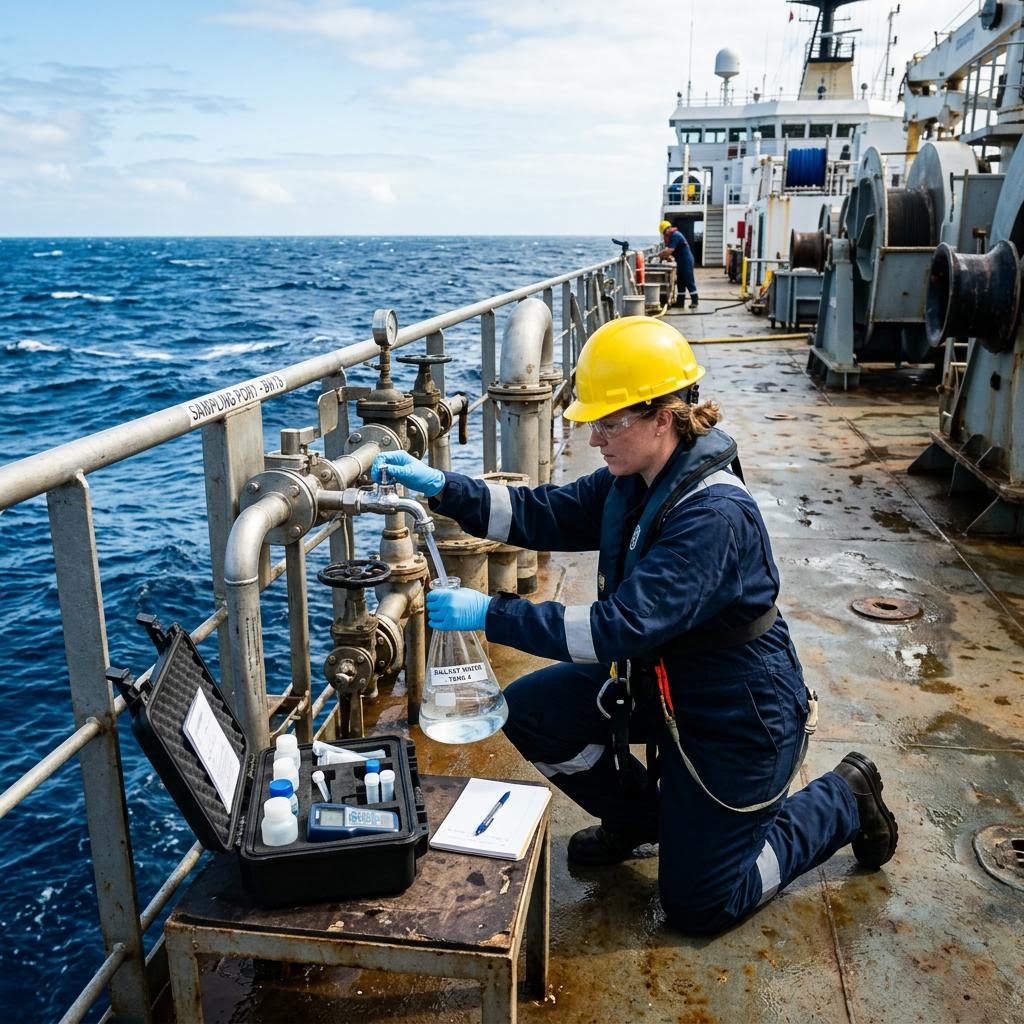
Commissioning testing of newly installed systems follows IMO resolution MEPC.325(75), with a representative sample of treated water analysed to confirm performance before the system enters service. In the UK this is arranged with the flag administration or recognised organisation and an accredited or authorised testing party, and the documented result is retained on board.
The test typically combines indicative analysis for a rapid on-board indication with detailed analysis where required to confirm organism counts against the standard. A failed or absent commissioning test is a serious finding that an MCA surveyor or port state control officer will pursue.
Sea Clean coordinates and supports commissioning testing in UK ports, attending to facilitate representative sampling, supplying the kits and reagents, and working with accredited laboratories and authorised parties who perform and certify the analysis. Sea Clean is not itself an accredited testing laboratory.
Port State Control Inspections
Paris MOU inspections in UK ports check ballast water alongside the wider examination, looking at the management plan, the record book, the certificate, crew familiarity and the operating state of the system. The MOU's targeting factors influence which ships are selected, so vessels with poor histories see more scrutiny.
Where doubt exists, officers may take or witness samples, using indicative methods for a quick screening result and, if warranted, referring samples for detailed laboratory analysis. Concentrated inspection campaigns across the MOU have at times focused on ballast water, raising the level of checking during those periods.
Sea Clean supports vessels by helping assemble a coherent record set, supplying reagents and consumables, and coordinating sampling with accredited parties when detailed analysis is needed. The defensible result comes from the accredited laboratory; Sea Clean's role is to make the sampling and documentation reliable.
Records, Certificates and the Management Plan
Ships calling UK ports carry the approved Ballast Water Management Plan, the Ballast Water Record Book and the International Ballast Water Management Certificate where applicable, and these must be present, current and consistent with each other and the installed equipment. UK inspectors expect the documentation to match what is fitted and done on board.
The record book should capture uptake, treatment, transfer and discharge clearly enough to reconstruct each operation, and the plan should describe the real sampling points and procedures. Gaps, contradictions or a plan describing absent equipment are common findings.
Sea Clean helps align TRO testing and sampling documentation with the plan and record book so the package holds together at inspection, and can advise on reagent restocking and system verification before a UK call. Contact post@seaclean.no with the vessel particulars to coordinate ahead of arrival.
How Sea Clean Supports UK Calls
Sea Clean is a Norwegian maritime company in Haugesund and Karmsund with a Rotterdam presence, positioned to support vessels across the North Sea and UK trading area. We supply BWTS spare parts and ballast water reagents, provide service and engineer attendance, and coordinate commissioning and sampling support with accredited laboratories and authorised parties.
For UK ports within the North Sea network, parts and reagents can be routed efficiently from the Rotterdam hub or the Norwegian base, with engineer attendance arranged by agreement for the vessel's stay. For more distant or less frequented UK ports, supply and attendance are arranged through courier, forwarding and local agents as needed.
Operators planning UK calls can contact post@seaclean.no with the vessel name, IMO number, installed BWMS make and intended ports. Early engagement lets us stage parts and reagents, arrange any commissioning support and align documentation before arrival.
Frequently asked questions
Did Brexit change UK ballast water requirements?
No. The UK is a party to the IMO Ballast Water Management Convention in its own right, and its ballast water standards derive from that Convention rather than EU-specific law. The UK also remains in the Paris MOU, so port state control practice continues to align with the wider European approach.
Who enforces ballast water rules in the UK?
The Maritime and Coastguard Agency administers the national legislation implementing the Convention, and enforcement in UK ports is carried out through port state control under the Paris MOU. Inspections check the management plan, record book, certificate and the operating state of the system, and may include sampling.
Can Sea Clean attend a vessel at a UK port?
Yes, by arrangement. With a Rotterdam presence and Norwegian base, Sea Clean can route parts and reagents efficiently for UK North Sea calls and arrange engineer attendance for the vessel's stay. For more distant UK ports, supply and attendance are arranged through courier, forwarding and local agents.
Does Sea Clean certify UK ballast water test results?
No. Sea Clean is not an accredited testing laboratory. It coordinates and supports sampling and commissioning testing, supplying kits and reagents, while accredited laboratories and authorised parties perform and certify the analysis used for compliance in the UK.
Sources
Related articles
- Ballast Water Compliance in the European Union
- Ballast Water Testing and Sampling at the Port of Aberdeen
- Ballast Water Commissioning Testing: What Happens On Board
- BWTS Service and Engineer Attendance at the Port of Aberdeen
- Ballast Water Compliance in New Zealand
- USCG Ballast Water Compliance for Ships Calling the United States