Whole BWTS Replacement Project Guide
Updated
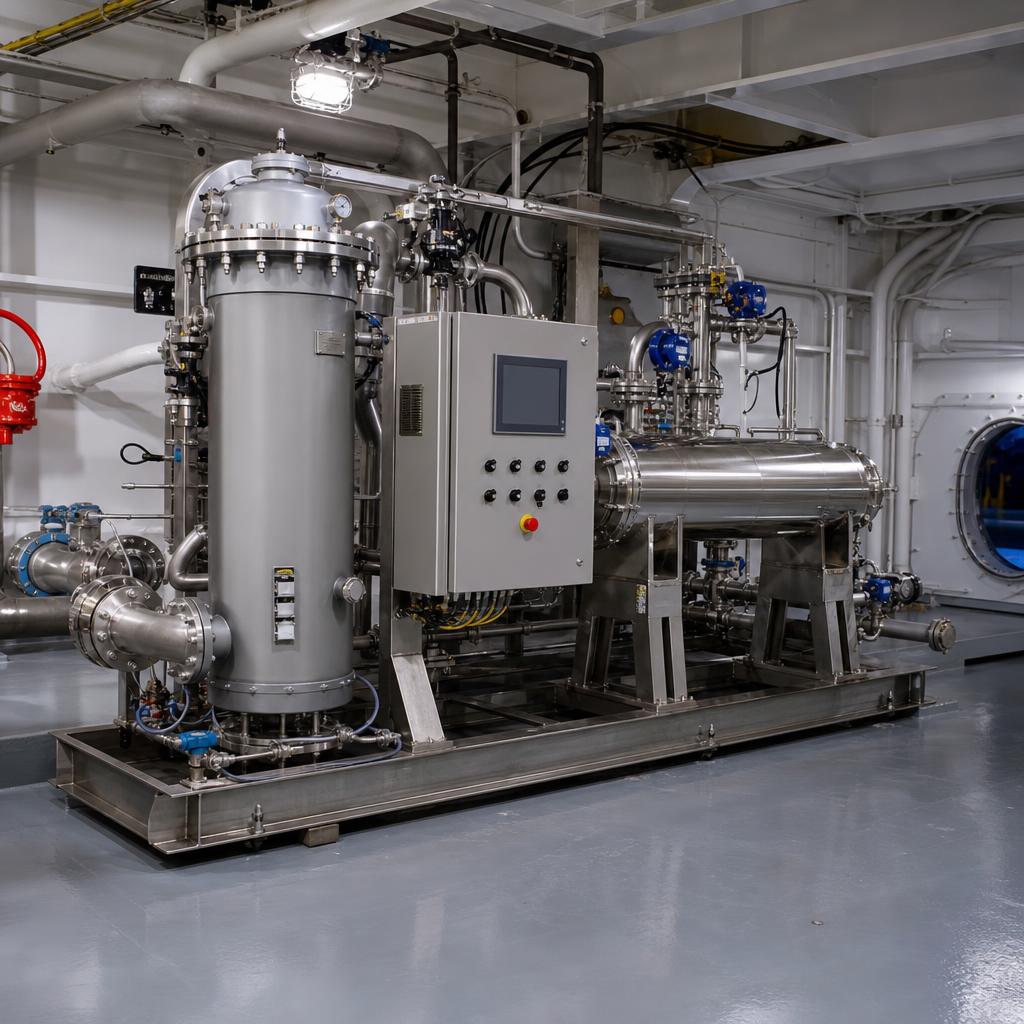
A whole BWTS replacement requires a removal-and-reintegration plan, not simply a new unit sized to the old footprint. Validate vessel hydraulics, structural and electrical interfaces, class steps, testing requirements and the support transition before work begins.
Key takeaways
- Start with a documented vessel, berth and operating case for the replacement project.
- Confirm hose routing, access, isolation, power and control interfaces before mobilisation.
- Size transfer activity around verified flow, pressure, time window and drainage constraints.
- Assign responsibility for monitoring, solids, records and emergency response in writing.
- Check applicable flag, port, class, authority, permit and approval requirements project by project.
- Use the final operating plan and evidence pack to support a controlled handover.
Decide Why Replacement Is Needed
Replacement may be driven by repeated unreliability, unavailable support, changed vessel operation or an uneconomic repair burden; document the reason and performance history. For a whole bwts replacement project, that point belongs under “Decide Why Replacement Is Needed” rather than in a late site query. It directly shapes the replacement project.
Turn the requirement into a measurable check: identify the responsible party, the source document and the point at which it will be verified. Review it with ship and shore teams before the ballast sequence starts. Escalate a mismatch rather than relying on an operational workaround.
Keep the resulting evidence with the operating plan, including drawings, readings, photographs or signed interface checks as appropriate. The applicable flag, port, class, authority, permit and approval requirements still require project-specific confirmation. This record helps distinguish a controlled limitation from an undocumented assumption.
Capture the Existing System Baseline
Record existing pipe routes, foundations, electrical loads, control links, access limits and removal hazards before assuming that a new unit can occupy the old space. For a whole bwts replacement project, that point belongs under “Capture the Existing System Baseline” rather than in a late site query. It directly shapes the replacement project.
Turn the requirement into a measurable check: identify the responsible party, the source document and the point at which it will be verified. Review it with ship and shore teams before the ballast sequence starts. Escalate a mismatch rather than relying on an operational workaround.
Keep the resulting evidence with the operating plan, including drawings, readings, photographs or signed interface checks as appropriate. The applicable flag, port, class, authority, permit and approval requirements still require project-specific confirmation. This record helps distinguish a controlled limitation from an undocumented assumption.
Engineer Removal and New Fit
Plan isolation, draining, cleaning, lifting and disposal of the outgoing installation, then verify the new equipment's structural, hydraulic and electrical fit. For a whole bwts replacement project, that point belongs under “Engineer Removal and New Fit” rather than in a late site query. It directly shapes the replacement project.
Turn the requirement into a measurable check: identify the responsible party, the source document and the point at which it will be verified. Review it with ship and shore teams before the ballast sequence starts. Escalate a mismatch rather than relying on an operational workaround.
Keep the resulting evidence with the operating plan, including drawings, readings, photographs or signed interface checks as appropriate. The applicable flag, port, class, authority, permit and approval requirements still require project-specific confirmation. This record helps distinguish a controlled limitation from an undocumented assumption.
Manage Class and Change Control
Treat a replacement as a controlled vessel change: drawings, class engagement, interface ownership and configuration records must reflect the installed system. For a whole bwts replacement project, that point belongs under “Manage Class and Change Control” rather than in a late site query. It directly shapes the replacement project.
Turn the requirement into a measurable check: identify the responsible party, the source document and the point at which it will be verified. Review it with ship and shore teams before the ballast sequence starts. Escalate a mismatch rather than relying on an operational workaround.
Keep the resulting evidence with the operating plan, including drawings, readings, photographs or signed interface checks as appropriate. The applicable flag, port, class, authority, permit and approval requirements still require project-specific confirmation. This record helps distinguish a controlled limitation from an undocumented assumption.
Plan Testing and Operational Transition
Use staged functional testing to prove piping integrity, controls, alarms and safe operating sequences before the crew relies on the new arrangement. For a whole bwts replacement project, that point belongs under “Plan Testing and Operational Transition” rather than in a late site query. It directly shapes the replacement project.
Turn the requirement into a measurable check: identify the responsible party, the source document and the point at which it will be verified. Review it with ship and shore teams before the ballast sequence starts. Escalate a mismatch rather than relying on an operational workaround.
Keep the resulting evidence with the operating plan, including drawings, readings, photographs or signed interface checks as appropriate. The applicable flag, port, class, authority, permit and approval requirements still require project-specific confirmation. This record helps distinguish a controlled limitation from an undocumented assumption.
Close the Lifecycle Support Gap
Avoid a support gap by identifying new spare parts, service procedures, training needs and document revisions before the old system is removed. For a whole bwts replacement project, that point belongs under “Close the Lifecycle Support Gap” rather than in a late site query. It directly shapes the replacement project.
Turn the requirement into a measurable check: identify the responsible party, the source document and the point at which it will be verified. Review it with ship and shore teams before the ballast sequence starts. Escalate a mismatch rather than relying on an operational workaround.
Keep the resulting evidence with the operating plan, including drawings, readings, photographs or signed interface checks as appropriate. The applicable flag, port, class, authority, permit and approval requirements still require project-specific confirmation. This record helps distinguish a controlled limitation from an undocumented assumption.
Frequently asked questions
When should a whole BWTS be replaced?
Replacement may be driven by repeated unreliability, unavailable support, changed vessel operation or an uneconomic repair burden; document the reason and performance history. The answer must be confirmed against the actual vessel, berth and local acceptance route. Sea Clean can help coordinate the technical scope and appropriate project stakeholders, but it does not replace required authority, class or laboratory decisions.
Can a replacement use existing piping?
Record existing pipe routes, foundations, electrical loads, control links, access limits and removal hazards before assuming that a new unit can occupy the old space. The answer must be confirmed against the actual vessel, berth and local acceptance route. Sea Clean can help coordinate the technical scope and appropriate project stakeholders, but it does not replace required authority, class or laboratory decisions.
What change-control steps are needed?
Plan isolation, draining, cleaning, lifting and disposal of the outgoing installation, then verify the new equipment's structural, hydraulic and electrical fit. The answer must be confirmed against the actual vessel, berth and local acceptance route. Sea Clean can help coordinate the technical scope and appropriate project stakeholders, but it does not replace required authority, class or laboratory decisions.
Which records transfer to the new system?
Treat a replacement as a controlled vessel change: drawings, class engagement, interface ownership and configuration records must reflect the installed system. The answer must be confirmed against the actual vessel, berth and local acceptance route. Sea Clean can help coordinate the technical scope and appropriate project stakeholders, but it does not replace required authority, class or laboratory decisions.