Sodium Thiosulfate and Electrochlorination BWTS Chemistry
Updated
Electrochlorination BWTS pass seawater through an electrolytic cell that generates chlorine (and bromine from seawater bromide) to disinfect ballast, leaving a total residual oxidant (TRO). Sodium thiosulfate is dosed at discharge to reduce that residual oxidant to harmless chloride, bromide and sulfate, allowing a discharge that is both D-2 compliant and within the system's approved TRO limit.
Request BWTS spare parts, annual calibration or ballast-water testing
Key takeaways
- Electrochlorination electrolyses seawater chloride (and bromide) to generate chlorine and bromine oxidants that disinfect ballast to D-2.
- The residual oxidant partly decays during the holding time, but decay cannot be relied on to fall below the discharge limit.
- Sodium thiosulfate reduces residual chlorine and bromine to chloride and bromide, oxidising to sulfate, all natural seawater ions.
- Seawater bromide raises and prolongs measured TRO, which can increase thiosulfate consumption; thiosulfate reduces bromine too.
- Electrochlorination systems have salinity limits in their type approval because low salinity changes the oxidant chemistry.
- Both treatment and neutralisation loops depend on a calibrated TRO analyser, making calibration the highest-leverage maintenance task.
How Does Electrochlorination Generate the Oxidant?
An electrochlorination cell applies a current across electrodes in seawater, electrolysing the chloride in the water to produce chlorine, which forms hypochlorite in solution. Because seawater also contains bromide, the process generates bromine species as well, and the combined oxidising power is what the system measures and controls as total residual oxidant.
The oxidant may be generated in a full-flow cell treating all the ballast, or in a side stream that is dosed into the main flow, depending on the system design. Either way the target is a controlled TRO high enough to inactivate organisms during the holding time and meet the D-2 biological standard.
The generated oxidant is the active substance, which is why these systems require IMO G9 approval assessing the environmental and human-health risk of the oxidant and its by-products. The approval sets the operating envelope and the maximum allowable TRO at discharge.
What Happens During the Holding Time?
After treatment, the ballast is held in the tanks for the voyage, during which the residual oxidant continues to act on organisms and also decays naturally through reaction with organic matter and reducing species in the water. The system's approval typically specifies a minimum holding time needed to achieve D-2.
Natural decay means the TRO at discharge is often lower than at uptake, but the amount of decay depends on temperature, organic load and holding duration, so it cannot be relied on to bring TRO below the discharge limit. Warm water and long holds decay more; cold water and short holds decay less.
This is why active neutralisation capability must always be available even when decay does much of the work. The ship cannot assume the residual will fall to a safe level on its own, and the neutralisation step is designed to guarantee compliance regardless of how much natural decay occurred.
How Does Sodium Thiosulfate Neutralise It?
At discharge, sodium thiosulfate is injected into the deballasting line, where it acts as a reducing agent. It reduces residual chlorine to chloride and residual bromine to bromide, while the thiosulfate itself is oxidised to sulfate, so the reactive oxidant becomes inert ions already present in seawater.
The reaction is fast and works across a wide pH range, which suits the crew-operated discharge environment. Dosing follows the practical rule of about 2.5 to 3.0 mg of pentahydrate per mg of Cl2-equivalent TRO, including a 10 to 20 percent safety margin, with a calibrated analyser trimming the dose to a near-zero residual.
Because the products are chloride, bromide and sulfate, correctly dosed neutralisation introduces no new environmental burden. This benign by-product profile is central to why thiosulfate is the standard neutraliser for electrochlorination and chemical-injection systems alike.
Why Does Seawater Bromide Matter?
Seawater bromide is oxidised alongside chloride during electrochlorination, producing bromine species and, with any nitrogen present, bromamines. These contribute to the measured TRO and can be more persistent than free chlorine, so the residual at discharge may include bromine-based oxidants that still require reduction.
This matters for two reasons: it can keep measured TRO higher after holding than free chlorine alone would, raising thiosulfate consumption, and it means the neutraliser must handle bromine as well as chlorine, which thiosulfate does since it reduces both to their halide ions.
In low-salinity or brackish water the bromide contribution is smaller and the oxidant chemistry shifts, which is one reason electrochlorination systems have salinity limits in their type approval. Operating outside the approved salinity range is a compliance failure even if the hardware runs.
How Is the Whole Process Controlled?
During ballasting, the system controls the electrolytic current or dosing to hit the target TRO for treatment. During deballasting, a TRO analyser at the overboard sample point measures the residual and a controller trims the thiosulfate injection pump to hold the discharge below the approved limit with a small margin.
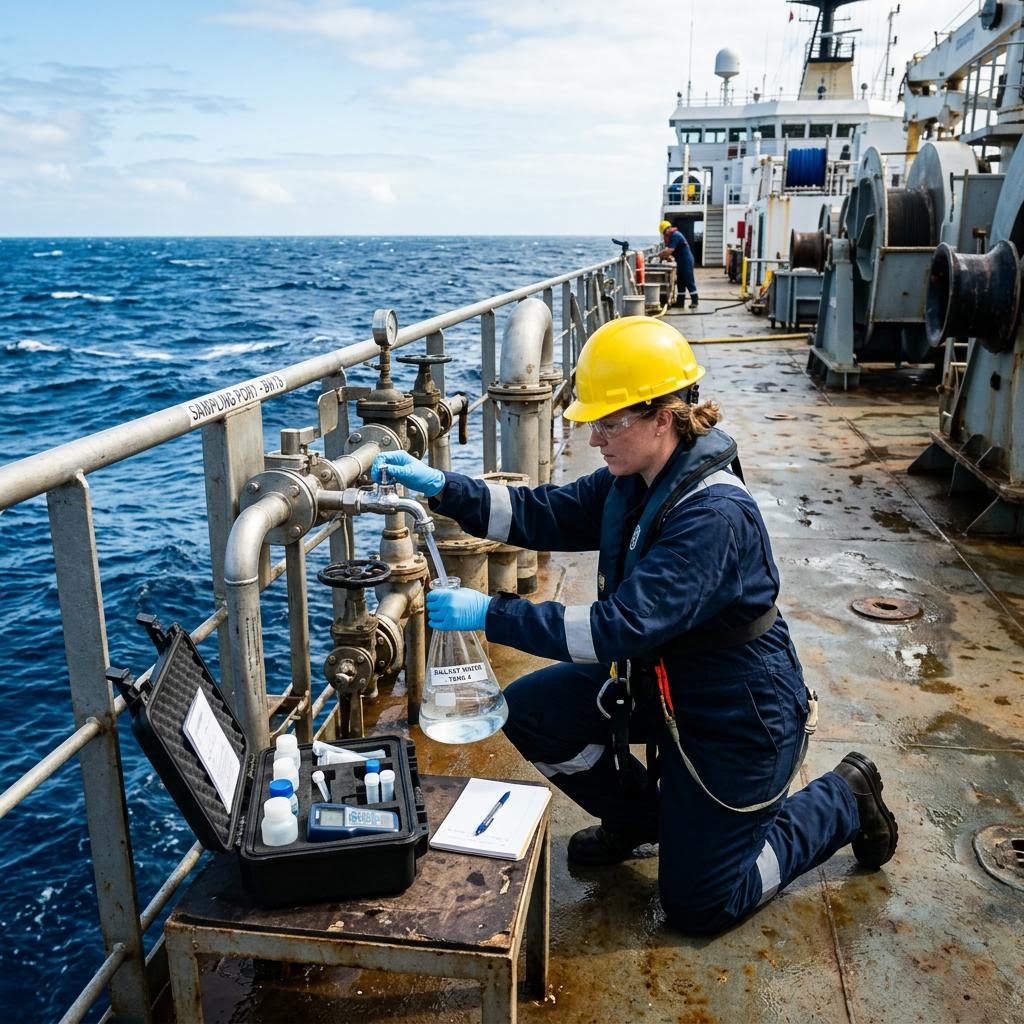
Both control loops depend on accurate TRO measurement, usually by DPD colorimetric or amperometric methods, calibrated for the salinity and temperature range in use. A drifted sensor at uptake risks under-treatment and a D-2 failure; a drifted sensor at discharge risks under-neutralisation and a residual-oxidant exceedance.
The neutralisation and monitoring must be interlocked with the ballast control so discharge halts or throttles on a high-TRO alarm or reagent-empty condition. Sea Clean provides independent, brand-agnostic support to set up and document these loops, and is an authorized agent for Headway Technology.
What Are the Common Chemistry Pitfalls?
The first pitfall is treating natural decay as a substitute for neutralisation. Short holding times or cold water can leave a high residual, so a ship that skimps on reagent or neutralisation capability risks an exceedance the moment conditions are unfavourable.
The second is analyser calibration error, which corrupts both treatment and neutralisation control. DPD reagent age, fouled optics and salinity mismatch all cause misreading, and because the whole process is measurement-driven, calibration is the highest-leverage maintenance task.
The third is ignoring bromine chemistry, which can drive higher-than-expected reagent consumption and persistent TRO. Recognising that the residual includes bromine species explains apparent overconsumption and confirms that thiosulfate, which reduces bromine too, is the right neutraliser. Sea Clean can help diagnose these issues across makers.
Frequently asked questions
How does electrochlorination treat ballast water?
It passes seawater through an electrolytic cell that generates chlorine (and bromine from bromide), leaving a total residual oxidant that inactivates organisms during the holding time to meet the D-2 standard.
Why is sodium thiosulfate needed with electrochlorination?
The residual oxidant that treats the water cannot be discharged untreated. Sodium thiosulfate reduces it to harmless chloride, bromide and sulfate so the discharge stays below the approved TRO limit.
Does bromide in seawater affect the process?
Yes. Bromide is oxidised to bromine species that add to measured TRO and can be more persistent than free chlorine, sometimes raising thiosulfate consumption. Thiosulfate reduces bromine as well as chlorine.
Can I skip neutralisation if the TRO has decayed?
No. Natural decay varies with temperature, organic load and holding time and cannot be relied on to fall below the discharge limit. Active neutralisation capability must always be available.
Sources
Related articles
- Electrochlorination BWTS Explained: Electrolysis, TRO Generation and Neutralisation
- Neutralisation Systems and Sodium Thiosulfate Dosing in BWTS
- Sodium Thiosulfate Injection Systems: BWTS Hardware
- Total Residual Oxidant (TRO) Monitoring and Neutralisation
- Sodium Thiosulfate vs Sodium Bisulfite for TRO Neutralization
- What Is a Ballast Water Treatment System? Explained
Request spares, calibration or ballast-water testing
Include BWMS brand/model, vessel/IMO number, port/terminal, date/ETA and scope or part numbers. These links prepare an email draft; you must send it yourself.
- Request a parts quote — Sensors, TRO reagents, calibration kits and replacement parts. Confirm compatibility, availability and delivery for your installed system.
- Request a calibration booking — Annual instrument calibration with a calibration certificate for the work completed. OEM instructions, drift or applicable rules may require earlier work.
- Request testing coordination — Arrange sampling and testing with an appropriately qualified party for your IMO D-2, commissioning or other stated purpose.
Authorised Headway agent. Other-brand enquiries are independently reviewed; no OEM authorisation is claimed. Sea Clean is not an accredited laboratory or approving authority. Calibration does not demonstrate biological D-2 compliance. Attendance, testing scope and parts delivery are confirmed per enquiry.