Ballast Water Testing and Sampling at the Port of Piraeus
Updated
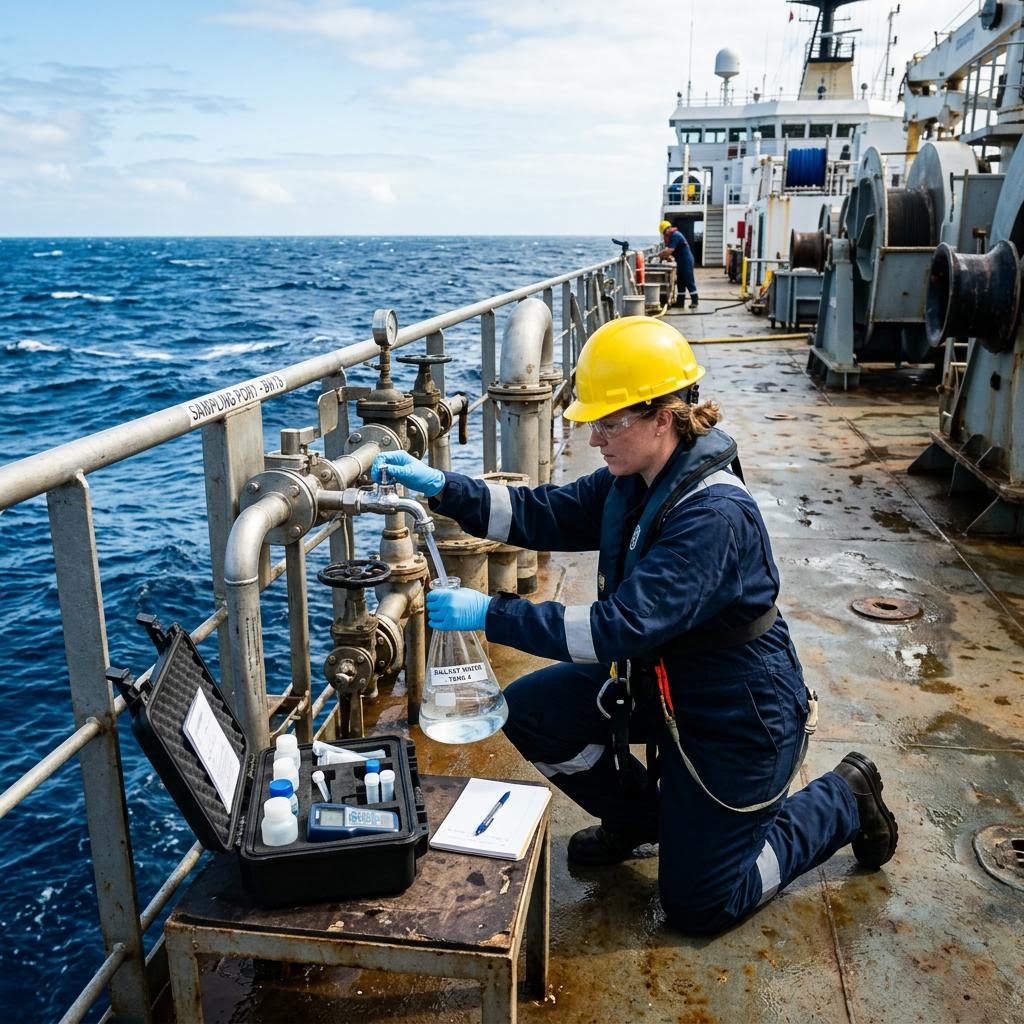
Piraeus is the largest Greek port and a major Mediterranean container and passenger hub, where ballast water management is governed by the IMO Convention as applied through EU and Greek implementation and the Paris MoU port state control regime. This guide explains the regulatory setting, how sampling is arranged across the port's terminals, and how Sea Clean AS supports sampling and BWMS commissioning testing in cooperation with accredited laboratories rather than certifying analysis itself.
Key takeaways
- Piraeus is the largest Greek port, mixing container, ferry and cruise traffic under EU and IMO ballast water rules.
- Port state control is exercised under the Paris MoU, and recorded deficiencies feed the regional system.
- Commissioning testing under MEPC.325(75) confirms an installed system meets D-2 using representative samples.
- Sampling timing depends on the terminal and the cargo or passenger schedule, coordinated through the agent.
- Indicative screening gives a quick on-board read; accredited labs provide certified detailed analysis.
- Sea Clean coordinates sampling with accredited labs and supplies kits and reagents, without certifying results itself.
Piraeus in the Mediterranean
Piraeus serves Athens and functions as a leading container terminal, a Ro-Ro and ferry hub for the Greek islands, and a cruise base, giving it one of the most varied traffic mixes in the Mediterranean. Vessels here range from large containerships at the eastern terminals to passenger ferries and cruise ships at the central quays.
Greece is an EU member state and a party to the IMO Ballast Water Management Convention, and port state control is exercised under the Paris Memorandum of Understanding. Inspectors examine ballast water documentation and may extend to sampling where records, system condition or operational evidence raise concern.
For a vessel calling Piraeus, sampling work typically supports commissioning testing on newly installed systems, verifies performance during routine operation, and helps demonstrate compliance ahead of or following a port state control inspection.
EU and IMO Requirements
Under the IMO Convention a vessel must meet the D-2 discharge standard, normally with a type-approved ballast water management system, and maintain a ballast water record book and approved management plan. EU member states apply the convention through national implementation, and the Paris MoU coordinates how port state control is carried out across the region.
BWMS Code commissioning testing under MEPC.325(75) applies where the flag administration requires it after installation or major repair. The test confirms, using representative samples from an actual ballast operation, that the installed system delivers treated water meeting the D-2 limits on that vessel.
Piraeus port state control is part of the wider Paris MoU effort, so a deficiency found here is recorded in the regional system. This makes demonstrable performance and well-kept records important, and it is one reason operators arrange verification sampling at a major hub like Piraeus.
Sampling Across the Terminals
Sampling needs a defined point on the treated ballast line and a window during active ballasting, so the plan depends on which terminal the vessel uses and the cargo or passenger schedule. Container berths, ferry quays and cruise terminals each impose different access and timing constraints that the vessel's agent helps manage.
For containerships on tight rotations, the sampling attendance is fitted to the part of the call when ballast operations align with cargo work. For ferries and cruise ships with frequent, fixed schedules, the window is narrower and has to be agreed precisely with the agent and the ship's staff.
Where alongside access is limited, the agent arranges gangway access, induction and any escort the terminal requires before the attending party boards. The sampling point and timing are confirmed with the chief engineer so the result reflects normal operation.
Indicative and Detailed Analysis
Indicative analysis offers rapid on-board screening of whether treated water is broadly within D-2 limits, using fluorometry, viability checks and TRO measurement. It is well suited to the quick turnarounds typical of Piraeus, giving an early answer without waiting for a laboratory.
Detailed analysis through an accredited laboratory provides the certified result needed for commissioning and for a formal compliance question, using methods that count living organisms in the regulated size classes. It takes longer because of culturing and microscopy and requires proper sample handling.
Both routes are useful at Piraeus. Indicative screening supports operational confidence and troubleshooting during the call, while accredited detailed analysis supplies the documented proof when a system is being certified or when an inspection requires evidence.
How Sea Clean Supports Piraeus
Sea Clean is not an accredited testing laboratory and does not certify ballast water results. It coordinates and supports sampling and commissioning testing in cooperation with accredited laboratories and parties authorised by the flag administration or class, supplies TRO test kits, sodium thiosulfate neutraliser and reagents, and helps the crew prepare the system and documentation.
For Piraeus, attendance is arranged by prior agreement, with mobilisation depending on flights, visas and terminal access, and reagents and kits supplied via courier and forwarding through the vessel's local agent. The support is organised for the specific call rather than from a standing local office.
The accredited laboratory or authorised party performs and certifies the analysis, while Sea Clean makes the sampling attendance work within the schedule and keeps the vessel supplied with in-date kits and reagents. This separation keeps certification with the qualified body.
Planning a Piraeus Call
Start with the vessel name, IMO number, ETA, terminal and the reason for sampling, whether commissioning, routine verification or preparation for port state control. Because terminal type and schedule drive the available window, early notice lets attendance and laboratory coordination be set up reliably.
Reagent and kit consignments are ordered with enough lead time to clear inbound logistics and reach the agent before arrival, and any detailed laboratory turnaround is built into the plan. For ferries and cruise ships, the narrow fixed schedule makes advance agreement of the window essential.
Send the vessel details and requirement to post@seaclean.no to begin coordination. Lining up the agent, the attending party and the laboratory in advance is the main factor in completing sampling within a Piraeus port window.
Frequently asked questions
Which ballast water rules apply at Piraeus?
Greece applies the IMO Ballast Water Management Convention as an EU member state, so vessels must meet the D-2 standard with a type-approved system and keep a record book and management plan. Port state control is carried out under the Paris Memorandum of Understanding.
Does Sea Clean perform the analysis at Piraeus?
No. Sea Clean is not an accredited laboratory and does not certify results. It coordinates and supports sampling and commissioning testing with accredited laboratories and authorised parties, and supplies TRO test kits, neutraliser and reagents. The accredited party performs and certifies the analysis.
How is sampling arranged for ferries and cruise ships?
Passenger vessels at Piraeus run frequent fixed schedules, so the sampling window is narrow and must be agreed precisely with the agent and ship's staff. The attending party boards during a confirmed ballast operation, with terminal access and induction handled in advance.
Why arrange verification sampling at a hub like Piraeus?
Piraeus is a major call where many vessels already stop, and port state control here feeds the Paris MoU regional system. Arranging verification sampling at such a hub helps demonstrate performance and well-kept records before or after an inspection.
Sources
Related articles
- Ballast Water Compliance in the European Union
- Ballast Water Testing and Sampling at the Port of Algeciras
- Ballast Water and Port State Control Inspections
- BWTS Service and Engineer Attendance at the Port of Piraeus
- Ballast Water Testing and Sampling at Istanbul and Tuzla
- Ballast Water Testing and Sampling at the Port of Las Palmas