40 Micron Filter and UV BWTS Explained
Updated
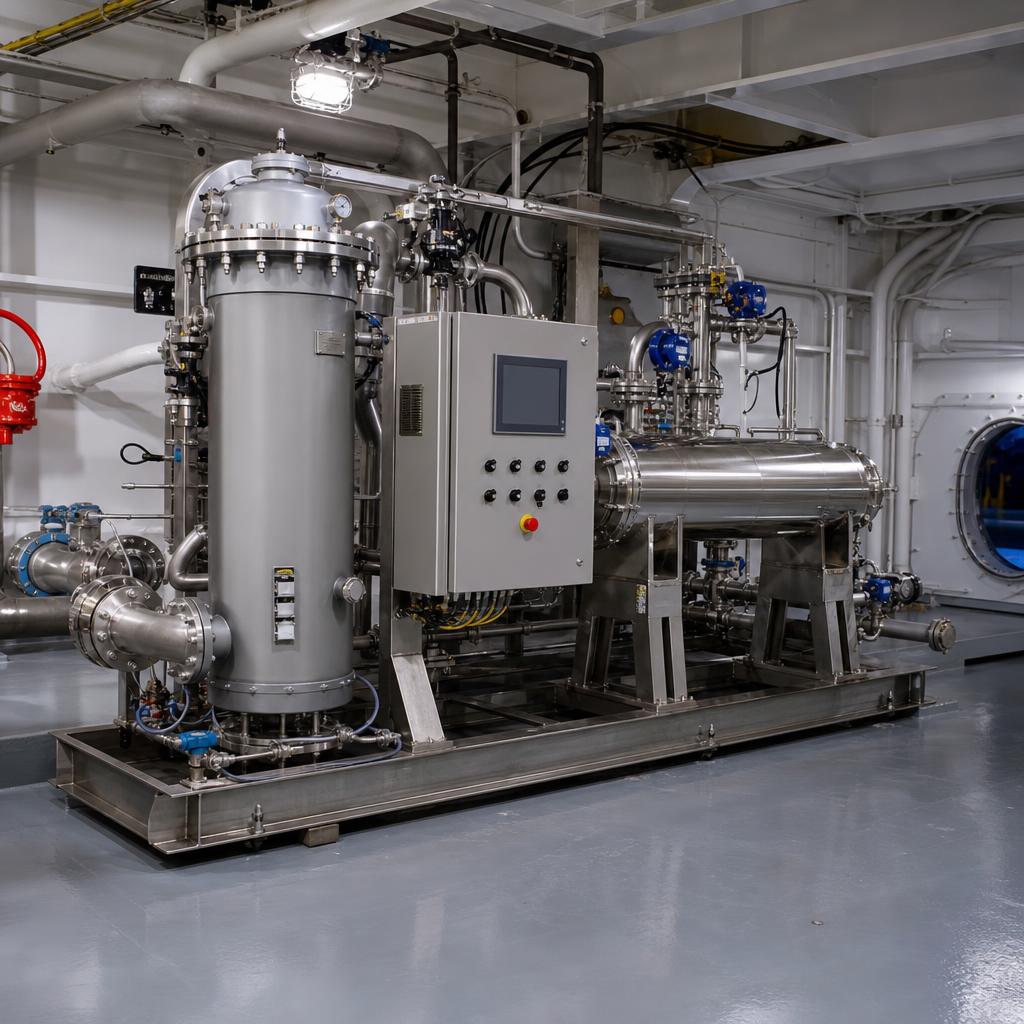
The filter protects downstream UV treatment by separating larger solids, while UV performance depends on water condition, flow and controls. PACT publicly describes a 40 μm self-cleaning filter with medium-pressure UV; that description is not a substitute for vessel-specific engineering.
Key takeaways
- Start with a documented vessel, berth and operating case for the filter and UV duty.
- Confirm hose routing, access, isolation, power and control interfaces before mobilisation.
- Size transfer activity around verified flow, pressure, time window and drainage constraints.
- Assign responsibility for monitoring, solids, records and emergency response in writing.
- Check applicable flag, port, class, authority, permit and approval requirements project by project.
- Use the final operating plan and evidence pack to support a controlled handover.
What the 40 Micron Stage Does
A 40 μm screen is a pre-filtration threshold, not a statement that all biological treatment has occurred; the downstream UV stage remains central to the process. For a 40 micron filter and uv bwts, that point belongs under “What the 40 Micron Stage Does” rather than in a late site query. It directly shapes the filter and UV duty.
Turn the requirement into a measurable check: identify the responsible party, the source document and the point at which it will be verified. Review it with ship and shore teams before the ballast sequence starts. Escalate a mismatch rather than relying on an operational workaround.
Keep the resulting evidence with the operating plan, including drawings, readings, photographs or signed interface checks as appropriate. The applicable flag, port, class, authority, permit and approval requirements still require project-specific confirmation. This record helps distinguish a controlled limitation from an undocumented assumption.
Why Water Quality Matters to UV
Turbidity and UV transmittance can change reactor performance, so a crew needs usable indications and defined actions when water condition moves outside the operating envelope. For a 40 micron filter and uv bwts, that point belongs under “Why Water Quality Matters to UV” rather than in a late site query. It directly shapes the filter and UV duty.
Turn the requirement into a measurable check: identify the responsible party, the source document and the point at which it will be verified. Review it with ship and shore teams before the ballast sequence starts. Escalate a mismatch rather than relying on an operational workaround.
Keep the resulting evidence with the operating plan, including drawings, readings, photographs or signed interface checks as appropriate. The applicable flag, port, class, authority, permit and approval requirements still require project-specific confirmation. This record helps distinguish a controlled limitation from an undocumented assumption.
Manage Backwash and Separated Solids
Self-cleaning filters move retained solids into a backwash stream; the piping destination, valve sequencing and contamination controls need design attention. For a 40 micron filter and uv bwts, that point belongs under “Manage Backwash and Separated Solids” rather than in a late site query. It directly shapes the filter and UV duty.
Turn the requirement into a measurable check: identify the responsible party, the source document and the point at which it will be verified. Review it with ship and shore teams before the ballast sequence starts. Escalate a mismatch rather than relying on an operational workaround.
Keep the resulting evidence with the operating plan, including drawings, readings, photographs or signed interface checks as appropriate. The applicable flag, port, class, authority, permit and approval requirements still require project-specific confirmation. This record helps distinguish a controlled limitation from an undocumented assumption.
Verify Flow and Pressure Loss
Differential pressure, fouling rate and backwash frequency determine the pressure loss seen by the ballast pump and can constrain a theoretical flow rate. For a 40 micron filter and uv bwts, that point belongs under “Verify Flow and Pressure Loss” rather than in a late site query. It directly shapes the filter and UV duty.
Turn the requirement into a measurable check: identify the responsible party, the source document and the point at which it will be verified. Review it with ship and shore teams before the ballast sequence starts. Escalate a mismatch rather than relying on an operational workaround.
Keep the resulting evidence with the operating plan, including drawings, readings, photographs or signed interface checks as appropriate. The applicable flag, port, class, authority, permit and approval requirements still require project-specific confirmation. This record helps distinguish a controlled limitation from an undocumented assumption.
Plan Inspection and Consumables
Inspect screen condition, backwash valves, UV lamps, sleeves and sensors at the intervals in the equipment documentation, with spares matched to the installed configuration. For a 40 micron filter and uv bwts, that point belongs under “Plan Inspection and Consumables” rather than in a late site query. It directly shapes the filter and UV duty.
Turn the requirement into a measurable check: identify the responsible party, the source document and the point at which it will be verified. Review it with ship and shore teams before the ballast sequence starts. Escalate a mismatch rather than relying on an operational workaround.
Keep the resulting evidence with the operating plan, including drawings, readings, photographs or signed interface checks as appropriate. The applicable flag, port, class, authority, permit and approval requirements still require project-specific confirmation. This record helps distinguish a controlled limitation from an undocumented assumption.
Keep Operating Evidence Available
Trend filter pressure and UV-related alarms alongside ballast operations so recurring water-quality or maintenance issues can be diagnosed rather than merely reset. For a 40 micron filter and uv bwts, that point belongs under “Keep Operating Evidence Available” rather than in a late site query. It directly shapes the filter and UV duty.
Turn the requirement into a measurable check: identify the responsible party, the source document and the point at which it will be verified. Review it with ship and shore teams before the ballast sequence starts. Escalate a mismatch rather than relying on an operational workaround.
Keep the resulting evidence with the operating plan, including drawings, readings, photographs or signed interface checks as appropriate. The applicable flag, port, class, authority, permit and approval requirements still require project-specific confirmation. This record helps distinguish a controlled limitation from an undocumented assumption.
Frequently asked questions
What does a 40 micron BWTS filter remove?
A 40 μm screen is a pre-filtration threshold, not a statement that all biological treatment has occurred; the downstream UV stage remains central to the process. The answer must be confirmed against the actual vessel, berth and local acceptance route. Sea Clean can help coordinate the technical scope and appropriate project stakeholders, but it does not replace required authority, class or laboratory decisions.
Does filtration alone treat ballast water?
Turbidity and UV transmittance can change reactor performance, so a crew needs usable indications and defined actions when water condition moves outside the operating envelope. The answer must be confirmed against the actual vessel, berth and local acceptance route. Sea Clean can help coordinate the technical scope and appropriate project stakeholders, but it does not replace required authority, class or laboratory decisions.
Where does filter backwash go?
Self-cleaning filters move retained solids into a backwash stream; the piping destination, valve sequencing and contamination controls need design attention. The answer must be confirmed against the actual vessel, berth and local acceptance route. Sea Clean can help coordinate the technical scope and appropriate project stakeholders, but it does not replace required authority, class or laboratory decisions.
What maintenance does UV equipment need?
Differential pressure, fouling rate and backwash frequency determine the pressure loss seen by the ballast pump and can constrain a theoretical flow rate. The answer must be confirmed against the actual vessel, berth and local acceptance route. Sea Clean can help coordinate the technical scope and appropriate project stakeholders, but it does not replace required authority, class or laboratory decisions.