Why the BWM Convention Was Created: A Brief History
Updated
The BWM Convention emerged from a genuine ecological and economic emergency rather than routine rulemaking. This history explains how organisms hitchhike in ballast tanks, the two invasion events that pushed regulators to act, the long path from the first IMO discussions in the late 1980s through adoption in 2004 to entry into force in 2017, and how compliance moved from the D-1 exchange method to the D-2 treatment standard that governs vessels today.
Key takeaways
- Ballast keeps ships safe but has long ferried living organisms between ecosystems, a risk that grew as shipping got faster and bigger.
- The Great Lakes zebra mussel and the Black Sea comb jelly each caused billions in losses and forced governments to act together.
- Canada and Australia raised the issue at the IMO's environment committee in 1988; the 1992 Rio Summit reinforced it; adoption came in 2004.
- The treaty took effect on 8 September 2017, a year after ratification reached 30 states and 35 percent of world tonnage on 8 September 2016.
- The D-1 exchange route (open-ocean swaps 200 nm offshore) was a stopgap; the D-2 treatment benchmark now applies to essentially all vessels.
- Today's priority is keeping systems performing through preventive maintenance, calibration and system-specific crew training.
The Biological Problem
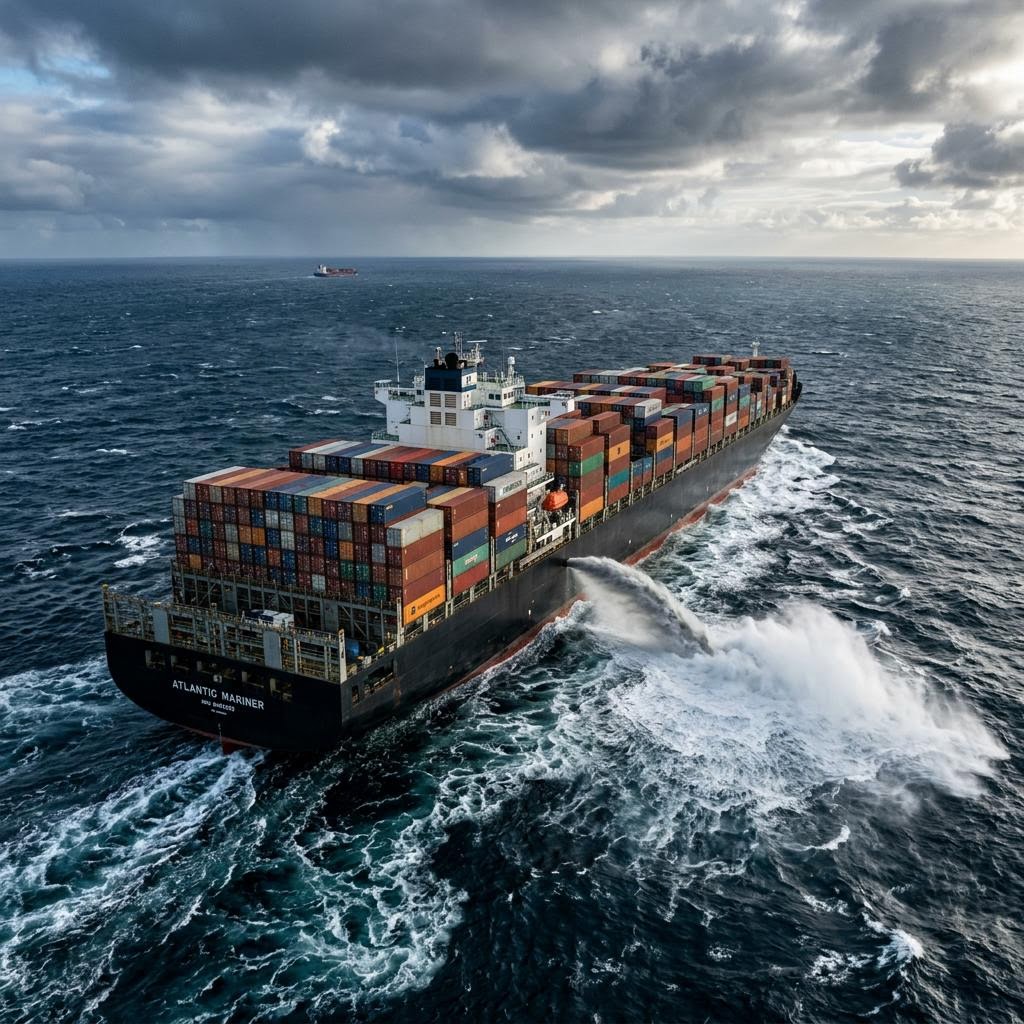
From the earliest steel ships, taking on ballast has been fundamental to safe operation: it holds the hull steady, offsets the weight lost as bunkers are burned, and keeps the propeller deep enough to work efficiently. By the middle of the last century, though, as fleets grew in size and speed, this routine practice revealed a serious ecological cost. Water pumped for stability was quietly carrying living organisms from one coast to another.
Filling a ballast tank in one harbour also draws aboard vast numbers of tiny organisms, everything from bacteria and plankton to invertebrate larvae and juvenile fish. Those passengers travel inside the tanks and are released when the vessel deballasts in a distant harbour, often in a climate and food web entirely unlike the one they came from.
The great majority of these stowaways perish, either during the crossing or once released into unfamiliar conditions. A minority, however, take hold, and with no established predators to check them they can crowd out native populations, wreck commercial fisheries and foul submerged plant and pipework. Because shorter voyages leave more organisms alive on arrival, faster shipping steadily raised the odds of a successful invasion.
The Catalysts: Two Ecological Disasters
Momentum for an international agreement built through the late 1980s, spurred by two invasions that made the danger impossible to dismiss. Zebra mussels, native to the Caspian and Black Sea basins, reached the Great Lakes of North America in discharged ballast. They spread explosively, blocking the intake pipework of municipal and power-station water systems and inflicting damage and lost output measured in billions.
A second invasion travelled the other way. A comb jelly native to American coastal waters established itself in the Black Sea, where it consumed the eggs and young of anchovy in such quantity that the stock crashed and a fishery worth millions collapsed with it. Taken together, the two episodes proved the problem flowed in both directions and could ruin economies just as readily as ecosystems.
What had looked like a scientific curiosity was now plainly an economic hazard on a worldwide scale. Governments meeting at the IMO recognised that a scatter of national rules could never contain a problem carried by ships crossing every ocean, and that only a common, binding standard would do. That conclusion is what launched the formal treaty process.
The Road to 2004 Adoption
Reaching a treaty took many years because the science and engineering were genuinely difficult. The issue was first put formally before the IMO's Marine Environment Protection Committee in 1988, when Canada and Australia raised the spread of unwanted species as a matter needing international attention, placing ballast water firmly on the agenda.
Political weight followed in 1992, when the Rio Earth Summit, formally the UN Conference on Environment and Development, named ballast-borne species transfer among the significant dangers facing the world's seas. That endorsement kept the pressure on to produce an enforceable treaty rather than a set of voluntary recommendations.
The treaty was finally adopted by the IMO in 2004 after prolonged negotiation. Adoption did not by itself create binding law, because entry into force depended on ratification by no fewer than 30 states that together accounted for 35 percent of the world fleet's tonnage. That double threshold was satisfied on 8 September 2016, which set the treaty running exactly one year later, on 8 September 2017.
From D-1 Exchange to D-2 Treatment
Two compliance standards frame the treaty's story. The earlier route, the D-1 standard, relied on ballast exchange: ships were to swap their coastal ballast for open-ocean water taken no closer than 200 nautical miles to land. The reasoning was that harbour organisms would perish in oceanic conditions and that deep-water organisms would fail to establish once released in a port.
Exchange was never meant to be permanent. Pumping large ballast volumes at sea can be hazardous in rough conditions, and the method removes only a fraction of the organisms present, so its ecological protection is partial at best. It served as a stopgap while treatment hardware was developed and proven, but the treaty always looked beyond it.
The D-2 standard is the destination the treaty had in view. It obliges ships to reduce the living content of their ballast to a defined biological limit before it goes overboard, which in practice means fitting a Ballast Water Treatment System, whether based on ultraviolet dosing with pre-filtration, on generated or injected oxidants, or on chemical dosing. Meeting D-2 across the fleet has effectively retired routine exchange for most vessels.
Why This History Matters Today
Knowing the origins of the treaty makes sense of how seriously Port State Control now treats ballast systems. The rules were never about certificates for their own sake; they exist to head off the next zebra-mussel or comb-jelly catastrophe. Seen in that light, an inspector's insistence on a system that genuinely works is entirely proportionate to the stakes.
Attention has shifted from getting equipment installed to keeping it performing, because the fleet is now well past the fitting phase. A vessel that cannot demonstrate D-2 performance risks financial penalties, time lost to detention, and the cost of arranging urgent treatment support in port, and every one of those consequences traces straight back to the treaty's environmental purpose.
With each year that passes since 2004, the hardware itself grows more capable while the burden of keeping it reliable increases. Routine calibration of sensors, periodic verification of biological performance, and training tailored to the particular system aboard have become ordinary expectations of a well-run vessel. The environmental aims behind the treaty are only realised when the equipment is kept in genuine working order.
Applying the Lesson to Fleet Operations
The clearest lesson to draw from this history is that planned upkeep, rather than emergency repair, is what lets a vessel honour the treaty and keep trading at the same time. A treatment system that is regularly serviced, correctly calibrated and well understood by its operators simultaneously keeps the ship clear of detention and keeps foreign organisms out of local waters. Waiting for a breakdown, by contrast, costs more and disrupts more.
For those managing fleets, the practical points line up neatly: unwanted-species transfer stays high on the Port State Control agenda, treatment under D-2 is now the universal benchmark with exchange essentially retired, and disciplined preventive maintenance is what delivers the treaty's aims without derailing the schedule. Folding these into the maintenance regime converts a piece of regulatory history into a steady operational edge.
Sea Clean works across the obligations that flow from the treaty: servicing and calibrating treatment systems, supplying genuine Headway spare parts while offering independent service for other makes, and arranging D-2 and VGP sampling through accredited ISO 17025 laboratories. Engineers reach North Sea ports within 24 hours, with other regions covered by arrangement as flights, visas and port access allow. Send the vessel and system details to post@seaclean.no to schedule calibration, service or preparation for a coming survey.
Frequently asked questions
Why was the BWM Convention created?
It was drawn up to halt the spread of unwanted aquatic organisms carried between regions in ships' ballast, after that transfer caused heavy ecological and economic harm. The Great Lakes zebra mussel invasion and the collapse of Black Sea anchovy stocks after a comb jelly took hold showed that scattered national rules were no substitute for one common standard.
When was the convention adopted and when did it enter force?
The IMO adopted the treaty in 2004, but it could only take effect once ratified by at least 30 states representing 35 percent of world merchant tonnage. That level was reached on 8 September 2016, so the treaty came into force one year later on 8 September 2017, well over a decade after adoption.
What changed in the shift from D-1 to D-2?
The D-1 route relied on swapping ballast for open-ocean water at least 200 nautical miles offshore, a stopgap of limited effect and some risk in heavy weather. D-2 instead requires treating ballast down to defined numeric limits before discharge using an installed system. With the D-2 requirement now in force fleet-wide, routine exchange has largely ended.
How does this history affect vessels today?
It shows why Port State Control scrutinises treatment systems so closely and why the emphasis has moved from installation to sustained performance. Falling short can mean fines, detention and urgent service costs. Sea Clean provides preventive servicing, calibration and sampling coordination; write to post@seaclean.no to arrange attendance.
Sources
Related articles
- Ballast Water Rules and Regulations: A Practical Overview
- BWM Convention Explained: D-1 Ballast Water Exchange vs D-2 Performance Standard
- Ballast Water Management Plan Guide: Why It Matters
- BWM Convention Compliance Timeline and Key Dates
- The IMO BWMS Code (Formerly G8) and How Type Approval Works
- USCG Type Approval vs IMO Type Approval: Key Differences for Owners