Ballast Water Invasive Species: A Practical Overview Guide
Updated
Ballast water is the largest single vector for moving marine organisms between ecosystems, and the consequences — collapsed fisheries, blocked intakes and toxic algal blooms — are why the IMO BWM Convention exists. This guide explains why ships carry ballast, which organisms travel in it, the ecological and economic damage they cause, and how treatment to the D-2 standard, exchange, and disciplined management break the transfer chain.
Key takeaways
- Ships carry ballast for stability, but it moves billions of tonnes of organism-laden water between ecosystems each year.
- Invaders range from zebra mussels and green crabs to microscopic Alexandrium cysts and Vibrio bacteria that pass unseen.
- The IMO D-2 standard caps viable organisms by size class and limits indicator bacteria, so treatment must cover the whole size range.
- Bioinvasion damage — collapsed fisheries, blocked intakes, toxic blooms — is largely irreversible, which is why prevention beats remediation.
- The BWM Convention (in force 2017) mandates management plans, record books and D-2 treatment, reinforced by USCG and EPA VGP rules.
- Well-run, well-maintained systems verified by accredited-lab sampling are what actually break the invasive-species transfer chain.
Why Ships Carry Ballast and Why It Moves Life
Ships take on ballast water to maintain stability, trim and structural balance when cargo is light or unevenly distributed. Without it, a vessel rides high, exposes propeller and rudder, and becomes vulnerable to heavy rolling and structural stress — so ballast is not optional equipment but a fundamental part of safe seakeeping. A large bulk carrier or tanker may move tens of thousands of cubic metres of water on a single voyage.
The problem is that ballast is drawn from one port's ecosystem and released in another's. Every uptake pulls in whatever lives in the local water column and sediment — larvae, plankton, bacteria, cysts — and a fast passage can deliver them alive to a new coast days later. Estimates of the volume of ballast moved globally each year run into the billions of tonnes, carrying an enormous biological cargo.
This makes ballast water the principal pathway for aquatic bioinvasion, alongside hull biofouling. A single tank can seed a founder population; once established, an invader is effectively impossible to remove. The scale and irreversibility of the transfer are what elevated ballast water from an operational detail to a subject of binding international regulation.
The Organisms That Travel in Ballast Tanks
The travellers range from visible animals to microscopic cells. Zebra mussels (Dreissena polymorpha), native to Eurasia, spread through North American waters via ballast and now clog water intakes and outcompete native molluscs. The European green crab (Carcinus maenas) preys on shellfish and reshapes coastal habitats far from its home range, and the sea lamprey devastated Great Lakes fish stocks after arriving through shipping.
Microscopic organisms are the harder threat because they pass unseen. Dinoflagellates such as Alexandrium form resting cysts that survive in tank sediment and can seed harmful algal blooms that produce shellfish toxins; diatoms like Skeletonema and copepods such as Acartia and Calanus travel as plankton and larvae. Bacteria and pathogens, including toxigenic Vibrio, can also be carried, which is why the D-2 standard sets explicit limits on indicator microbes.
The IMO D-2 discharge standard targets exactly this spectrum. It limits viable organisms greater than or equal to 50 micrometres to fewer than 10 per cubic metre, organisms from 10 to 50 micrometres to fewer than 10 per millilitre, and caps indicator bacteria including toxicogenic Vibrio cholerae, E. coli and intestinal enterococci. Treatment must knock down the whole size range, not just the large, easily filtered animals.
Ecological and Economic Damage
An established invader outcompetes native species for food and space, introduces disease, and can restructure an entire food web. Zebra mussels alter water clarity and nutrient cycling; killer algae (Caulerpa taxifolia) smother native seagrass; predatory newcomers collapse prey populations. Because ecosystems are interconnected, a single successful introduction can cascade into losses of biodiversity that take decades to appreciate.
The economic toll is concrete. Fouling species block cooling-water intakes at power stations and industrial plants and foul aquaculture gear, imposing ongoing cleaning costs. Harmful algal blooms close shellfish harvests and hit coastal tourism. Fisheries collapse when invaders outcompete or prey on commercial stocks. These are not abstract environmental concerns but direct financial burdens on ports, utilities and coastal economies.
Crucially, the damage is largely irreversible. Unlike an oil spill that disperses, a self-reproducing population persists and spreads. That asymmetry — cheap to introduce, effectively impossible to eradicate — is the reason regulators favour prevention at the source, on board the ship, over remediation after the fact.
How the BWM Convention Breaks the Chain
The IMO's BWM Convention — the treaty on controlling and managing ships' ballast water and sediments — entered into force in 2017 as the international response. It requires vessels to manage ballast so that transferred organisms are removed or inactivated, backed by an International Ballast Water Management Certificate, an approved ballast water management plan and a ballast water record book documenting every operation.
The Convention set two standards. D-1 allowed ballast water exchange in open ocean, at least 200 nautical miles from land in water at least 200 metres deep, on the principle that oceanic organisms rarely survive in coastal water and vice versa. D-2 is the treatment standard, met by an approved ballast water treatment system, and following the compliance timeline that culminated on 8 September 2024 the fleet operates to D-2.
Exchange was always a transitional measure; treatment is the durable answer because it works regardless of route and water depth. National regimes reinforce the IMO framework — the US Coast Guard type-approval rules under 46 CFR 162.060 and the EPA VGP add their own requirements for vessels trading to US waters. The combined effect is a legal expectation that no vessel discharges untreated ballast into a foreign ecosystem.
Reducing the Risk in Daily Operation
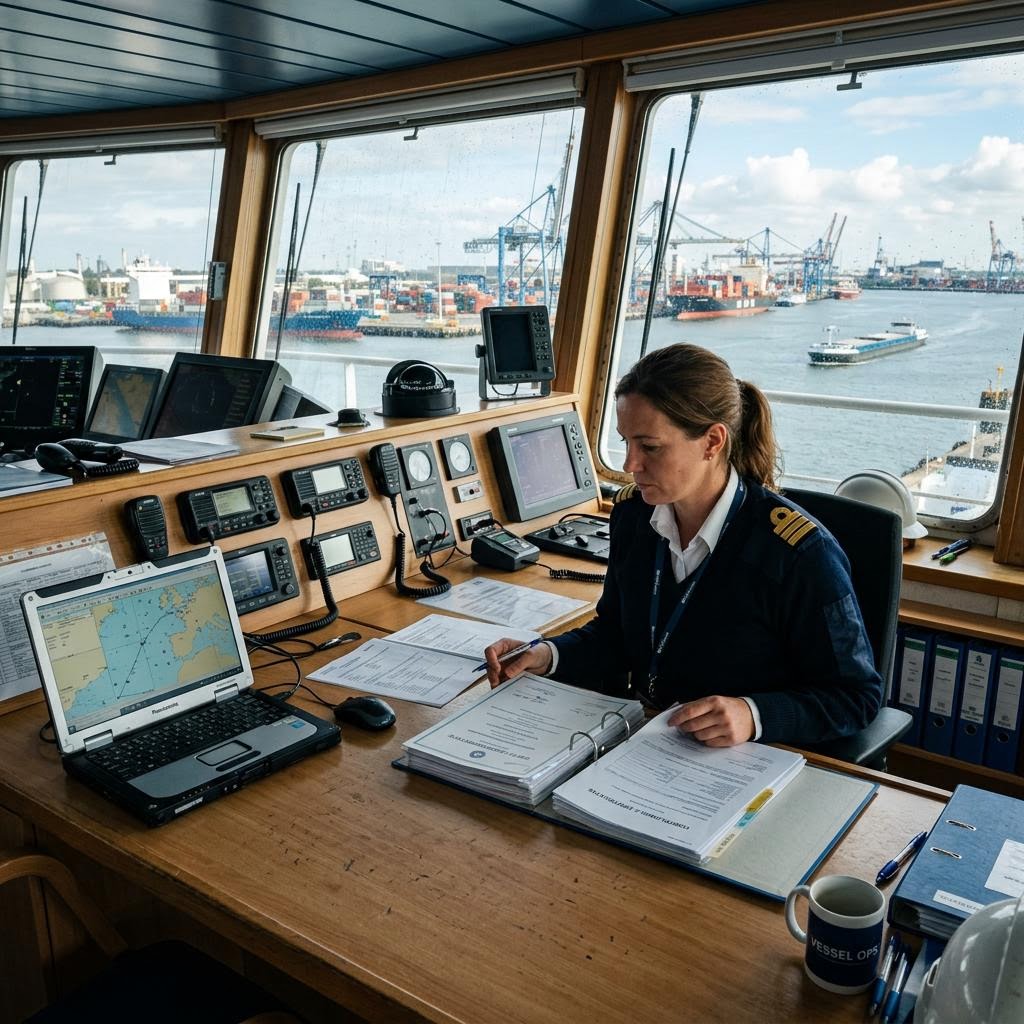
Regulation only works if the ship executes it. That means running the ballast water treatment system as designed, following the ballast water management plan for uptake, treatment and discharge, and keeping the record book accurate and current. Uptake in shallow, turbid or bloom-affected water should be minimised, since it loads the tanks with sediment, organisms and oxidant demand that make treatment harder.
Maintenance underpins prevention. A UV reactor with fouled quartz sleeves or an electrochlorination cell that cannot reach target TRO will pass water that looks treated but still carries viable organisms. Sediment accumulation in tanks harbours cysts that reseed each ballasting cycle, so periodic tank cleaning and sediment management matter as much as the treatment rack itself. Crew training ties it together, because the system is only as good as the people operating it under real port conditions.
Sea Clean supports this preventive discipline across the North Sea and, by arrangement, worldwide as flights, visas and port access allow: multi-brand BWTS service, TRO calibration, reagent and spare-parts supply, and coordination of commissioning and VGP compliance sampling with accredited ISO 17025 laboratories. Send the vessel name, IMO number, BWTS make and model and the port call to post@seaclean.no to keep a system genuinely capable of meeting D-2.
Verifying That Treatment Actually Works
Meeting D-2 on paper is not the same as meeting it in the tank. Commissioning testing under the IMO BWMS Code (MEPC.325(75)) uses indicative analysis to validate that the installed system's processes function correctly at start-up — it is a process-validation step, not a definitive biological pass or fail against the D-2 numeric limits. VGP compliance sampling under the EPA permit then checks efficacy through operational life, with samples handled by accredited laboratories rather than judged on the ship's own sensors alone.
Self-monitoring parameters such as TRO, UV transmittance and flow give the crew a real-time indication, but they are proxies for biological performance rather than a direct organism count. When a port state control officer takes an indicative or detailed sample, it is the viable-organism result that decides compliance. Aligning routine sensor data with periodic laboratory sampling is how a vessel demonstrates the system is doing its ecological job.
Sea Clean is not an accredited test laboratory; it coordinates sampling and commissioning testing with accredited ISO 17025 labs and flag- or class-authorised parties, and provides the engineer attendance, sampling support and documentation that make results defensible. This closes the loop between regulation, hardware and the biology the whole regime is designed to control.
Frequently asked questions
How do invasive species get into ballast water?
A ship draws ballast from one port's water and sediment, pulling in local larvae, plankton, bacteria and resting cysts, then discharges it in another port. A fast passage can deliver these organisms alive to a new ecosystem, where a single tank can seed a founder population that spreads and cannot practically be removed.
Which organisms are the biggest ballast water threat?
Well-known animal invaders include zebra mussels, the European green crab and the sea lamprey. The harder threat is microscopic: dinoflagellates like Alexandrium that form toxin-producing algal blooms, plankton such as copepods and diatoms, and pathogens including toxigenic Vibrio, all of which the D-2 standard limits.
How does the BWM Convention stop invasive species transfer?
It requires ships to manage ballast to the D-2 treatment standard using an approved system, hold an International Ballast Water Management Certificate and ballast water management plan, and log operations in a record book. D-1 open-ocean exchange was a transitional step; treatment is now the durable requirement.
Is a treatment system alone enough to prevent transfer?
Only if it is maintained and verified. Fouled UV sleeves or an under-dosing electrochlorination cell can pass water that looks treated but still carries viable organisms. Commissioning testing validates the system's processes at start-up through indicative analysis, while periodic VGP sampling by accredited laboratories, plus tank sediment management and crew training, is what checks that treated water genuinely meets D-2 in service.
Sources
- IMO BWM Convention — D-1/D-2 standards and the international regulatory framework
- GESAMP Ballast Water Working Group — Scientific review of active substances and environmental risk
Related articles
- BWM Convention Explained: D-1 Ballast Water Exchange vs D-2 Performance Standard
- Ballast Water Management Plan Guide: Why It Matters
- Marine Ballast Water Treatment Types Fully Explained
- Types of Ballast Water Treatment Systems: An Overview
- Ballast Water Management at the Port of Rotterdam Guide
- Recordkeeping and Digital Logs for Ballast Water Management