Choosing a BWTS: Retrofit vs Newbuild Considerations
Updated
Selecting a ballast water treatment system involves different constraints for a retrofit on an existing vessel than for a newbuild designed around the system from the outset. Retrofits are dominated by space, power and pipe-routing limitations and dry-dock scheduling, while newbuilds allow optimal integration and technology choice. Both must match the system to the vessel's salinity profile, water clarity and ballast flow.
Key takeaways
- Newbuilds integrate the BWTS from the design stage; retrofits are constrained by existing space, power and pipe routing.
- Footprint often decides retrofit selection, favouring compact side-stream electrochlorination and UV reactors.
- Power availability limits retrofit options, especially for UV and electrolysis systems with high electrical demand.
- Technology must match the trade: UV for clear water and any salinity, electrolysis for seawater, chemical injection for fresh water.
- Sizing follows maximum ballast flow against the treatment-rated capacity, not vessel deadweight.
- Retrofits must be planned around the dry-dock window, including lead times and class approval of drawings.
- Both routes require MEPC.325(75) commissioning testing to demonstrate D-2 compliance aboard the vessel.
The Fundamental Difference
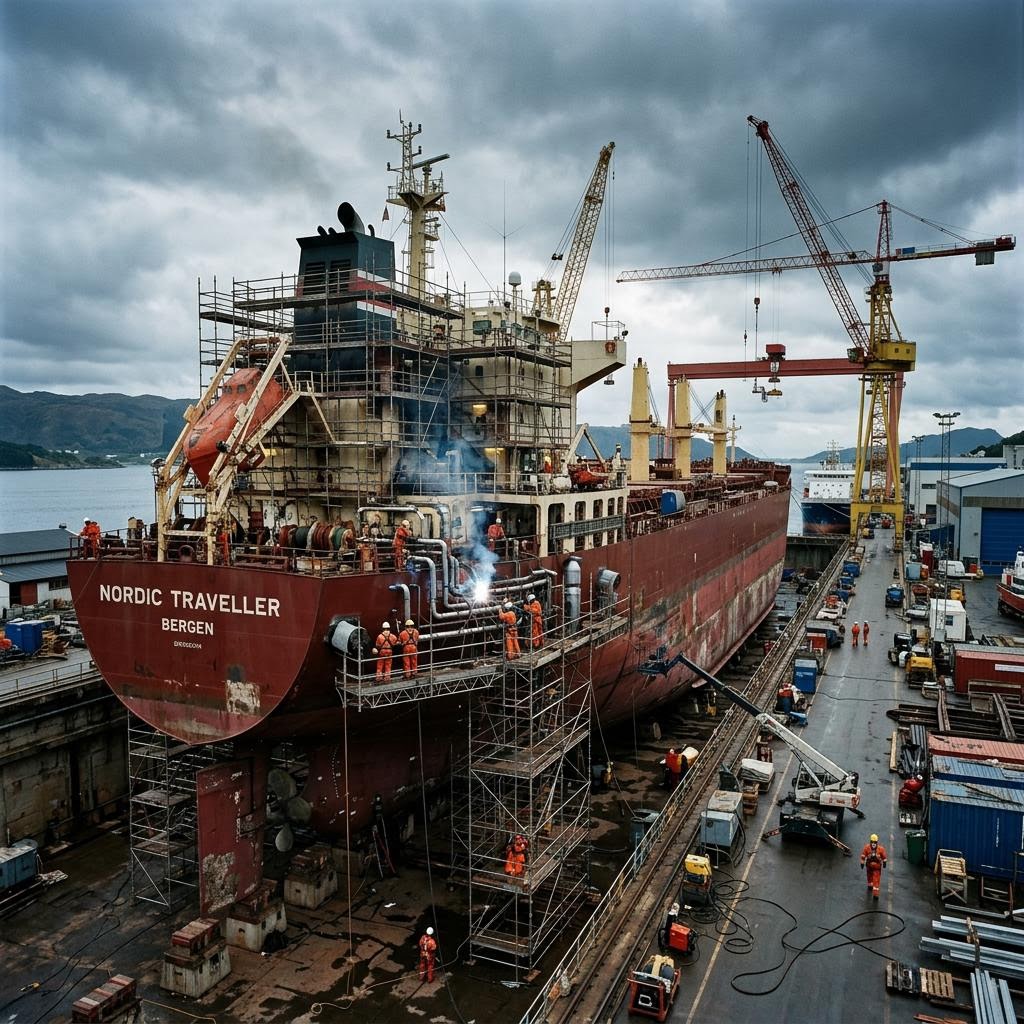
On a newbuild the ballast water treatment system is designed into the vessel from the start, so equipment can be located optimally, pipe runs and power are planned for it, and the system is sized cleanly against the specified ballast pump capacity. On a retrofit the system must be fitted into a vessel never designed to accommodate it, which makes available space, existing pipe routing and power availability the dominant constraints rather than free choices.
This difference shapes almost every downstream decision. A newbuild project can select the ideal technology and footprint for the trade, while a retrofit often has to compromise, choosing a system that fits the available engine room or pump room space and the power that can realistically be made available without major electrical upgrades.
Under the BWM Convention the great majority of the world fleet has already passed its compliance date for fitting a D-2 compliant system, so most remaining decisions are either retrofits of older tonnage, replacements of early systems, or newbuild specifications. Understanding which situation applies frames the whole selection.
Space, Footprint and Pipe Routing
Footprint is frequently the deciding factor in a retrofit. Engine rooms and pump rooms are congested, and the system, its filter, reactor or electrolysis cell, control cabinets and any chemical storage must fit without obstructing access to other machinery. Side-stream electrochlorination units and compact UV reactors are often favoured in tight retrofits because they minimise the equipment footprint relative to full-flow alternatives.
Pipe routing is equally important. The treatment equipment must be plumbed into the existing ballast main, often requiring significant pipe modification, new spool pieces and revised valve arrangements. Locating the sampling points required for compliance monitoring also has to be planned, since accessible, representative sampling access is a regulatory expectation that is far easier to design in on a newbuild.
On a newbuild the naval architect can position the system for short pipe runs, easy access for maintenance, and clean sampling arrangements, avoiding the awkward compromises that drive up retrofit installation cost and complexity.
Power Availability and Energy
Electrical power is a major retrofit constraint, especially for UV systems, which draw significant current when lamps ramp up in low-UVT water, and for electrolysis systems with their rectifiers. An existing vessel may not have spare generator capacity, and adding it can be costly, so the available power budget often narrows the technology options in a retrofit.
Chemical-injection systems generally have a lower electrical demand because they dose a stored chemical rather than generating oxidant electrically, which can make them attractive where power is constrained, at the cost of chemical handling and storage. Electrochlorination sits between, with the rectifier load but smaller than full-flow UV in poor water.
On a newbuild the generator capacity can be specified to suit the chosen system, so energy demand becomes a design input rather than a limiting constraint. Over the system life, energy consumption is a real operating cost that should be evaluated alongside capital cost regardless of project type.
Matching Technology to the Trade
The vessel's trading pattern should drive technology choice in both cases. UV systems are salinity-independent and chemical-free but sensitive to UV transmittance, so they suit clear-water and short-voyage trades but can throttle flow in turbid ports. Electrolytic and electrochlorination systems are highly effective in seawater but salinity-dependent, struggling in fresh and brackish water without salt dosing.
Chemical-injection systems are salinity-independent and maintain dose in any water, suiting vessels with significant fresh-water ballasting, at the cost of chemical supply and handling. Advanced oxidation systems such as Headway OceanGuard offer salinity independence without storing a chlorine residual. For a vessel that ballasts in both clear seawater and turbid fresh water, the trade-offs must be weighed carefully.
Sizing follows the maximum ballast flow rate, not deadweight, because every in-line BWMS is certified for a treatment-rated capacity. Running pumps beyond the certified flow risks under-treatment, so the system must match the actual ballast operation, with margin for realistic operating conditions.
Scheduling, Commissioning and Lifecycle
Retrofits are normally executed during a scheduled dry-docking to minimise off-hire, which means the project must be planned around the dry-dock window: engineering, class approval of the installation drawings, equipment delivery and the installation work all have to align with that fixed date. Lead times for the system and for skilled installation resources need to be secured well in advance.
Whichever route is taken, the installed system must pass commissioning testing under MEPC.325(75), with representative discharge sampling and analysis demonstrating the D-2 standard is met aboard the vessel. Planning the commissioning test, including access to sampling points and a competent testing provider, is part of both retrofit and newbuild delivery.
Lifecycle considerations also differ. A newbuild starts with current-generation equipment and full spare-parts support, while a retrofit of older tonnage should weigh the remaining trading life of the vessel against the capital outlay, and any replacement of an early system should consider obsolescence and parts availability. Sea Clean AS supports both retrofit and operating fleets with parts, reagents and service across system types.
Frequently asked questions
What is the biggest constraint when retrofitting a BWTS?
Available space and power are usually the dominant constraints, followed by pipe routing into the existing ballast main. Engine rooms and pump rooms are congested, and the vessel may lack spare generator capacity, so the system often has to be selected to fit the space and power available rather than chosen purely on technical preference.
How do I size a BWTS for my vessel?
Sizing follows the maximum ballast flow rate, because every system is type-approved for a defined treatment-rated capacity. The system must handle the actual ballast pump throughput with margin for real operating conditions; running pumps beyond the certified flow risks under-treatment and a non-compliant discharge. Deadweight alone does not determine the size.
Which technology is best for mixed sea and fresh-water trading?
Salinity-independent technologies handle mixed trading better. UV and chemical injection both work at any salinity, while electrolysis and electrochlorination struggle in fresh water without salt dosing. UV is sensitive to turbidity, so for vessels in turbid fresh water a chemical-injection or advanced-oxidation system may be preferable. The trade-offs should be weighed against the specific route.
Does a retrofit need commissioning testing?
Yes. Any installed BWTS, retrofit or newbuild, must pass commissioning testing under MEPC.325(75), with representative discharge sampling and analysis demonstrating the D-2 standard is met aboard the vessel. This should be planned into the project, including sampling point access and a competent testing provider.